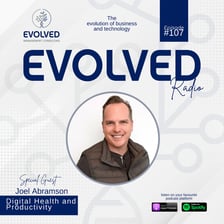
Joel, welcome to the Evolved Radio podcast. Thanks, Todd.
Great to be here. So we'll get straight into it.
You're pretty recognized in the industry at this point. But for the those
that are maybe not familiar or need a refresher, you wanna give us a quick
bit of background on you and your your story? Yeah. Absolutely.
Well, my my time in the MSP space dates back
right alongside yours as we work together, what was it, 10,
12 years ago now? But, yeah, I've been in
the space for my whole career and was lucky enough to join
Chris Day and yourself at Fully Managed and, kind
of worked worked to build that MSP up and, you know,
led the eventual exit of that company to TELUS in 2022 with
about 500 staff. So definitely cut my teeth in in scaling,
an MSP and working alongside, you know, great
great folks like Chris Day and and Mark Scott, my 2 partners in in
this venture, as well as, our fund, TopDown Fund 1,
and all the various companies that we support with Scalepad and Quoter
and backup radar over the years. So, I've had a had great exposure in the
MSP space for a long time. I'm very thankful to to be here and continuing
to do our part to forge the path forward. So maybe
just a quick aside on this as well like, I
think a lot of people in the industry are definitely familiar with Scalepad and
and sort of the the products that are underneath the the Scalepad,
entity. Do you wanna can you talk a bit about sort of Top
down and and the company that, that oversees some of the the direction
there and how that relates to the group of companies? Yeah.
Absolutely. I mean, so TopDown started in
2018, by Chris Day after his exit of
IT Glue to Kaseya. And it was his way of, you know, reinvesting
back into the MSP software community. So he cofounded Scalepad or at the
time Warranty Master with his brother, Anthony. He invested
in a company called Quoter and invested in a company called Backup Radar.
And from 2020, 2021,
Scalepad was was growing quite rapidly. And so we brought in some
external capital from a group called Integrity Growth Partners. They've
been great partners, to scale to help scale
Scalepad, up and, you know, the capital partner for
7 acquisitions. And now Scalepad's, yep, big big
company, number of different products, incredible kind of
evolving platform, 230 employees.
And, but, yeah, top down kind of, you know, behind the scenes has
been supporting, not only Scalepad, but also, you
know, the various other companies I mentioned, as well as Control
Map and a couple of other non MSP software companies.
And then most recently, we're actually launching
a a venture capital fund, for MSP software
companies. And so Mark Scott has come in with Chris and myself
to be our 3rd partner. And, we're super excited to do the public
launch of that over the next couple of months. So stay tuned on that one.
We're not not totally ready to to bring that one out to the world, but
it certainly is coming, and we're excited to get the whole MSP community
planned there as well for sure. So, focus for today is
one of the the companies, sort of in
your in your portfolio is produce 8. So an
emerging product, maybe not as familiar or have sort of the
street recognition as a a scale pad. And I think
a place to start that I, because this sort of goes core to
this being a very different approach to both a software
product in the MSP space but also a different approach to what
you could argue is already an established, bit of software but
sort of really runs counter to the way that we need to go, go
about this. So, before we get too into what the
product is, I really wanna understand sort of where where you were,
and what was sort of the thought around this. Like, you had,
conversations I assume with with Ryan, one of the cofounders around this this
product and he said like this is it. This is this is something that absolutely
needs to come to the market. What was your thinking around that? And I think
that that'll help explain sort of what the product is and why it's different in
my mind. Yeah. Well, as as an
operating MSP, you you
rely on the innovation around you from all of your various vendors
to make the best selection of products and and drive your
business forward.
You know, on the heels of IT Glue started to create new products that, you
know, are trying to look around the corner and understand what MSPs needs are gonna
be down the line. And so produce 8 came
about. I was actually attending a really, really interesting talk from
a couple of PhD professors at Berkeley. And,
they were talking about productivity in the 20th 21st century and and
the impact of technology on it. And, they they I'll never forget.
They put up this slide, and it showed productivity increases,
in the US. I mean, it was just a rising chart growing and growing and
growing. And then it peaked, and it flatlined.
And there was what they talked about a lot of the different things were going
on at that peak and and our inability to break through
that ceiling. And at the time, you know, they they were
hypothesizing around open office concepts. And,
the release of the iPhone, that was a big one. That it was just
there was a lot of distraction starting to happen to the average
knowledge worker. And and as a result, despite the the massive
improvements in the software that we were using, we actually weren't getting
any more productive as as a a working society.
And that just it stopped me in my tracks, Todd. And I was
like, how is this possible? You know, I spend my career
enabling end users to to use all these
different products and work in a fluid IT environment
and kind of felt like it it was all for nothing. We were just
keeping the lights on if we weren't getting any more productive. So I
became obsessed with with kind of diving into this problem
and looked at all the different players in the space and what they were doing
and what they weren't doing and what was making them successful. There were
some great incumbent companies that had built great products that served a lot
of different needs around employee monitoring and and understanding what was
going on on the desktop because on the surface, it doesn't seem like a difficult
thing to solve. Like, you know, at least we're working on machines. So let's just
track everything on the machine, and and, there you go.
But then then, you know, this this other, you
know, avenue sort of intersected with that,
yeah, this problem that that I was toiling over. And it was the the
pandemic hit, and, everybody went home. And I I
often, you know, I often pontificate that if the
pandemic had occurred 10 years earlier, I mean, imagine as the pandemic had happened when
you and I first met Todd. Like, our customers would have
been in absolute disarray as an MSP because half of them
probably didn't have, you know, a VPN set up. They weren't
built for employees to work from home. So everybody would have been all over the
place. So, like, everybody using BPOS or logging in, you know,
terminal servicing into exchange servers to keep the you know, all
these businesses going, it would have been chaos. And instead,
nobody really talks about how smooth that transition
was for everybody to go home and work in the cloud. It
was it was unbelievable, like, from an IT guy to watch
all this transpire. And so that wasn't the
problem to solve, how to make sure everybody is working okay,
in this this remote work environment. It was already solved for us because everybody
was using the cloud or everybody was, you know, well well suited for that
transition. But what kept CEOs up up at night in
those first few months was, what are my people doing? They
became, like, grossly uncomfortable with the fact that they couldn't
see their people. And therefore, what were they doing? And
granted, there was a lot of different stresses plaguing all of
humankind around that time. But in general, people were
were just like, what are my people doing? And they couldn't get comfortable
with the idea that they were working at equivalent levels at
home. And so I, you know, I was in a peer
group and and I got, you know, put this question out. And so I was
like, well, this is easy. I've been studying productivity for a while
here. Just install one of these 3 platforms. You can do
it silently. We can push it out through the RMM. No as an MSP. No
problem. It'll bring back everything that your team is doing, and you can see it
all right there. And I thought I was gonna, you know, nail
10 sign ups to a new product in that meeting. And all of them
had this visceral reaction. I'm not spying on my people.
I trust my managers. I would never install spyware on
my team's machines. I was like, oh, okay.
So they they don't they want visibility into what their team is
doing or want some sort of, understanding or relationship or something. They
want they don't even know what they're asking for if they don't if they won't
install monitoring software on their machine. So
so what's this missing middle here? And,
that was, you know, around the time when I I started to really kind of
think the problem through, with with Chris and and with
Mark. And then there's this other intersection,
of, you know, this personal obsession with our own health
data. And here we are. We're trying to understand how many you
know, what we're eating. So we're using this app. We're trying to understand
how many calories we're burning. So we're using this app. We're trying to understand our
sleep, so we're using this app. And us as tech guys, yourself included, I
know, are now just obsessed with Yep. You know, understanding what's going on in their
body. So we're looking at this this path. We're looking at the, you know,
the remote work angle, and then we're looking at productivity. And so we said
we gotta we gotta solve. We gotta figure out a better way to
bring this data together around what people are doing and do it in a
way that is actually productive for the end users as
well as as the companies and and the
employers. And so that's really what started what
catalyzed that, produce 8. And the original, you know, working
name of the company was WorkFor, because we're all kind of Tim
Ferris fans. And we said, look, you know, 4 day work weeks coming
up, the the 4 hour you know, some of our top guys, they're probably
working remotely. They're probably only working 4 hours a day, but they're absolutely
crushing it. So is that okay? I think it's okay if
if they're still producing 8 hours of work. But let's, like, let's try
and figure out what they're doing so we can disseminate that that knowledge throughout the
rest of the organization. And I know this is a long build up here,
so I'll wrap it up here. But, you know, the next things that happened were
really interesting because then we started we started trying to solve for this problem. So
we started building. We brought the initial team together. And then we started to
get some data back from the pandemic, and people were actually
working more hours. Okay. So now one of our inputs is disrupted. People
are working more hours. So the whole what are my people are doing? They're actually
working more. They're producing less. So
productivity started to decline. Again, lots of macro
environmental factors, but the reality is they're working more hours
and producing less. And then this third, vector came in,
which people were getting burnt out at much
higher rates. And so, you know, this is all these things coming
together for, you know, just to to fuel our desire
to solve the problem or at least, you know, start to take things back in
the other direction. Okay. Cool. That's a great sort of
background. I love and I love this. Like, it sort of sets up a bunch
of the things that I wanted to visit on here. And I think the first
is, like, guilty as charged. I, you know, I am
a, you know, an old school biohacker, you
know, quantified self. You know, I got my Oura ring. I've got my Apple
Watch. You know, my wife gives me a hard time about how much I obsess
over my data in the morning, all of those things. Right? I've I've made dramatic
lifestyle changes to sort of, based on the data
that was given to me around things that I knew were true, you know, like
I cut back drinking because, like, once I had an Oura ring I could not
lie to myself about the impact that it had. Right? So,
like, I I love sort of the description of the produce a
produce a product as more of sort of a digital health score. Right? And I
think it's it helps to understand how this is distinct and different
than, like, the other tools that are, you know,
for lack of a better description, they're kinda spy ware. And I'm sure,
like, you've been in those circumstances where, you know,
a, sort of a borderline ethical client asks you to
install some some monitoring software to track employees
and things like that. And it's it is a very sort of strange ethical dilemma.
And I like the fact that this is done in such a more transparent
fashion and really goes towards, sort of the things that you
learned. It's like, I've always hated the term, right, I
need my I need to see my people to know that they're productive, like, that
was never true in the first place. Right? People can be just as
lazy and unproductive sitting in their desk as they are at home.
So I I always bristled against that idea of like I
need to see my people as a management style. As a management consultant, it just
rubbed me the wrong way all the time. So, you know, getting this this
this quantifiable data to understand, you know, what are people working
on and, you know, there's a big difference between effort
and results and you sort of you noted this around people are
working longer. They may feel that they're working
harder but they're producing less, right? So like how does that square?
And that's not something that you can fix for someone. And I think that
goes to sort of one of the key aspects of of this product is is
that this has to be a collaborative problem to be solved. Like you
can't just say to people, you know, I need you to work harder. And
they're like, Ugh, like God, if my boss tells me this one more time. Why
aren't you working better? Yeah. Exactly. What does this even mean? Right?
And I often describe this to junior managers as a really
strong problem. Right? Because it's such a disconnect around,
you know, I'm working hard is their perception around sort
of a subjective experience and the manager has a different
subjective experience of I don't think think you're working hard enough.
And neither of those are correct. Like there's sort of the three sides to the
truth. Right? But what does the data say? What are we producing? What is that
relative to other people? What is that relative to previous performance?
And I think those factors are so much more important to understand of
like what have we done? What are we trying? What are we
experimenting with? And in this age of distraction, it's a
massive massive problem. Right? Like the number of people
that are just, like, completely drawn into teams notifications
and DM hell in in a modern organization is a
very very strong problem. And like a lot of
these, these metrics are really helpful around this of understanding,
like, have I been able to focus this week? Why or why not? How
much time have I spent in meetings versus actually working in a line
of business product? These are much more helpful than, you know,
the traditional measures of like, you know, did that person leave
before 5 o'clock? Like, is that an effective measure of whether or not
they're working hard? I don't think so. Right? Yeah.
Yeah. Oh, look. I mean, you're you're, yeah, you're you're hitting on
a number of points, which, you know, through our our
3 plus years of research now have have really surfaced up. And,
you know, the first and most impactful one for me is
that, like, there's there's no debating the fact
that all the social media apps are are designed
to just consume attention. Right? It extends out to the the
gaming apps, you know, these infinite game plays, like roadblocks are
even our kids are are working in these environments that are
just you know, they're they're calibrated and built from the ground up
to hold your attention and pull you back in.
And that's the reality of the consumer devices that that
we work with. But what what we've nobody talks about is the fact
that our work technology actually has a lot of the same attributes. It's all
attributes. It's all fighting for your attention to get you back into that
application, whether it's a Slack notification over here or
Zoom's, you know, a Zoom chat or, an
app notification in Asana. It's all trying to pull you back into those
systems to have, you know, more of your your mind share. And
it's it's if you don't just like on your personal mobile device, if you
don't take control of that, you're just gonna, you know, be a
a victim and and, you know, your time is gonna get eaten up by all
of those things competing for your attention, which is is
ultimately this huge layer of distraction from what you're
actually trying to do or is it any intentional work or
any deep work. So that's a a really interesting starting point
is just to understand it. And I I always go back to, you
know, if you you talk about the the habit
building. And for me, it's as simple as write down everything you
eat for the next 2 days. Are you gonna make slightly better
decisions if you have to write down what you're eat with the intention of
obviously improving? If you wanna see how many calories you can eat, that's a
And you'll start to make little micro adjustments or maybe you'll, you know, And you'll
start to make little micro adjustments, or maybe you'll you'll actually
say, you know what? I'm not gonna eat that, you know, 6 pack of doughnuts
because I gotta write it down, and I'm gonna have to, you know, hold be
accountable to that later on or take a photo. So that's the the
first layer is just awareness. And that's like, you know, what what you
see the same day that you start using the produce 8 platform
is you just start to see that back, and you're like, wow. And
there's you can make big decisions. The the the box of donut decisions is you
know what? I know I'm not needed in this meeting, but I attend
it every single week. And now it's just sitting there in my
face. I could easily read them. It's I haven't spoken that meeting in
6 months. I don't need to spend 90 minutes in that meeting. And we, you
know, we talk about the 90 minutes back. There's your 1st day's 90 minute facts
right there. Probably, it's a weekly meeting. It's
Every
every time you're trying to clear all the gold out of Slack or every time
you're, you know, infinitely scrolling somewhere else in your work
environment. You start to see how much time just bleeds
out. And there's there's lots of uses for
the repurposement of that time. It can be back into the
work that, you, you know, you you you haven't been that that you
wanna spend it in, or maybe it's that you get your workday done a little
bit quicker. And you actually get out there and and do some things that you
haven't been able to do because you're so burdened. And then you're starting to impact
the burnout and all that. So there's so many positive use
cases for technology like this. You know, it's it's tough to to
cover even a, you know, a small port of portion of them in
a session like this. But you start to see that whether you're looking at
work technology designed to distract us, collaboration or
over collaboration or just, you know, the lack of respect of everybody's time
with with with meetings, remote meetings, task switching,
or just the impact on burnout. Very quickly, you can see by just
pulling some basic awareness to to your day, how you can
make positive changes. Yeah. And I think all of those
things are are excellent. Just the the quantitative data to make
informed Right? Like, I I kinda relay the story of, like,
I I couldn't justify drinking as much. Not that I don't
drink anymore, but I certainly drink a lot less. Similarly, you
know, how do I actually spend my day? And whenever I talk to people that
are like, they you always run into people in techno in the technology space who
are are totally overwhelmed. And, like, I won't go on my band
busy rant, but people always describe I'm too busy. Right? And it's, like, well,
what does busy mean? And, like like, what do you mean by that? Right? Like,
are you working on the right things? And one of the things I often,
subscribe to people is do a time audit. And this is just a simpler way
to do that. Right? Like, you run this tool and it it collects information about
what you're doing so you can reflect on it and go, Really? Like, I
thought I felt like I was crazy busy today, but that's actually sort of a
lower level of engagement that I've had in in previous days. And one of the
other aspects that I think is important about sort of p eight being different, again,
like, I I want people to not sort of lump this into, you know,
employee tracking. It's like there's contained data that you see
individually. Right? What are what are my personal sort of digital health score stats?
And I see this, you know, emails you every day to tell you you can
actively review this stuff. And then you can actively
subscribe to a workspace where you collect you collectively share things
that are line of business apps. You know, how much time did you spend in
a ticketing system? How much time did you spend in in teams? Those sorts of
things. So there's the distinction between the personal insights that you have
and the team data that you're willing to share. The subscription aspect
of the apps that are collected information is collected on I think is a huge
distinction in this. Right? But it just goes to that idea of like there's a
lot of personal data here that I think can be really really helpful. And
what we're touched on is like staff engagement is absolutely
plummeting across the board. Right? This is a huge huge issue in
businesses all across, the the business world.
And I I think, like, there's various reasons as to why, you
know, like, you've dug into a lot of this data. What do you what are
sort of your suspicions around why that engagement has
has dropped so much probably in the last, you know, since the
pandemic, but it was on a steady decline certainly before that. Do you have any
thoughts on that? I got I got lots of thoughts, but let's, you
know, let's be so one of the dangerous,
traps about talking about producing is is it can go you can go
totally broad across all knowledge workers because, you know, there's
there's various trends that affect everybody. And that's our big
vision is is that we can get this out into the world for all
knowledge workers. That's a that's a $1,000,000,000,000 problem, and we're not shy to go
out and solve big problems. But we do,
we do, you know, have a ton of respect and appreciation for the
space that we've come from being MSP. And so one of the very
intentional things that we're doing with produce 8 is bringing it to MSPs
first to solve that problem, bringing it to MSPs to bring to their
customers so they can be future of work experts and and have those,
you know, bring them innovative products. It's not just, you know,
email and another cybersecurity product. So
we're being very intentional about that. So I'm going to answer that question talking about
MSPs because, I've got lots of thoughts around, you know, why
general workforce, engagement is declined. But let's let's talk about
Well, let's so let me let me let me square that for you. Right? Because,
like, industry stats that I've seen and and validated against the the groups
that I work with is is 20 to 30% decline in productivity in
MSPs. So, like, it's that's based on real data. Right?
Yeah. Yeah. So we're seeing that in in,
billable hours. We're seeing it in the in ticket close rates. And you you you
and I I mean, you you can reminisce with me on some of our top
performers. And so imagine if our top performers now were 20 or 30%
less effective and productive, and and you can very quickly see,
you know, a big problem there. And so we we know that
the MSP game is hard. The MSP game is is really
challenging for, you know, those those folks that
are growing up in the space and solving problems day in and day out. I
I often joke that nobody ever called and and thanked me for the job that
I was doing as an MSP operator. And that's not
true. We had lots of very, very grateful and awesome customers. But, you know, that
you're in the problem solving business. And so that that wears on
you. And it's, you're in an infinite arms race as well as,
you know, that, you know, 10 years ago, it was ransomware.
And, you know, now it's, you know, these big massive phishing attacks. And
there's a there's just always you're always on onto the next
something. And so, yeah, it's a it's a very tough
business and and the so how did how did the, you know,
the MSP how's the MSP vendor community try
and solve for that? Well, they solve for it by more automation and better
tools and, all these things that are, you know, designed
to make MSPs' lives better. The reality
is that humans struggle to actually shift attention
between manual and automated tasks. And
so as we we infiltrate more and more automation
into our problem solving environments, it's actually
not like something that that is super easy for technicians to
say, I'm gonna help solve you with something, and then I'm gonna jump into this
automation thing. It's actually not the way that the that that we're
wired. So we're actually, you know, putting more
weight on the, on the the service technician's,
shoulders. The more that we evolve the industry. So it's a really
interesting problem to face. And then you think about kind of this
whole first of all, you're you're totally distributed. And so you're if you're
in a hybrid work environment, the the top guys
are constantly being pinged by everybody else to understand, you
know, to trade, which is great. You want information dissemination. And
if you think back to you know, if you're in a in an office environment,
you're on the on the service desk floor, there's a lot of collaboration, which
is great. And it exists inside of Slack too Teams
too, which is great. The problem is there's absolutely no visibility
into it. So you have no idea that your top guy is getting
pinged 45 times an hour because he doesn't
complain about it because he's your top guy. But he's also, like,
it's burdensome to be constantly, you
know, getting inbound from
from, you know, in an in controlled state. At least if there were 10 people
huddled around your top service desk techs desk at all
time, you'd see it. You'd be like, oh, hey. Like, maybe let's give this guy
a break. But the reality is you just can't see all that flow inside an
organization. So the access to each other,
has has incredibly powerful as it is. The ability for me to
just say, hey. Let's hop on a quick Zoom. You hop on the Zoom. You
do the thing. You know? Just not that different than popping over to someone's desk,
but it is. Right? And and it's at
volume, and it's a totally different landscape. So that's where that's
where I think some of this, you know, dissatisfaction at work comes
about is because people generally feel out of control. They're
shifting between things that their their brain isn't
necessarily wired to do all the time, and there's there's
no control of the inbound. And so it's it's actually when
you when you really step back and think about it and you
imagine all the lines of communication in your organization and all these things
that that they're trying to do, it paints a pretty chaotic
picture for what was already a pretty chaotic
business as MSPs. And so again,
yeah, just for us, the big goal is just
try and try and contain it a little bit. Right? Try and understand it.
Try and engage people on the journey of making it a little
bit better selfishly for themselves and, you know, as
a kind of flow through for your organization. We
always we always say to people, imagine a world where
80% of your people are engaged in making
themselves and the work environment better. And that is a very,
very cool thought because, you know, the current state is most people
are engaged in maybe making the business more profitable because of
different goals you've set, maybe doing their job, but not necessarily
in the improvement of of the the work environment and how
the work happens. So we we think that that's a kind of cool
thought. Yeah. I I I strongly agree with this. Like,
that that burnout from just sort of the the overburdened with
a lot of miscellaneous activities that are not necessarily,
continuous and there's a lot of fragmentation in
I would say prescriptively do less. Right? As what I often tell people like
there's a lot of work that gets done especially in MSPs that produces no
value for anybody and I think that that's a really strong problem. But again these
are not the type of things that you can you can really surface any insight
around unless you get to some level of data analysis. Right? Like, sure,
you can kinda review some tickets but that's really ticket data. Does that speak
to sort of the time they spent in teams and escalations they didn't tag their
time on those tickets for, the number of meetings they were in, the number of,
you know, client escalations that they fielded? Like, it's it's a lot more
complex than sort of limited dataset that a lot of people are are sort of
fundamentally working with. And it sort of goes to the second idea that I think
is really foundational here is like, I think there's the burnout
problem. The other problem that I think is actually super prevalent in the
MSP space is is bored out. So there's burnout but there's also
bored out. Right? Like, what are people actually working on?
So I think there's there's a high contingent of people that are just not
challenged by the work that they have on deck. And, like, how are you
actually managing against those types of aspects? Right? Like, what are they
working on through the course of the day? Is it to the level of the
things that they should be working on? How do they if they're wanna be a
highly technical person and they spend 6 hours a day in meetings
and and other sort of administrative tasks, like, are they really that
engaged? Right? So I think, it goes to this idea of,
like, these problems need to be visible so that they can be solved. Right?
And we don't really have the data to be able to wrap around this and
and surface this and discuss it sort of openly as a team. And that's sort
of again, this I think important distinction of of how PA approaches this is
that none of this is punitive. Like, I don't wanna monitor you to make
sure you're working. That's not the point. It's I wanna understand
how you spend your time and more importantly, I wanna understand
how we spend our time collectively. And is that the best
use of our time? Right? And how how how are we able to focus?
And if we're not focusing, how can we reform some of the internal policies to
fix that? And that goes directly to some of the things that we've talked about.
Like, changing the way that your team agrees to interact
with each other on teams, I think is a really great way. Like, I've I've
seen this surface by some people, working with with,
with p eight and saying, like, okay, you know, like, every time I'm in teams,
you know, I'm popping in and out. Like, I'm constantly sort of in and out.
And so it's not like I'm tending a 60 8 60 minute meeting. Like,
I'm always sort of flipping in and out between things and I'm caught in
DM hell. Right? So all of a sudden you're able to see this and everyone's
like, oh, yeah. That's what mine looks like too because you get, like, this timeline
It shows you sort of your the the time you spend in certain products. And
all of a sudden that's a lot more, it's good data to be able to
say to the team, look. You guys, like, stop messaging each other whenever
something comes to mind. Right? Like, this is a great first step. Like,
people say, oh, you know, it's it's so easy. Like, would you just walk by
someone's office and say, hey, when you've got 15 minutes, you
know, can you help me out with such and such? And then you just literally
walk away and don't even engage with them and they're like, wait, what? Hang
on. What was I working on? Like, that's literally what we're doing when we DM
each other about things that are not particularly important. Like catalog those things,
put it in into an agenda somewhere so you can capture it, review it at
a more focused time. So you can leave people to really focus on the
work that they're doing. These are the types of things that I think are really
important to sort of curb a bit of that burnout, but
also to be able to dedicate more time to focus on what people
want to and should be working on so that they're also not being bored out
of their mind by working on menial things that don't really reward them in
their career. Right? Totally. And and so, you know, the
way that we tackle this is, you know, we we you could do once you
have awareness, you understand what look work looks like. Then you
can start to think what do I want work to look like. And
then you can start to take intentional actions. You can set goals
around, you know, really, really low hanging fruit just like how much
time you spend in in Zoom or Slack or the collaboration stuff or
email and batching and batching email time. All those things
are are fairly low hanging fruit to me. To get to a
state where we actually have a bit of control around what our
individual day looks like, what our team's day, and our organization
day. Because then you can start to do some really fun stuff. Like, what
do I want the future of work at my organization to look
like? What do I want? How do I want AI
to impact my work? And so think about just setting a
goal around, you know, AI usage in your in your
team and just just to promote, like,
exploration and say, look, everybody do do do 30 minutes a
day. And just we're just gonna all throw a goal, and we're gonna do
it for 2 weeks, and we're gonna see where we get to. And maybe we
start solving some really big problems that we never actually
gave our ourselves the room to solve for. And we're just doing it
by skimming out the garbage on top. And that that is where it
gets really exciting to me that you're actually gonna start to create more.
And so however you you measure productivity in your organization, you
can't can't really argue that if you're create if you're giving people the
room to do more deep work or to do exploratory
work with, you know, productivity enablers like AI,
you're gonna you're gonna start to yield some pretty positive results. And that's
that's what we're just you know, that's the starting point we're giving everybody
with with the product today. It's just give yourself some room
to start working and and, you know, taking back the work.
Yeah. I think that's that's such an important aspect to this is that it has
to be intentional. These things don't just magically happen on their own because
of sort of best intentions. Like you you have to work as a management
team, as a as a team, collaboratively
to make time for these things, to spend effort on them, and to make it
okay to spend time on these these things. So totally agree it has to be
intentional. I guess like a final sort of thought on this is like
a lot of people may feel like like like sure am I responsible for my
staff's happiness? Probably not. You know, should you create an
environment that allows them to be happy? Yes. You should probably think about that.
Am I responsible for my my staff's productivity?
Probably. Like, should you at least make an effort to to to
make that transparent and support the team to be more effective and to
to to sort of protect them against burnout, I think that's a
really important aspect. But I can see how people would be comfortable with like, look,
you know, I pay these people to come and do their job and I expect
them to do their job. Like, how much support should I be giving them to
do these things? Like, is this really my responsibility or should I just trust that
people should do this stuff? I don't necessarily subscribe to that, but I can
imagine some people may feel that way. You have any thoughts on it? Yeah.
Hey. If if you need to flip it around and just create
value back to the business, that's super simple because we could
just very quickly show the results of of the change and how
that that can impact the bottom line. So if you just wanna create more room
for people to work more and harder for for your bottom line,
then do that and say, you know, wow. Holy crap. Now I see we're
spending x amount of dollars every week in meetings. Let's
let's pull that back so we've got more time to spend solving
tickets and, or, you know, doing sales,
calls. And and that's that's time back and and profit back to the
business. So, you know, as a byproduct, though, Todd, if we're
creating a better work experience for the users,
fantastic. It just happens to enter through a different way, which is,
you know, more of, like, a business performance
management outlook on where people's time is going. So we think that
either way that that produce aid is ingested in an organization
is positive for the end workers because it creates awareness around what's going on in
their day. It gives them something to to give them feedback and
and not just in this perpetual loop of of work and however work
is dictated to them by the tools they use. So if it's, you know,
brought in from a for more of a top down initiative than a bottom
up, like, that's okay because the end the end output to the
end users is the same, and that's awareness and power back in their hands
around how they're working. So, you know,
yeah, it it's a it's it's why it's not a tough
sell. If you look at it if I was looking at it for my
MSP, I'd go, well, you know, whether it's it's
driven by, we want people to have better
days for themselves, or we want people to have better days or less
less of, more efficient days because we we just don't wanna
be an inefficient company and therefore dragging our bottom line. Either
way, positively impacts workers, which is awesome. And it and it
positively impacts the guys that are, you know, running these
businesses, and that's that's just gotta pay the bill. But very quickly, you can see
that it's a worthwhile investment by many orders of
magnitude, by small changes and impacts in the organization.
And then, you know, for MSPs, this is something that as soon
as soon as they understand the impact for their
business, we encourage them to bring it to their customers. Because, you know,
just like we wouldn't want MSPs to sell email without using email,
we would we don't want them to go talk about produce 8 without
understanding actually how positive the product can be in their work
environment. So get it, understand it, and then bring it to the customers because
we know that this is a much bigger problem than just it it exists in
MSPs. And all these end customers are gonna be thrilled
to be having that conversation with their MSP around what their
people are doing and how they can do their jobs a little bit better,
a little bit less burdensome from the, you know, technology that they're using.
I like that. Like, not necessarily being prescriptive of about why you should do
this. Like your own intentions can be your own. Right? But like let's be
realistic. Time is the most important resource any business
has. Right? Like if you have human labor as like the like one
of the highest costs of of of your p and l which
is any service company, your highest cost is gonna be your people.
So how do you effectively utilize their time? Like, that is the
name of the game. Right? So we're not talking about draconian measures to
make sure that it's efficiently as, efficient as possible, but let's
be realistic that it is absolutely a resource that will
be utilized and is non recoverable in your business.
So you're better off to manage this with some level of intention, I suppose.
100%. And I mean, look, you can even take it to the next layer. And
we're we didn't talk about this at all today, and we don't have enough time.
But, you know, talking about workflows, talking about efficient use of the tools,
talking about tool utilization and, you know, the order of the
use of those tools. There's so many things that you can start to unlock
when you understand what's happening in your day and what's, you know
and your teams can share what's happening in their days. So,
you know, there's the 2 biggest costs any MSP have are
people and technology. You can really, really start to
understand how this could be positively impacting the business's bottom line by
starting to look at these things, through a different lens. And so,
you know, at yeah. At the end of the day, we we know that this
is a tool that, or platform that that businesses
can get a lot of value back for their the business. But at
the same time, we feel that we can accomplish something really positive for the end
users, and that's gaining, you know, regaining control of their own Workday.
Awesome. Well, I appreciate your efforts, Joel. And, anyone who's not
checked out the products, see for yourself. Right? Like, I I think it's a a
really important aspect to to building, a scalable and
efficient company. So appreciate your time, Joel. Thanks for being on. Thank you so
much, Todd. Take care. Bye bye.