My common response to that cliche is fusion is now, and I'd like to be able to explain why I say fusion is now.
Show Notes
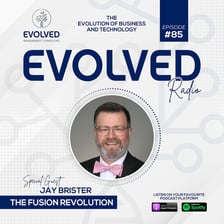
Today is a special episode of the Evolved Radio Podcast. I’m chatting with Jay Brister, Chief Business Development Officer with General Fusion. General Fusion is a Canadian company and one of the leaders in the race to develop commercial fusion energy.
Fusion technology has been around for 70 years but has historically remained elusive. Recently things have changed. Funding of private companies has been rushing into the space as technological advancements are being announced regularly. Today I chat with Jay about the state of the industry and why General Fusions approach holds so much promise to bring the world a clean and safe source of power to bring us into the future of energy production.
Read Transcript
Our founder Michelle La Berge when he created this company, he was focused on not creating a fusion company, but creating a company that produced electricity from fusion. So that fundamental approach of how do you take this wonderful, you know, science of fusion and turn it into a basic commodity that everyone's going to need, right? That's the approach and so that's kind of the practical approach of magnetized target fusion in being able to take this forward and getting it into a commercial space for power plants in the future. Welcome to Evolved Radio, where we explore the evolution of business and technology. I'm your host Todd Kane. Did you know Cisco helps manage service providers directly? Know about the Cisco partner program focused on helping partners combine manage service expertise and service creation with innovative Cisco technology and proven go-to market resources. There's a program option for you. With provider pricing, MDF and marketing resources coupled with Cisco's leading technologies including Moraki, Duo and Umbrella, learn more with the link in the show notes. Today is a bit of a special episode of the Evolved Radio podcast, taking a break from the typical MSP content as I sometimes do to explore a topic that's cool, nerdy and interesting to me as well. Today I'm chatting with Jay Brister, Chief Business Development Officer with General Fusion. General Fusion is a Canadian company and one of the leaders in the race to develop commercial fusion energy. Fusion technology has been around for about 70 years, but has historically remained elusive. Recently things have changed. Funding of private companies have been rushing into the space as technical advancements are being made regularly. Today I chat with Jay about the state of the industry and why General Fusion's approach holds so much promise to bring the world a clean and safe source of power to bring us into the future of energy production. If you enjoy the show, please consider leaving a rating and review in your favorite podcast app. It really helps to spread awareness and bring more listeners to the show so we can share the message with more of the community. Now, on with the show. Jay, welcome to the Evolved Radio podcast. Glad to be here, look forward to conversation today. Awesome. This is exciting for me. I've long had an interest in nuclear energy and sort of the promise that it has for the future. And fusion, I think has always been a long-held promise. Tons of potential and truly a revolutionary technology. This year in particular has been a pretty banner year for fusion as a technology and the commercial hope for it. So far, uh, you know, in 2021, there was over $5 billion in funding for fusion projects. I think there's about 35 commercial projects around the world that are uh competing for kind of taking the trophy on this one. And I think that leads to the excitement in the air really being kind of palpable. And it does feel like this time is different. You know, the the perpetual joke in fusion is that for 50 years, it's been 10 or 20 years away. And maybe if uh to start things off, if you could bring us up to speed on just the technical progression of the technology and sort of the state of the industry with uh sort of those things in mind. Yeah, I'd be glad to. And my common response to that cliche is fusion is now. And I'd like to, you know, be able to so, you know, why do I say fusion is now? You mentioned a banner year last year. So the industry itself is really building on as you mentioned that 70 years of kind of standing on the shoulders of giants if you will, who've been advancing plasma physics and the science around fusion. But I think there are three critical elements that substantiate why I can say fusion is now. I think first is just the advancements in plasma physics. So I think we know more today about the science of plasma physics. We're confirming plasma theory. We've got some of the best simulation codes and analytics that we've ever had. So the science of this is advancing and and we're really beginning to get a salient understanding of the science side of things. And there's global efforts that the whole industry is taking advantage of down this path. Second is what I'll call enabling technologies. So from a advanced manufacturing perspective, from high-speed computing to high-speed digital controls. I mean, we can do things today we couldn't do two or three years ago, right? The ability to do and deliver coupled with the science is underpinned with the third element of that. Which is an astronomical change in funding that's coming into the sector. So when you put all of those together, it means, you know, the science is there, the delivery capability is there. And for companies like us, it's the real ability to go out and hire the right kind of intellectual capital to come in and advance your technology and funding allows you to do all of that. So it just puts the industry in and of itself in a very unique position. So, you know, ballpark is three dozen of these private, uh, you know, ventures that are out there pursuing this. There's half a dozen that are in a in a I'll call late stage VC status as General Fusion is. And we think we're on the fastest and most practical approach to deliver, you know, a fusion power plant. But I think that's kind of a snapshot at a high level of, you know, why I'll say fusion is now and kind of what's really driving this interest. And it's it's I guess the way I put it is getting to the point where fusion is much more tangible than it ever has been. So, projects are starting, big projects are starting. The awareness of where this technology sits, the ability of this technology to fit into a clean energy portfolio in a in a visible, tangible timeline, all those things are coming to fruition. So I feel like it's really coming out of that research stage, right? I've heard your CEO Chris Mauri talking about how, you know, space is a good comparison here. That for decades, space was just not commercially viable and dominated by governments. And I feel like historically, you know, all the research and applications, just the general expense of trying to research this technology was didn't make a ton of sense from a commercial application standpoint. And now that is really flipped in a very similar way in the the space race that that fusion is now getting this level of investment. Because people see the advancement is so far down the line that commercial application is really not that far away. Despite the promises of before, as I said, it does feel different this time, right? No, that's right. That's right. Just a quick sort of technical side note, you're talking about sort of the containment of plasma. And as I said, I've I know enough to be dangerous here. Uh, but I I do maybe want to understand this that the What is the difficulty of of sort of the the containment of plasma? Is this been a limitation of like collapsing the plasma in order to generate a fusion reaction because you have to get in it a perfect shape in order to collapse properly and if there's even sort of micro movements then it just doesn't work. Is that is that the the issue there? Well, you know, so for us and and maybe quickly just a snapshot on our technology, right? So we, you know, our approach to to fusion is called magnetized target fusion. And if you will, I think it's, you know, on one end of of the the fusion development spectrum is is magnetic confinement, which is the Tomac approach. The other end of that spectrum would be laser-based fusion or inertial confinement. And we're kind of in between the two of those. So it's it's it's it's kind of a, you know, we don't have superconducting magnets and we don't have lasers where we're using, you know, electromagnets and electromechanical forces. To create conditions for fusion. So for us, there's a fusion vessel inside that fusion vessel is a spinning vortex of liquid metal. And what we do is we have a array of drivers around our fusion vessel and we control a collapse of that liquid metal that's spinning inside our fusion vessel. And as we collapse this liquid metal inside our fusion vessel, we collapse it in the form of a sphere. And right before that collapses, we inject hydrogen plasma in a in the form of a ring inside that fusion vessel. And it's the actual physical compression of that liquid metal vortex onto the plasma that creates fusion conditions. You know, 150 million degrees C inside the vessel. When that happens, uh it's a hydrogen plasma. The these isotopes of hydrogen fuse, high energy neutrons come out of that and helium. And it's that high energy neutron that for us is going to heat up that liquid metal and that liquid metal is a heat transfer mechanism. To convert water to steam and a you know, metal to water heat exchanger and drive a conventional power plant. So for us, as we've approached magnetized target fusion, we've been developing these constituent components, so plasma injector, working on our compression system and the control systems independently. We're going to put all that together in our fusion demonstration plant over the UK. So kind of going back to your question now, this, you know, this requirement to be able to actually collapse this spinning liquid metal vortex. It's, you know, you talk about the space race, it's really for us. It's kind of migrating away from the science side of things into kind of engineering and operational challenges to advance the technology at this point. So, you know, we had an announcement this week that, you know, our teams have been able to to develop this compression system to be actually able to collapse, you know, a spinning liquid vortex in a very controlled manner, in a very even manner, in the matter of milliseconds. Right, so that that activity is a big de-risking activity for us as we continue to advance our technology and move things forward. So it's a great engineering solution to a problem that people have been trying to solve for a long time and just a great team of folks in Bernaby that are working on this. That's amazing. Uh, so it does bring up another side note that I wanted to ask later as well. But since you mentioned it, I understand like one of the challenges of this is the materials required to contain and manage such a sheer amount of energy and heat is is part of one of the challenges of of this technology. But, you know, perhaps you could help us understand how exactly do you contain something that's 120, 150 million degrees Celsius without it just liquefying everything within a block radius. Yeah, I I think here once again, that's one of the the unique advantages that that magnetized target fusion delivers. As far as a fusion technology. Again, I'll go back to you've got a you've got a fusion vessel and then you've got a meter and a half of of liquid metal that's that's spinning around in there. So when you compress this this liquid metal and fusion occurs, I mean it it's it happens, you know, very, very quickly. And these high energy, you know, so there's a very instantaneous occurrence of fusion. And for us, the inherent characteristics of having this liquid metal inside the vessel. Number one, it acts as a shielding mechanism for the physical vessel itself. So there's longer term benefits where you're protecting that kind of critical piece of the infrastructure. Whereas in like in a Tomac design, I mean, you you you have this thing called the first wall problem, right? And it's exactly what you were describing, it's it's just the degrading effects of putting fusion conditions in contact with the vessel itself. So they're still working very hard on that and you know, using things like lithium to help solve that kind of problem. But I think with with our approach is having that, you know, kind of the twofold benefit of having that as a as a shield. But number two, it's actually that heat transfer mechanism. So our founder Michelle La Berge when he created this company, he was focused on not creating a fusion company, but creating a company that produced electricity from fusion. So that fundamental approach of how do you take this wonderful, you know, science of fusion and turn it into a basic commodity that everyone's going to need, right? That's the approach and so that's kind of the practical approach of magnetized target fusion in being able to take this forward and getting it into a commercial space for power plants in the future. So if I understand that correctly, it's essentially like the magnetized conditions are suspending the products inside and at that heat. So it's not really touching anything, so therefore you can you can kind of sustain that level of energy. Is that right? Yep, yeah, sure. Okay, cool. You also mentioned something that I think is incredibly important and and I think a distinction between some of these different projects that are operating and and in particular for General Fusion. There's sort of twofold ideas or or targets that that people are trying to get to with the technology, ideally, it would be amazing to have net positive energy where, you know, you're you're introducing less fuel than the the reactor actually produces. And this is sort of the the gauntlet or the the Holy Grail of of fusion. But not necessarily what some of the projects are targeting near term and General Fusion is looking for more of a power plant approach. Where you're not necessarily looking for net and positive production outputs, but just a better power source that could fuel power grids and commercial applications and other things like that. Can you maybe touch on the differences in in those objectives in the in the technology? Yeah. So I mean, I think kind of where the industry sits and and our approach to to this is well is because of the nature of fusion. We're able to build demonstration facilities and that's kind of the next big milestone for the industry. And you'll see that occurring as as we go through the the middle of this decade and we can talk more about our project later if you like to. So it's it's about for us being able to actually, you know, take the, you know, our constituent components we've been developing there in Bernaby and design our fusion demonstration plant and be able to demonstrate at power plant relevant scale. So this machine that we're building will be about 70% the the size of an operating power plant. So it's, I mean, it's a 3,000 ton machine, we're going to build in an 11,000 square meter building. So it's, I mean, it's it's it's it's basically a power plant without a power plant attached to it, right? The power producing pieces of that, right? So, and it's about demonstrating that at a power plant relevant scale, we can actually create the conditions for magnetized target fusion. And by doing them at that particular scale, we can then take that data set and actually create that power plant that is going to achieve all of those goals that you mentioned. And also produce electricity. The other big benefit we get by taking this kind of two-step approach. There are some just some fundamental economics around this as well. So number one, we want to do this in the most cost-effective way that we can to take, you know, advantage of the of the funding that we have to get the most bang for the buck out of that. But also as we build this facility, it'll give us a a good baseline for the economics of what our next evolution of the machine will be. So as we go into producing a power plant as we do go forward, it's it's all about the economics of the product that you produce and the ability to do that that's going to be comfortable for our customer's wallet in the long run, right? So we got to meet those goals as well or else we're not going to get there. Right. I've heard sort of your target power plant would be 100 to 200 megawatts. What is the the power output expectation of the the demonstration facility that you're building? So it is going to be just a fusion demonstration facility. It will not be power producing. So it's all about it's all about demonstrating the the technology. So in for example, in our operating power plants, that compression system, it will be doing that between one and 10 times a second. In our fusion demonstration plant, we'll be doing it one to two times a day. I see. It's about really focusing on, you know, taking all of this new power plant scale equipment and validating the magnetized target fusion approach. Right. So it it works, we can repeat this reliably, so therefore we can build something in a larger scale, correct? Yes, perfect. And I imagine there's sort of a continuum that you follow in this that that the the next step would not necessarily be a power plant, but maybe a smaller commercial applications. Like a uh say an industrial facility that would otherwise use, you know, dirty sources of power or other other sort of applications. You could maybe build a a smaller fusion reactor for those industrial applications. Is would that be the next step? Or what what would be sort of the next step after that demonstration facility? What we're doing, that's a great question. And, you know, we're on I'll call it a five-year path towards commercialization of our technology. So just trying to get to the point where the, you know, the designs of cells and the and the technology performance has advanced to the point that we're able to, you know, take this product to market. So in addition to the efforts that we have around designing and delivering our fusion demonstration plant, we're also developing the design basis for our power plant. That will be going on in parallel with the development of our fusion demonstration plant. So when I look, you know, ahead into what's the application of this particular technology in the marketplace, as you mentioned, electricity is there, but industrial applications are there. You know, possibly even marine applications are there. So, you know, so it's it's coming up with, you know, that right kind of standardized product that's going to be there to do what it needs to do for a business application for commercial delivery of a of a technology. But as the technology continues to advance and evolve, especially the benefits of of carbon-free fusion power being realized, you know, I I think there'll be a much broader kind of diverse application of the technology. Um, as it it does go forward. With, you know, the main drivers I think in the marketplace today that the, you know, the biggest kind of collective global benefits are getting fusion introduced into the production of electricity to offset, you know, these these carbon sources that are in the market today. Which are in North America, it's it's one of those things where, you know, sometimes it's it's great to be a consumer of electricity today because it's just so cheap. You know, so but but but underpinning that are some some strong carbon-based components that go into that. So we'll have to go through this this energy transition and see how all of that is going to work. But getting fusion into that mix to become part of, you know, an integrated resource plan and time that as we do go forward with the development of technology. Those are kind of some of the levers that we're having to look at as we look at going forward to commercialize the technology. Yeah, the the green application, the rebuilding of the power grid, those are those are absolutely some things I wanted to I want to hit on. So we'll get to that next. One thing I I did want to sort of hit on as far as sort of the the nearer term commercial applications, one that that I find is really exciting and really promising is water desalination. And I I think um this is not something that that occurs to people, but but the access to clean water, potable water and water that is that is drinkable. I think especially going forward is going to become an incredibly difficult thing to manage for for people in in very particular areas around the world. And the the difficulty with water desalination is that it's totally possible, but it is incredibly energy intensive and not really practical. So um, you know, having a green source of energy, especially kind of a a a smaller scale power source to to do these types of things, I think would be would be really advantageous for those types of applications. Or are those some of the things that you guys are considering as commercial options in the future? Well, I mean, I'll maybe I'll just give you a frame of reference here, I had the opportunity for for several years in the United Arab Emirates. So desalination is core to being able to produce water, you know, for their for their nation. And it's just interesting as they develop power projects, they develop water and power projects together. So you're building a power plant, but also coupled to that is a desalination facility. So what we're doing is we're creating a carbon-free energy source, so that application can be very, very diverse in in how it it's delivered. So the other the other tangential, you know, application could also be hydrogen production, right? So you again, if you're going to do this with electrolysis, you need a clean source of electricity to get green hydrogen out of that. So, you know, on one side of the equation is is how is the energy produced that's going to produce this secondary product. And if you can do that in a carbon-free manner, there's a lot of different applications for the technology that goes forward. Right. Okay, great. So, yeah, I didn't realize that they built those the the power source and the desalination together, that makes an incredible amount of sense and sort of further validates the that as a as a as an application. So that's interesting. So the other one that I that you said I wanted to come back to is sort of the refitting of the green infrastructure from a global power grid. And and I watched a Ted Talk or or a podcast or something recently that I listened to that that really keyed me into something that I hadn't considered beforehand. I I think I knew this, but but hearing someone talk about it really had it resonate with me. And that one of the the major challenges to creating a green energy grid is most of the the sources for solar and wind in particular are in areas that are very, very far away from where that energy would be consumed. And that's a huge issue around how you actually rebuild a power grid so that people that need the energy are able to access that energy in an efficient manner when it's generated so far away. So I think the transmission and the storage of that energy is going to be a critical component of rebuilding that grid. But I also see fusion as a a really powerful source to supplement those high density, high draw areas where you do need a core source of energy. You can't necessarily rely on wind, but you also want to move away from natural gas and coal and other dirty sources. So I I think it's really important that you guys are focusing on the power plant generation as a component for the refitting of the grid. Can you maybe expand on sort of your your your thoughts and the company's thoughts on how you fit into the rebuilding of the grid in the future? Yeah. No, you hit the nail on the head. So it's quite an incredible challenge to find those parts of the world where wind and solar. There's an ideal application. But it's the remoteness of that is usually the the downside and having to create the infrastructure to be able to support that. When when you integrate fusion into uh kind of a going forward carbon-free energy portfolio. And and you and you run some economic models around that to try and, you know, you optimize what is going to be built kind of based on the economics and and eventually kind of that end price to the customer. How do I do this such that economically I'm going to pass those tests that I need to to get to the point where I'm going to be selected and dispatched as a fusion power plant, right? When you introduce our our plant into the mix. I mean, our economics are, you know, right now we're looking at about $50 to $65 a megawatt hour. So, you know, something that's very competitive with coal, for example, in the market today. When, you know, we've done some analysis around that. And I see fusion is just, you know, there's a hand and glove fit with renewables. With what's going on. Because renewables, you know, the cost for that continues to come down, continues to come down, continues to come down. And I saw I think a report just news bite came in this this morning. That was forecasting that, uh, for example, in the United States, that, um, renewables were going to be the largest build out of any energy source in the United States during 2022. So I mean, the amount of renewables is going to continue to increase. But when you when you put fusion into that mix, you get a base load dispatchable source that can complement the the intermittent nature of renewables. The other thing is, you can put it right next to the load. The safety requirements for this particular technology are are going to be very, very different than in fusion-based requirements, right? So it's it's it's it's it's it's a very different technology from a radiological risk management perspective. So being able to number one, you know, put these things close to the load and and and then allow them to complement, you know, that, you know, combating the effects of that duck curve as the wind quits blowing and the sun goes down, what are you going to have to turn on to make up for that to maintain a steady output, but fusion can fit into that mix and actually just kind of underpin it. So when you look at how do I get to a greener grid application. I think the renewables will go where they go. I think the other the other thing to look at too is when you when you put fusion into that mix, it actually is going to offset some of the renewables you would have to build. Yeah, to get to that, you know, to get to the demand side of things. So, you know, it creates, you know, more of an integrated energy portfolio. To be able to be a a truly green decarbonized portfolio. But the other kind of, you know, ancillary benefit that is there are just some very, very significant land use savings that come into play there as well, right? You know, I think one last maybe thought on this one is it's going to be interesting to see how renewables continue to grow because I I think I guess the way I look at it. I think a lot of the the renewable projects, the easy ones have been done. So as as the land use requirements begin to there's a little bit more encroachment, I think we're seeing, you know, both, you know, both in, you know, in North America as well in Europe. It gets getting to the point where there's actually more moratoriums being set on any additional wind. So it's going offshore. And that will have its own set of of challenges to deliver. But, you know, those will be overcome. And we'll have some big offshore wind farms, but we're going to have to complement that with carbon-free fusion on the mainland. Yeah, right on. That does lend itself to sort of where these things are placed and you mentioned that fusion is categorically much, much safer than a fusion reaction. The safety profile is is much, much different. But, you know, to people that don't necessarily understand nuclear physics and and don't are not sort of up on the science of that. The people tend to still be very wary of nuclear energy and I think that's based on technology that was built in the 40s and 50s in a lot of cases. And it's not even necessarily applicable to fourth generation nuclear technology. It's certainly not applicable to fusion. But there's still that that psychological profile or or an issue that you have to overcome with people. You know, I imagine you guys must have faced this and and what are your thoughts around educating people around the safety of fusion? Especially as you're trying to build a demonstration facility, I imagine you ran into some resistance of people saying, no, no, no. You can't build a nuclear power plant in my neighborhood, right? Yeah, yeah. Well, I mean, first we did a global search for about three years to figure out, you know, what's the best place to put our fusion demonstration plant. And uh the United Kingdom was gracious enough to host us at the UK Atomic Energy Authority site there at Cullum. So a very unique set of conditions there, there are already fusion machines there, the joint European Taurus is there. So, you know, it was a very open and easy pathway to be able to deliver that machine, you know, in, you know, as we do go forward and deliver. All the the governance and things we needed were there. So that that made that kind of a handing glove fit. I think as we go forward, I think there's a parallel here that that that we can look at to kind of maybe help kind of maybe gauge where the public sits on this. And as a tool to help the public further understand kind of this new technology that's being developed. And that is we're, you know, how is this new technology going to be regulated? So there really are no regulations for fusion power plants yet, right? But if you go back and kind of look at the set of regulations that are in place. When you look at the kind of the radiological risk that this needed to be managed. It's already written in the regulations, it's just that fusion is not there, right? So as an example, if you look at what's happening in the United Kingdom, they're looking at how do I get fusion technology into my country? So they they looked at the regulations that were set forth for fusion, for fusion, for other technologies. And they've come up with a path forward there where they they basically said, we've looked at fusion. We think the the risks associated with oil and gas are higher than than they are with fusion. So we're going to use our existing health and safety executive regulations and our existing environmental regulations with a couple of clarifiers on that. And that's going to be our fundamental basis to regulate fusion within the United Kingdom. So that's just gone out for a period of public comment throughout last year that closed. And they'll be taking that forward. So it's actually going to be regulated outside of their existing nuclear regulator in the United Kingdom. So, I mean, Canada is looking at that as well, the CNSC has done their initial look at fusion and and how to develop fusion regulations. So that will be forthcoming as well. And then south of the border, the US NRC is having their series of public meetings on this, it's throughout the whole last year, they've been doing that. So they're beginning to move forward and come up with a path forward. And again, if a country's got a nuclear medicine program, if they're doing academic research with particle accelerators, there are regulations that are there to kind of govern that already. So acquainting it to the kind of what's there and and for us, it's it's we're a carbon-free clean tech technology. That's that's what we are. So it's just a little bit of differentiation in there between where we are, what's underneath it, I mean, it's still science that's going on underneath all of this and and being able to, you know, as we do go forward, you know, educate everyone with where we are and what's going on to have a better understanding of the technology is essential. I imagine like the the different groups that are that are targeting some of these projects and doing this the advancement of this science. I assume you guys are are chatting with each other about some of these challenges. Have you ever considered like a consortium that that could help kind of publicly educate people about why fusion is different to to sort of reduce that resistance that you're going to face at some point in the future? Yeah, a fabulous question. And actually to that end, in the United States, there's been a group put together called the Fusion Industry Association. So, it's really the collective almost, you know, global fusion industry and supporting companies that are interested in fusion or the eventual delivery of fusion. And it's exactly those principles that the fusion industry is focusing on, it's focusing on getting the right type of regulations put in place that are the appropriate level of risk to the technology. And number two, you know, what are the FAQs on fusion that we need to answer, right? So let's let's just get that out there. And get it set. So it's a kind of a here's our sheet of music, right? So it doesn't matter if you're in in England, in Sweden or in in in Vancouver. You're going to be singing from that same sheet of music. Right, perfect. And maybe just quickly like to to digress a bit on the nerdiness of the science as well is again, like I know enough about nuclear energy to be dangerous here. But I I don't actually understand, I understand how they're how they're different, obviously, fusion being the splitting of an atom to to produce energy. Fusion being to smash things together and fuse them together. Why is it that fusion creates such a sort of a dirty profile of of waste? Is it the just the the way that the coolant works or or what is it that fusion does not have the same byproducts as fusion as fusion does? Yeah. Let's just well, you know, from I mean, I mean, I'm a I've I've got a background in fusion as well. So when you when you look at, I mean, at a very simple level, fusion is really taking one of the heaviest elements and you're splitting that element. And fusion as a reaction is relatively easy to start. Right. But it's hard to stop. Mm. So right. So it's hard to stop. So there's there are layers of regulations that go around that that govern how, you know, that that fusion reaction. Has has to be managed. And then it's just the nature of the technology, the nature of the fuel and the nature of the byproducts from that. It has its own inherent set of characteristics. So there's a, you know, a whole set of regulations that are put in place to govern and and manage all of that. On the fusion side of things. We're taking isotopes of hydrogen and fusing those together. And we're creating energy and and helium, the byproduct there will be tritium, which can be managed, but it's in such small quantities. So the, you know, the way I would look at it, you know, it's again, it kind of goes back to that nuclear medicine analogy. And fusion, it's it's more so setting up regulations that are focused on kind of the health and safety of the worker. As opposed to the broader health and safety of the public. So it's just it's just the magnitude. I mean, the regulations are there, they're they're risk-based, so they're they're very appropriate for what has to be applied. And for us as we do go forward, it's just kind of wrapping things with a with a with the regulatory cover. That that need to be there to, you know, number one, provide that level of protection that the public's looking for. Okay. So if I understand this correctly, it's the the nature of the fuel being used in fusion reactions. And the fact that you can get it started, but it it maybe a hell of a lot of work to slow it down. Which creates kind of a risk profile. And I guess the inverse is true for fusion is that the the the fuel source is what you're using to to manage the the reaction is fairly benign in most cases. Uh and it's it's a actually more difficult to sustain. The the the. Yes, very, yeah. So it's kind of just the opposite, it's very, very hard to start, but be very easy to stop, right? So that's, you know, it's. Those accident scenarios just aren't there. Right. Okay, okay. I guess looking to sort of wrap up here, um one of the other applications. More on the long term, but I I imagine you guys may have thought about this. But uh space applications, I think in the future would be huge for this as well. Is that certainly the size of the reactor being really beneficial. The low necessity for huge fuel sources. One of the most difficult parts of getting to space is you have to carry all the fuel with you. Which is as an incredible amount of weight. And then not being able to sort of sustain that and keep enough energy on board a vehicle in order to now move around in space. And I think fusion would be revolutionary in that. And you know, anyone who's a sci-fi fan will certainly recognize like any spaceship kind of worth being in in a future futuristic sci-fi scenario is largely running on fusion. So if you guys sort of thought about that or had any type of discussion with people on on potentially testing some of these technologies in space. Yeah. I'll go back to the Fusion Industry Association again, there's actually a space subset of fusion that's very active. So, you know, the things you just mentioned, you know, the development of the technology to be able to support applications in space. There's people that's their day job every day right now. So they're working on that trying to develop that. Right on. I mean, different size and scale of of of a power plant, right? So it's a different application, but, you know, there are, you know, governments putting out procurements looking for. How do we how do we do this kind of thing? So yeah, it's it's something that is active globally. And maybe just to circle back on something you else you mentioned, the fact that you guys can sort of as a byproduct produce hydrogen. And that would potentially be used as a storage vehicle. So you're producing the energy as well as kind of the necessities for a battery for that that energy as well. Is that right? Well, I mean, yeah. It's it's again, it goes back to the economics of, you know, what's the ultimate cost of electricity going to be that's going to drive the electrolysis, which is going to drive the cost of what that hydrogen product is going to be. So it's just continuing to kind of watch how the hydrogen market is going to continue to evolve. And will there be, you know, I think there's some newer technologies that are not based on electrolysis. Where process heat can be used to develop the hydrogen, but if you can do that in in a carbon-free manner as well, that's another application. But again, it's it's one of those things as the energy transition occurs, I think there're going to be lots of of pathways that get explored to see how do we create this right portfolio of of energy technologies. That do get us to the point where we are carbon-free and, you know, fusion is going to be part of that mix and I think as we go forward, it's determining, you know, the best and then the diversity of applications. The technology can fit into kind of to meet the global needs to get us where we need to get to. Okay. And also recognizing that uh net energy production is not necessarily a near-term goal, like I said, it'd be the the ultimate Holy Grail. But is that something that that the industry is is looking for in kind of the the next 20 to 30 years? Like commercialization of using this as a viable production of energy for power plants and and power sources. But then, you know, true net energy output is I have to imagine is a longer term goal, right? Well, it it's. Globally, there there's a lot of research and and development going on for fusion science, right? So in the south of France, you've got the joint European Taurus there in the UK. And then, you know, there's activity in China, there's activity in South in South Korea, there's activity in Japan. So there is a tremendous amount of effort to achieve this milestone and I don't think that it's it's it's it's decades away. I mean, I think it's something that's that's going to happen, it's going to happen probably again sooner than we think with the amount of effort that's going into some of these really big projects and some of the kind of again, kind of this wave of announcements that's been coming out. As technology develops, you know, movements do go forward. And again, that's to the benefit to the collective benefit of the whole fusion sector because we're all getting to take advantage of what they're learning. What's being delivered and how you can take that and put it in application. And we can get commercialized. So maybe to wrap up, it's it's really, you know, the the government work that's been going on. It's just been phenomenal. The advancements in science have been phenomenal. But it goes back to that that little SpaceX analogy you mentioned a little bit earlier. So it's really, you know, you had decades and decades and decades of NASA doing what they did. And the science there and the technology was there. But then you needed to instead of move at the speed of government, you needed to move at the speed of business. So that transition. I think is where we are today with fusion. So it's migrating and integrating those types of applications together to move things forward. Right on. Very, very exciting times. I really appreciate you coming on. And uh and bringing us up to speed, Jay. This is all awesome stuff. I guess one finally, you guys are actually looking at this as a commercial application within 10 years, like within the decade, right? Yes. Yes, our our our goal is to get our fusion demonstration plant. We're going to put the shovel in the ground for that a little bit later this year. And then that machine will go operational in 2025. And we'll further our our power plant design throughout the the course of this decade with a goal of getting a shovel in the ground by the end of this decade. And commercial operation early in the 2030s. Amazing. That's our development timeline. Yes. All very exciting stuff. I think you guys are are certainly one of the the leaders in this industry. And I'm sure you would agree. And really exciting, especially cool that you guys are are local as well. I I definitely like to spotlight some of the amazing research and and development and entrepreneurship that's going on in BC as well. Being kind of where I'm from. So really neat that you guys are local as well as one of the world leaders in in the race for fusion. Now, very, very excited to be here. We've just got such a a great talent of young scientists and and engineers. That are part of our company as well. And, you know, we're growing and expanding, so we're about to move uh out of Bernaby. Into a new expanded headquarters down at uh down at YBR. So, you know, the growth continues and we're, you know, we're almost doubling in size, tripling in size. So, you know, this going forward by minimum forest and be able to, you know, I guess the brain trust is going to be in Vancouver, right? That's that's where we are and that's where we're going to grow this from and really and truly for the benefit of the world. Awesome. Appreciate it, Jay. Thank you. Yeah. You bet.
The Ops Brief
Weekly MSP ops insights, in your inbox
Frameworks and field-tested tactics for service-delivery leaders. One email a week.