Episode 8 May 10, 2016
ERP008 - Unleash Culture w/ David Reeve
45:07
I think the biggest thing is the attitude that we have towards people working in other cities, and a lot of times I see out of sight sort of a little bit out of mind.
Show Notes
David reviews with us his eco-system for a healthy culture and we chat about the evolution of corporate culture through the years. We also touch on some of the key struggles that business owners deal with when trying to develop a healthy culture.
Read Transcript
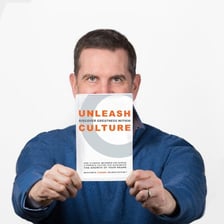
Welcome to Evolve Radio where we explore the evolution of business and technology. Today I'm speaking with David Reef, the founder of Unleash Culture. Very excited about this episode because how corporate culture affects your business and overlaps with effective management is very close to my heart. David is on a mission to help businesses design, implement and sustain a powerful culture. David has worked with dozens of brands that in turn have racked up a laundry list of industry awards. A couple of even made appearances on the venture capital reality show Dragon's Den. Culture is a hot term in business lately and with good reason. Corporate culture is now key to recruiting talent as well as retaining great people. So if you're just getting started in your business or you've been around for 10 years, it's important to understand how your culture is viewed both by internal staff, but also by clients and potential clients. Today, David reviews with us his ecosystem for healthy culture, and we chat about the evolution of corporate culture through the years. We also touch on some of the key struggles that business owners deal with when they're trying to develop a healthy culture. So let's get into it. Today we have joining us David Reeve from Unleash Culture. Welcome, David. Hey Todd, great to be with you. Your focus is around the business and particularly business culture. Do you want to give us a sense of where unleash culture came from and the business that you're in? Absolutely. Uh and I appreciate the opportunity to share uh some great insights with your audience. Uh so a little bit about the evolution of unleash culture. Um, you know, I've always been one of those guys that throughout my my career, I've I've always I like to say just sat in the front row and uh and taking great notes and always been a student. And from day one, from from my early childhood, actually going back to my my very first uh job, uh was at with was with Keg restaurants. And I was just absolutely enamored with the culture that they had built there. And this is what I was 14 years old. And really since it was my very first job, I thought all company cultures should be like this. It was just everybody wanted to work there, everybody wanted to dine there. People would come in and just have the most amazing experiences. And I just got enamored with culture at a very young age. And so wherever I was, I just always paid attention and I was always just looking for ways to wherever I was working, um, to think, how can we, how could I make things kind of like it was in the keg? And so, I used to just sit in the front row, take tons and tons and tons of note. and master what I like to call a concept called R&D, which is rip off and duplicate. And I'd highly suggest everybody become a master of that because all the great ideas are out there. All you have to do is pick and choose the ones that that makes sense for you. Yeah, that's great insight. It's it's interesting you mentioned, you know, corporate culture and your view of that from, you know, some time ago in the keg. you know, when you're a young lad and spending some time in the restaurant industry. to me, culture is something that's more modern term in a lot of ways. It's not something that I think people put a lot of active effort and thought into their business historically. Do you think that that's true or is it just sort of a different view or a different awareness that people have in modern business how culture affects them? No, I agree with you 100%. So, so if we go back to say my keg days, back in the day, we really we really measured culture from the perspective of how much fun we were having. Um, I'm not even sure, you know, back in the businesses back there if there was such an emphasis put on making money and turning profits and things like that. It was mainly just how much fun were you having and that was sort of our benchmark. Today, now culture has evolved beyond what I like to say, you know, a lot of people consider culture like beanbag chairs and beer Fridays. And I think those days are are gone now. Um, and in this competitive landscape that we're in, there are so many elements now that go into building an overall culture. And I'm happy to walk you through those. Um, more so than just we got cool paint on the wall, cool slogans and beer Fridays and beanbag chairs and, you know, bring your dog to work and things like that. It is really now become uh the essence of what business is all about and really it's a much broader label than just sort of the fun perky things that we used to associate with back in the day. Yeah, I definitely see that certainly from a tech space, the Silicon Valley influence was huge in this that you know, there was the the corporate cafe and uh you know, free free sodas and uh you know, the gym membership and all kinds of it was really largely around perks. and I think that that that you like you said is kind of losing its luster. There's a lot of expectations around, you know, what could and should be provided and it's less about the environment and more about sort of the interactions and the people. So the the shift from culture being, you know, these tangible things that are provided as perks and more about the interaction and, you know, how you how you how you work with your peers and the experience is probably coming back as more to the forefront, right? Very very true. And I also think too, a big what's changing it today too, of course, is a huge shift in in the demographic. Um, you know, I I mean, obviously I'm in the the boomer category. So, you know, where our focus was 10, 15, 20 years ago, um, is very different than what, you know, the uh the the different generations are today. And they have different needs and they put a different emphasis and a different value on on things that we necessarily didn't do that. Um, but I'll give you an example, you know, just of how I think culture has really evolved over the last while. To your point, yeah, I think I think to attract, first of all, there's there's a there's a huge demand out there depending on the space you're in. But let's just use this space, the technology space. There is a huge, huge demand for talent. And there are so many companies vying for the same talent. So let's just say you're a developer for instance. It is, you know, virtually impossible almost to hire a developer because they have so many options out there. and so many people want them. And so the days of just you said, the corporate cafe, this, that, the perks, they want more and more now. But what we're also seeing is when when you interview people and you talk to people and people say, you know, the culture here sucks. They're not really talking about the cafe and the beer Fridays and things like that. There is something that is missing in the overall rhythm by which the business is being conducted that they don't feel a part of. And uh if if you like, I'll just walk you through sort of those five areas that I that I've sort of discovered that make up great brand and corporate culture. And you have to keep yeah, you have to keep all of them in balance, otherwise you'll lose people. The first one is what I call culture of alignment. And that is knowing your purpose and your core values and aligning everybody within the brand um around those. And and what we're talking about here really is the character side of your brand. It it's it's amazing to me how many cultures out there still continue to put an emphasis on the skill side of their brand and what they do and how they do it. which is important, don't get me wrong. We we need skill or people will not follow you as a brand. But equally as important is the character side. And people want to be aligned with why they exist, what is the cause? I'm not talking mission statements or vision statements, but actually, why do we exist and how do we articulate that and how do we use that as a rallying cry? So that's sort of the first piece. And when you start to align people around your why and your values, there all of a sudden becomes an emotional connection to the brand that wasn't there before if you just focused on what you do and how you do it. It's almost like we're all now working for a greater cause and and people like that. Wouldn't you also suggest that the the that that appeal around the culture is just as relevant for external business as it is for the internal relations as well? I've certainly seen a lot more conversation around the character of businesses versus, you know, the what their their speeds and feeds and their offering is, especially in the tech space, which is so commodity-based and and competitive. 100%. Yeah, you nailed it. And I always say to people when I'm when I'm working with brands, I always say to them, really when you when you go out to build a company or build a brand, you're really in the business of doing one thing. And that is telling your story to the world. You tell your story to the world for two reasons. One to become an attractive brand to do business with, so just what you said. The second piece is to become an attractive brand to work for. There's two parts to telling your story. There's the skill side of your story which most people focus on. And then there's the character side of the story which people are not expecting really when when they engage your brand. But it's the character side of your story that emotionally hooks people into that. And then there's two parts to telling your story on top of that. There's the part that we tell as a brand. And we can generally control that through PR, marketing, social media, but then there's the part that other people tell. And we call them brand ambassadors. And so the question we always ask ourselves is, who's telling our story and and what are they saying about us? So to your point, absolutely, if culture is if we if we equate culture as being aligned with the character of your brand, and we know character is very, very that side of your story is equally important to tell as the skill side, then you're right, culture plays a huge role in attracting brands into that want to want to do business with you. Because let's go back to purpose and core values. If if that company that's thinking of using your services can see an alignment between their value and their purposes and your value and purposes, now we have an incredible foundation by which to build a relationship on. And and that's another thing I think that is really shifted in the whole business world and the the culture world is so many businesses in the past have acted in a very transactional way. Even when it comes to building culture and the way to treat their clients. And now people are expecting an experience. Um, an end-to-end experience. And character is is certainly the anchor of building that experience. Right. So I I pulled sorry, I pulled you off track and we're step number two. Yeah, step number two then is is so let's just agree that we've got a great culture of alignment and everyone's aligned on the purpose and values. The second piece that I often see missing in brands and which are is is so important is what I call culture of clarity. And that's getting everybody in the brand aligned with what are we going to do and how are we going to do it. And there's um, you know, in other words, the strategic plans around the company. One of the things I'm very big on is that when you ask someone to join your brand and and be part of the family, we're going to ask them to give a significant portion of their life to helping build the business. I think we owe it to them to be as transparent as we can and involve in involve them every step of the way with respect to um, the goals of the company. How are we going to um, you know, achieve them? How are we going to measure them? Um, you know, what are they responsible for? And and really get them involved in that and get them crystal clear on, you know, where are we headed. It's pretty shocking when you go into most companies and you you approach anybody and you say, do you know the top three goals for the company this year? Most of them will say no. They have no idea. They just really come in and exist and come in at 9:00 and leave at 5:00. And I think if we're going to have our people become more and mature our people and mature our culture, that's a really huge piece of it is is being as transparent as we can and teaching people the business of the business. So now, once again, now we've created great brand ambassadors because now they know what to go out and look for, um, when they're out and about as far as lead generation and different things like that. The third piece is what we call um is is called our culture of accountability. And I read somewhere in a Harvard business review that it was like 10% of people in companies actually hold each other accountable. Uh, which is pretty shocking. And nothing will kill culture faster than uh people not holding each other accountable or being held accountable. So, um, what we do is we like to go in, we like to work with when we work with the brands, and we set up a rhythm by which, you know, daily, weekly, monthly, quarterly, annual rhythm by which we hold people accountable. It's easy to hold people accountable when they're aligned with the purpose and the values. It's also easy to hold people accountable when they know exactly what the goals are of the company are, how they're going to be measured, etc, etc, because now and and we like to use one of the ways we like to do this is use um scorecards. You know, 90-day scorecards. So take your annual plans and break it down into 90-day plans. And then give everyone a 90-day scorecard and then just set up a peer-to-peer review process with that. And and that way we just everyone knows. Not a lot of time goes by beyond reviews. We know if we're on track, we're off track, we can be a resource to each other. But the overall lift to accountability is huge. And once again, we're gaining that transparency into what's working, what's not working, and and that just bodes well for overall culture and then the whole brand just gets this incremental lift. Yeah, this is a a piece that I'm I'm really big on from a management perspective because often the conversations that, you know, managers and business owners are having with their staff are not in an objective nature. If they don't have measurable metrics to to guide their performance, the conversations around performance problems are are a bit ethereal. And it's a lot easier to to point to specific metrics saying this is failing. You know, that's that's an easier conversation to help the person and support them and help rally around that that issue than it is to just sort of say, you know, I'm not happy with your job performance. And there's not a lot to go on with that. You know, it's it ends up feeling much more like a personal attack versus, you know, a business issue that together you're trying to resolve. Absolutely. And and and if and if we've done our homework properly and we've told our story properly, then let's just say we both agree that we're going to start attracting some really good people to our brand. And if we've taken the time to hire what I like to call A players up front, then if someone is failing, then usually it's going to be something within our system because we've hired an A player. And A players generally don't fail. Uh so to your point, which is a great one, yeah, now we can get to the root cause of what's going on. And you're right, it doesn't it doesn't turn into a character assassination. Um, it turns into how can we be a resource to each other? Uh, you know, it could be something as simple as maybe we've identified the wrong goal. or the wrong set of tasks to achieve the goal or the wrong way of measuring the goal. But through this meaningful dialogue and by having forms of measure and and a frequency of that, uh we can get to the root cause and fix it pretty quick and make sure that the person remains an A player, right? Um, the thing is, you know, it's interesting when you get into hiring people, you know, we we categorize people sort of into three categories, you know, A players, B players and C players. And, you know, A players usually remain A players. B players can become A players, but they can also become C players. And we should just never have C players on your team. They just they just kill everything. Um, but having this level of accountability just gives an overall incremental lift to the brand. It's fantastic. The fourth piece is what I call culture of continuous improvement. And that's where we want to create a culture where we end up with a group of people that are problem finders and solution thinkers. And we actually want to celebrate and reward people for finding challenges and coming up with solutions. And really running their segment of the business like they are the CEO of their own brand. And if we can get that collective energy going throughout the brand, then of course we're always, always, always looking for ways to improve. The other thing that that sort of does is it it kills what I often see in brands is this sort of culture of fear. where people are afraid to make suggestions or people are afraid to bring things up or people are afraid to want to make improvements because they think in some ways they equate that to almost walking themselves out of a role or out of a career opportunity. And so if I just leave things the way they are, we don't spend a lot of energy fixing them, then I'll always sort of be gainfully employed and I can just continue doing what I'm doing. And really that's the worst type of culture to have because it's fear-based. And so by embracing continuous improvement, by saying to people, go out and find things that are wrong and let's fix it up, it just prepares us so they can take on other roles, other opportunities. Um, and actually at the end of the day, we may actually be able to hire less people because we get more efficient, which means we can pay our people more and etc, etc. So, um, culture of continuous improvement is huge. And then the final piece is just the whole culture of inspiration. And, you know, how do we have really inspired people walking through our door every single day? And a big part of that is what I like to say is brands need to focus on what do they have their people becoming as much as what do they have their people doing. Um, most brands unfortunately focus on what do they have their people doing, which is uh, you know, tasks and things like that. But if we spend as much time developing the character of the person, and as much time in in making them become more than they thought they ever could be. We take care of the becoming, the doing will always take care of itself. And so this is where we start to get into more of a deep personal level with people and help them advance their career. Even if their long-term vision of a career isn't with our brand. That's okay. Let's teach them everything that they need to know to go out and be successful. And the only thing we ask in return is that during the time you're with us, you just bring your A game every day and give us your best. And and we'll just we'll just have that great relationship. And so when you start putting those five elements together, the alignment, the clarity, the accountability, the continuous improvement, the inspiration, you start to build a rhythm within your brand around culture. And so when someone comes to you and says, you know, the culture here sucks, what I always like to dig in and say, well, what area of these five isn't in balance for you? And usually it's more than one. Usually it's two or three. And they just don't feel inclusive. Um, they don't feel valued, whatever the case may be. So some slight adjustments to those areas, and and putting some of the systems and processes that we have in place, starts to get this ecosystem back in balance. And uh, yeah, and and so, you know, you just get a better overall lift to the brand and and so culture to me, uh, don't get me wrong, I like nice offices and slogans on the walls, but it's evolved more into a management system uh and building a rhythm around that than just the fun perks and the, you know, corporate, you know, cafes and things like that. Yeah, the accountability and the inspiration pieces are are pretty central to to me as well. I I have worked in a in a lot of businesses where those uh systems have been in place or not. And it's pretty dramatic the difference that you see between those systems existing and when they are absent. Inspiration in particular, being able to motivate people is often what people struggle with a lot. And, you know, just being able to to sit with people and understand what they're working towards can often be one of the greatest strengths for retaining your employees if they feel like they're being valued and that they're they're they have some trajectory. And they're they're spending some time to learn things as they're working and they're not just showing up to work. I think that's uh been a huge piece that I've seen success with in managing teams in the past. Agreed. And and you know, if you I mentioned it earlier, so if you think of that everybody that engages your brand, whether it be a client using your services, that's the benefit of your services or a team member that's decided to join your brand and and help deliver those services, everybody has a life cycle with your brand. And there's a starting point and there's an ending point. And within that life cycle, there are what I like to call a series of touch points. So, if we get out of this transactional thinking and more into building an experience and ultimately an end-to-end experience, so let's just take a team member, you've nailed it. So let's sit down with that team member and say, you know, we don't know what the finish line is going to be like with us with you. Um, that probably to be determined. So, but let's let's bring the best out in each other while we while we're here. And you're absolutely right. Um, an inspiration comes in in many ways because back to our earlier point, we can have the coolest offices in the world and we can have perks and beer Fridays and all sorts of things. But if those other elements are missing or people just don't feel inspired, then of course they're going to leave and seek that out somewhere else. Those elements that they're missing and put less emphasis on the cool walls and things like that and more on the human touch. And I think that's another big shift that's happening in culture over the years is it's become more humanized. Um, it it has a human quality to it. And that focus of that quality is again is is the foundation of it is is building the character side of not only the person but the brand as well. And and less on um what we do in the skill side. So, um, absolutely. I mean, we we've built some brands in the past where you know, we've had less than 1% turnover, we've had 150 applicants for every single role. Uh we've had people just knocking on our front door going, I know you're not hiring for the next six months, but I just want to work here one day. Um, so clearly the story that's been was being told about these brands out there in the marketplace was attracting like-minded and great people in. But it was the inspirational piece that they were really after. They wanted to leave each day feeling that uh their contributions were valued, but also they were growing as a person and and that is, yeah, you're right, you've nailed it. That is so huge. The other thing that I've seen a lot of is is uh managers and business owners that are identifying issues in their culture and trying to make adjustments. They often make what I view as a mistake is trying to dictate what the culture of a company would look like and really trying to force that down from the top. And certainly there has to be an aspect of executive sponsorship and a real belief from, you know, the business executives around what the the culture is supposed to look like and having a vision for that. But I also feel and and you know, I I obviously love your opinion on this is that culture can't be forced. In a lot of ways, you know, you can plant those seeds, but you have to sort of work with it and germinate it and give it the right conditions, but ultimately the culture of an organization is in a way organic because it's dependent on the people that you have and how they interact with each other and a lot of environmental factors. Is is that something that you you subscribe to as well? Oh, 100% me. Yeah, I mean, here's the interesting thing about um leaders that I've always found interesting from a from an entrepreneurial perspective. We love entrepreneurs and we love them for the risks that they take and the brands that they start and the vision that they have. Um, the the beauty of an entrepreneur is the fact that they are entrepreneurial, everything I mentioned. The curse of an entrepreneur is quite often what they want to do, especially in these fast-paced growth companies, is they have a tendency to want to get through something, not from something. And so something doesn't feel right and it doesn't look the way I wanted or feel the way I wanted to be, so I want it fixed right now. So, in other words, because they've got an itch that needs scratching and they just want it scratched. And so, yeah, you'll they'll just impose their ideas on people uh or throw something against the wall and and and hopefully it sticks. Now, they've satisfied the itch and being entrepreneurial, now they're on to something else. Um, but what happens, what it ends up happening is it is perceived as a bit of a shiny object. And then people are like, well, that didn't stick and it's done and what what's the next shiny object? And we're going to be on to something else. If you can still encourage them to come up with these great ideas, but be much more inclusive with respect to how we're going to roll it out and get everybody involved at every level. Um, because the big thing is is we have to be able to sustain it. And let like you said, let it grow organically. Let's try some things. Let's see what worked, what didn't, but let's get input from everybody as opposed to just pushing it down because I've got an itch that needs to be scratched. And 20 minutes from now, I'm going to be on to something else. Um, you're you're setting yourself up for so much more success long-term because now it will start to take a life of its own. Um, and now all of a sudden, you you've also demonstrated that this is the type of culture we have here. We're inclusive in our decision making, we're inclusive with the ideas we want to share, and everybody has a voice and everybody can breathe life into it. So, yeah, it's um, you know, I call it the shiny object syndrome, whether it's culture or anything else, it'll actually kill your culture fast because it's just again, it's just that itch that needs to be scratched. The problem is, you know, they're on to something else and and and there's no sustainability factor whatsoever. So you've uh you've mentioned that uh you know, the the businesses that you work with, they often have these deficiencies within these spaces and you help them kind of identify some areas that need shoring up. Uh when business owners and managers approach you to to engage your services, what are some of the typical issues that they are fighting with? It's kind of I'm sure there's kind of a a few specific ones that tend to pop up more often than not. What do those look like? Yeah, and and usually they approach me because they've they've reached a reflection point in their business where to be honest with you, what when they started out and the vision they had and what they thought it was going to evolve to hasn't materialized. And and something's just not right. But they can't quite put their finger on it. And so, you know, it really just boils down to one of those if not for the most part, most of those five areas. Um, you know, that we we talked about earlier. And and just it's just out of sync. You know, something's out of sync. And I would say probably one of the biggest things, the biggest common thing is, um, a lot of the brands I work with have been run as a start, you know, they they they were started out as a lot with an entrepreneur. So two common themes and they're they're startups, but now they've reached a maturing point of their brand where they want to maintain the startup energy, which I'm a big fan of it. But now they need some structure. Because sort of running it by the seat of our pants and making decisions on the go and just kind of building it by default isn't working for us anymore. Um, and in yet in some ways, they're a little afraid of putting in structure because they don't really want it to become a corporation. But they recognize that if they continue to run it this way, it's only going to grow so big. In fact, it's going to start imploding in on itself. And so of course, the key is when we start to work with them is we bring in this structure, but we keep the startup mentality. So I would say that is is one of the biggest um is one of the biggest things is that they recognize that what they've done to date has taken them so far, but it isn't going to take them to the next the next level because it's just it just it's just way too chaotic. So this this is something that I I'm I'm particularly interested in because especially in the tech field, a lot of companies are looking at um, you know, this holocracy model and a flat management structure and a flat hierarchy where, you know, it's just teams and you can organize yourself organically based on, you know, the needs of the organization. And this kind of runs, you know, contrary to what has been a fairly long history and granted some of it's antiquated in management strategies. But, you know, you you're kind of uh touching on the the the bridge between those that, you know, the there is a certain energy, there's a certain uh rhythm that gets built in a startup where it is a flat team. Do you feel based on kind of your experience and what you've seen that there there's an application and a place for that or, you know, ultimately is there still a need and a requirement for for some hierarchy and managerial structure? Yeah, I I think to me there is still a need, the short answer. I've always uh subscribed to the the structure that um we're all at the same level, we just have different accountabilities, right? And and if each one of us uh brings our A game and and and uh, you know, does our part, the whole brand uh works. I but I still think it really depends on the level of maturity that you've developed across your brand. I've seen brands try to go with that system that you you talked about earlier. The challenge with that is is that they they haven't spent time maturing their people to be able to be self-sufficient that way. And so, um, I still am a big believer that people like to be led. Um, but in a very constructive, uplifting, inspirational, let's do it together sort of format versus a push down. But I still believe that that for brands to hit hyper growth, things like that, I think structure needs to be in place. Um, but it can be done, um, you know, for instance, let's just take an example of environmental, the way you lay out your office. It can be done in an open office environment. I know many brands I've worked with where the CEO sits in the middle of the call center. And uh, you know, so there's there's sort of a equal footing that's going on there. Um, you know, different things like that. So you can do it in a way, but everyone knows this person's a CEO, but their approach and their attitude and their style is very, very inclusive. I don't think it's wise unless you've got an incredibly mature team, um, just to let people sort of do a free for all, you know, it's sort of like the inmates running the asylum. I I um, I I just I see what I see happening in those things and I think we've seen examples of that in the US with some big brands is that eventually it just starts to implode on itself. because there's just not that level of maturity to be able to say, these are the foundations by which we have to run the business every single day and a level of accountability. Um, that that takes a certain type of maturity to be able to be a part of a team like that and run like that. So I yes, I still believe hierarchy is involved there. Yeah, I think you're you're you're absolutely right that there sometimes there's a bit of a blend and perhaps there's areas where it does make sense, but uh, you know, where I see this coming from, often people are fighting against what they consider micromanagement. And I've often said micromanagement is one of the most misunderstood and misused terms related to management. Uh micromanagement is often mis confused with just good management. But it is much more about the approach that how you're working with the staff. If it's, you know, very autocratic and and and uh very regimented and the hierarchy is there in order to separate the staff from, you know, the management and creating these divisions, then it will be toxic and that that's I think what a lot of people are sort of fleeing from. But, you know, if it's done in a way that is uh, you know, true leadership rather than, you know, regimented management and uh and and scrutiny. And more kind of a checks and balances and and providing focus for people, it it act it functions a lot differently. One of the things I've often said to people is, you know, you want to you don't want to necessarily hold the person's steering wheel while they're driving, but you at least want to have barriers on the road so they don't drive into the ditch. And there's a big difference between how those two approaches feel when you're being managed and when you're managing staff. Absolutely. And and you know, going back to something we talked about earlier with respect to um, you know, having people become um, more than they thought they ever could be. That also applies to your your entire executive team, leadership team, management team. Um, you know, I've always I've always said to many founders of companies with their leadership team, their senior leadership team, you know, I said, you should be lying in bed at night if they're A players and thinking about how you're going to lock this person up. Um, for as long as you can because, you know, with brands, the rise and fall of the brand will often goes with the rise and fall of the leadership. And if we don't have inspired leaders walking through our door every day, and even backing up further, there's a lot of people that just shouldn't flat out be in leadership roles, but somehow have found their way in there and usually that's they've been appointed there because of some fear-based decision by the owner or by whoever it be. But if we give them some sort of misguided sense of power, uh and they're not happy coming to work every single day, they're actually taking out a lot of their frustrations and feelings on the people that work with them. And and that's not great. So, you you raise an excellent point. I it is is absolutely a must that uh as much energy is spent on developing our leaders, getting them inspired, making sure they're happy, career pathing them, um, because when you think about it, we're now trusting them to go out and lead the lives of other people. And and and you know, they're actually um also, they have to be held accountable because I've often seen in brands that they're holding their people to a different level of accountability than they're being held to as well. So it's got to be top to bottom, bottom to top. Um, otherwise it just it just doesn't work. But let's not forget the leaders and let's not let's continue to make sure that we grow and mature them into the very best versions of themselves. So they can in turn take that energy and grow others into the best versions of themselves. So another thing that we're seeing in businesses a lot more, particularly technology teams is that there's this geographic distribution and, you know, there's uh people working from home, there's people working in other cities and other time zones. And not that this is necessarily new, but it's certainly more the norm in everyday businesses. And you don't have to be, you know, a global uh Fortune 500 company to have offices, you know, in the UK as well as North America and maybe Australia as well. How do you feel that that plays a role in the development and the maintenance of culture? It obviously has to create a lot a lot more uh sort of moving parts and does it create a much more difficult uh application for that culture and does it create a regional culture or how does that apply in a in a distributed workforce? Yeah, and and I think it's almost depending on like you mentioned how your brand is set up. So for instance, if you have um a central office in a city and you offer people the opportunity to do um, you know, some telecommuting uh from time to time and I think that's a nice um, a nice, again, it goes to the level of maturity of the people. I think that's a very nice thing to offer people, although I think it's still very important that people come to the office if they're in the city, because if you had everyone in say you had an office in a city and everyone was telecommuting, you you're you're going to you will lose a little bit of that collectiveness. Um, there's just something about seeing other humans every day and being around them and things like that, I think is super important. But I do think that if you're in a a situation where you're you have um offices in other cities or you're using services in other countries, through the use of technology, um, you can certainly make them feel as inclusive. You can certainly make them feel um as part of the brand. Um, we've seen this where we've had offices in multiple cities and through using a variety of technology, people feel like they're literally in the same room with you. Um, it all goes back though to I'm going to go back to this over and over again, to the purpose and the values of the company. And let's start there and are we hiring people uh based on those purpose and are we hiring them based on the values? Because if we again get that emotional connection of people understanding why we exist and what our values are and we're hiring A players, um, it doesn't really matter what country they work in or what other city they work in, there is an emotional connection that we all share and then through a use of technology and various social fields and things like that, we can stay connected that way. Then if we implement all the other systems and hold everybody accountable and to the same level of standards. So, say you and I had a company, Todd, and we were in Vancouver and then we had another, you know, in Toronto, there's no reason why we can't through technology do a twice a month scorecard review and have people part of the daily huddle and connect them all through that. I think the biggest thing is the attitude that we have towards people working in other cities, you know, and a lot of times I see out of sight sort of a little bit out of mind. And we can't do that. Uh, we've got to make them as inclusive make them feel as inclusive as if they were sitting across the next the next table from us. Um, I think it's actually fantastic. I I think more than ever now, we can build a global brand faster and quicker. And actually, I think what's really cool is if we go to other countries, we can get other people really involved with opportunities that they may not have had before and allow them to become more than they thought they ever could be, um, probably based on what they might have in their country, right? So, I think there's some huge upsides to it. But if you're just talking in the same city, I think it's important to get people in the office um on a regular basis just so that we don't lose sort of that human contact as well, uh, you know, face-to-face. Right. So David, you have a a book entitled Unleash Culture. And this is a bit of a summary of of your experiences and some of the approach that you take in this. Do you want to tell us a bit about that? Yeah, uh, yeah, I appreciate the opportunity to talk about it. Yeah, it's it's a it's a book called Unleash Culture, uh how to design, uh implement and sustain a um a powerful culture that accelerates the growth of your brand. And really what it is, Todd, is it's just it's all everything I've learned over the years from just paying attention. And um, uh, certainly reflecting on a couple of the big brands that we built across Canada, but just all the lessons and I've built it out like a playbook. Um, and it walks through the ecosystem and then also what I have another thing called the culture energy cycle. And it's just step-by-step how to go through each one of those areas. And uh it's sort of the best bits of everything I've learned and and then quite a bit of my own stuff that I've developed over the years. And I've just put it in a very easy to digest playbook. Um, and it doesn't really matter where you're at on your brand company culture building journey. Um, you could be a solopreneur just starting out and there'll be some great value in there. Those to be some things that you'll take away. You could be 15 years into your journey and at a reflection point. There'll be some things in there that you could make you pause and reflect and go, you know what, why don't we give this a try? So, yeah, I'm very excited about it. Uh, it should be coming out in the next couple of weeks. Um, we're just in the final, final technical review, if you will. Um, and uh, and we're ready to launch here. And it'll be available on Amazon and uh in hard cover and also ebook as well. Awesome. Yeah, I'm excited. So, David, you're also a a fairly regular speaker at uh uh events and summits and things like that. Do you have any speaking engagements coming up that people might be able to check out here some of the uh knowledge that you can drop on the crowd? Yeah, um, not in the short term. Uh, in the fall, there there's some things that we're working on. And there's some opportunities that we're we're working on right now with the book coming out. Um, but I think the the next big one for me coming up uh is I'm hoping to do a um a TED or a TEDx talk next year. Um, I was approached last year to do one and uh I didn't uh at at the time it was a little too corporate speaking. Uh, but we've come up with some good uh some new topics that I think will will resonate well with people. Um, more on the um becoming side and building culture and and and more around purpose and values. So we'll look forward to that. Um, but in the fall, we've got a few things that we're we're starting to line up that um I can't really chat about just yet because uh they're not cast in stone. But we'll certainly uh people want to check out my website at unleashculture.com, we'll uh we'll be posting them up there. Okay, so great. Um you can bait the hook and get people interested. So unleashculture.com and uh can they find you on on Twitter or any any other any spots to follow you on social? Yeah, so other than my website and then of course there's the blog on there. Uh and my Twitter handle is just at Unleash Culture. And um you'll I really all I tweet about is culture. Uh you won't uh hear you won't get tweets from me saying that I just walked into a Starbucks coffee shop. Um, I just uh strictly keep it to business. Um, then those are those are probably my two two uh main areas. And then my website has um a really extensive blog on on um I got about 52 or 56 posts up there just on various ways to build culture and and leadership development and and things like that as well. Um, yeah, so check out those two areas and and you'll you'll get some good knowledge. And then like I say, the um there's a page sign up on my website where you can go and just register your name. And I'll uh I'll let you know when the book is out and you can sort of be front of the line for for getting that as well. Excellent. Well, I appreciate your time, David. I I I could personally spend another couple of hours digging deeper. I I already have a list of questions that I would love to continue to ask you. But in in order to to keep this in a in a listenable time frame, we'll we'll wrap it up. But really appreciate your time and your energy for uh speaking with us and uh anything else you'd like to throw out there for for everyone before we part? No, I just really appreciate your time too, Todd, and everything you're doing and and um uh it's been awesome being a guest on on this and uh yeah, I I'm certainly value uh our relationship. So thank you for that as well. And yeah, you know, just to anyone that's listening to this and and you might be at a bit of a reflection point in your culture and it just doesn't feel right. Uh, you know, the thing to leave you with is just, you know, it's never too early or late to slow down, take a deep breath and and pause and, you know, just say, okay, are there areas of our ecosystem that that could use a bit of a refresh? And if so, uh, gosh, reach out to me and I'd be happy to have a coffee with you and and give you some more sound advice and hopefully point you in the right direction. Awesome. Thanks, David. Appreciate it. Okay, my friend. Take care. Take care. Bye-bye.
The Ops Brief
Weekly MSP ops insights, in your inbox
Frameworks and field-tested tactics for service-delivery leaders. One email a week.