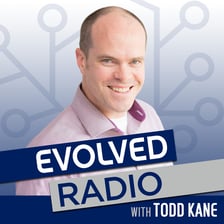
Episode 3 March 30, 2016
ERP003 - Blockchain Industry w/ Alex Sterk of Blocktalk
34:56
I think traditional banking is a lot like Blockbuster and this thing is like Netflix, it's just going to take over way faster than anyone realizes.
Show Notes
Alex Sterk is passionate about all things blockchain. For the past year, Alex has been interviewing members of the blockchain and fintech space on his podcast Blocktalk. Alex and I talk about the power of the blockchain, some of the cool projects he's come across in his interviews and what the future may hold for this technology.
Read Transcript
Welcome to Evolve Radio where we explore the evolution of business and technology. My guest today is Alex Dirk of Block Talk, a podcast that interviews the people involved in the blockchain tech space. This is a fascinating area of technology that is quickly becoming recognized as carrying the power to revolutionize finance, automation, contracts and countless other spaces. Some have even suggested that the blockchain technology is the next internet. Many people have heard about Bitcoin, but most people don't know that the underlying power of Bitcoin is the blockchain. which has applications far beyond currency. This podcast is quite technical in nature, but I try to keep it accessible, even if you're not a blockchain tech nerd like us. So I hope you enjoy it, here we go. So welcome to the show, Alex. Uh yeah, thanks for having me, Todd, it's a pleasure to be here. Um, yeah, I've been super excited about the space for the last uh year. I've been doing a lot of cool interviews and um, uh, yeah, meeting lots of fascinating people. There's so much going on in this space, I really uh, I I I I can't uh even grasp how much is going on. But I'm doing the best that I can, I guess. Yeah, it's really a fast evolving space. Uh I think I'm one of the the podcasts that I listened to recently from you, a couple of people uh kind of joked about the fact that, you know, if you've been around for a year at all in the in the Fintech space, it it it's pretty meaningful. And uh the the sort of the evolution and how how quickly the the companies are coming in and and sort of disrupting certain industries and and really changing the space at a breakneck pace is really fascinating. So it's it's been fun to watch because it's ever evolving kind of on a daily basis. Uh yeah, like I've said numerous times that like uh Bitcoin and cryptocurrency is going to make for a great movie one day. But uh right now it's it's like the best TV show going on. Yeah, very cool. So I guess Alex, if you could, how did how did you end up in in uh the the Bitcoin space, how were you attracted to it originally? Um, well, I first heard about it in 2010, but uh it was just kind of beyond my scope of uh comprehension. But uh it wasn't until I had someone approach me in like November 2014 asking what I knew about it, uh that I I really started to read more about it and understand really what it was. And um, I guess it was March, I kind of made the decision after going to the bank for uh numerous times and having them ask me if I was interested in meeting with an investor. I was just like, well, I think I want to take investing onto my own uh uh onto my own abode and um I I decided to actually get um hooked up with an exchange and uh buy my first Bitcoin. And just the entire process of trying to get my fiat to an exchange. I knew like that thing was like going to be big and uh that not a lot of people are into it yet just by how difficult it was for that initial transaction. Um, and then within um, I guess 30 minutes of buying my first Bitcoin, I had bought in three other alt coins, uh just like transferring off the exchange and uh getting into other currencies. So right away I was um um fascinated with like how to diversify my portfolio and learn about all the stuff that was going on because as fast as Bitcoin moves, all these alt coins are are exponentially growing faster. So for the people that don't really know the the Bitcoin space, the alt coins, you know, Bitcoin is is kind of got its uh foothold in the pop culture psychology. The the alt coins are are sort of other coins or other currencies that have been developed through the same uh ideology, the same technology as Bitcoin. But don't necessarily operate off of uh the same blockchain as it were. Is that is that is that correct? Uh yeah, that's correct. Like some people have some Bitcoin purists have referred to alt coins as uh test nets. Separate networks that uh have their own tokens and uh have their own developer teams and even their own value. So they're much they have much more freedom to actually like trial new technology and uh new ideas. And be a lot more bold with uh the way they're thinking and uh yeah. The the technology that they're trying to develop. Very cool. So the the development of the alt coins is is interesting. You know, the the Bitcoin is is the most sort of established cryptocurrency. What would be the motivation for you know, creating those alternative coins? Is is it, you know, the that Bitcoin doesn't serve a certain purpose or they're trying to advance the technology or kind of all of the above, I guess? I think uh Bitcoin's use case is probably to be the port for fiat. Like um for Canadian and US dollars to come into the space. Um, but these other currencies can do other things like um uh like smart contracts. Ethereum being um one of the newest ones, but like uh there are more anonymous currencies. Uh currencies that are developed for uh specific purposes like micro tipping or for uh gaming. Or even like um uh resources like uh computer storage. Uh so like you could actually um buy a token that uh to pay what's called a farmer to store your data and um on someone else's hard drive. It's it's a and it's like a much better version of like the cloud. Like the cloud is just someone else's computer. But if you're you're storing your stuff with Apple, it's basically a big bank vault that's someone's going to want to hijack. But like uh the way this other currency works, it's kind of like you're you're storing little chunks of your data encrypted in someone's safe in their house. So there's multiple redundancies, it's far cheaper. And uh it's less likely to be compromised. So that that one that you're speaking there is uh storage IO, correct? Uh yes, yes. Yeah. Yeah. Yeah. I've been looking at that one as well. So uh there was a long time ago there was a a cloud storage, I don't know if you ever came across, I believe it was called Simform. Uh and I discovered it when one of the uh the D-Link or a NAS that I bought had uh Simform built into it. And it was a similar idea in that you you give up a portion of your NAS to share with others and therefore you get free storage. And everyone kind of pools their storage and gets distributed. So I've always been really fascinated by that that idea. So once I saw uh storage IO come up, I was like, oh, this is cool. This is kind of what I what I was looking at originally. One of the things, I don't know if you've if you've sort of uh you've talked with these folks, so you may have some insight on this. But the uh, you know, is it is it really feasible to store sort of that much information? Or is it the the the cryptocurrency and the the the blockchain acts more as uh sort of a a contract engine in the center and then the storage is used or does the storage actually sit on the blockchain? Because when I first heard about this, I was worried about, you know, the idea of storing that sheer amount of data inside of a a traditional cryptocurrency was not really feasible in my mind. Well, yeah, so a blockchain is very much just a ledger, so it's not really the blockchain itself is not where you're going to store the data. But it can be used as a token um to provide value to the network, like a medium of uh of uh commerce. Uh so it enables you to build these robust systems that don't require any human intervention and and can be a lot more proven. So like there uh there's another coin that I'm really interested right now. It's grid coin and uh they're basically uh the Boink network. Uh B O I N C where you can contribute computing power towards things like uh uh protein folding or looking for stars uh like analyzing data. They basically uh created a way to prove how much you were or uh taking that proven value of your contribution and then uh pay you out based on um your contribution. So they they bootstrap this uh existing network of commerce and they actually gave a token that is much more liquid and movable. And it doesn't exist on the Boink network, it's just uh it is like a decentralized network. So that's where you can see uh these tokens like um I guess bootstrapping existing economies and stuff. Okay, cool. Yeah, so the the the cryptocurrency, the blockchain, the ledger, sort of all of these things are are interchangeable in some degree. They're not necessarily the same thing. But that that ledger acting as sort of the central record is a lot thinner and then the the traditional database functions and the storage still sit somewhere else or the computing power if it were, right? Uh yeah, that's correct. Um. Yeah, so storage is uh they're they are developing a different way or probably something very similar to that software that you had. Um it's just they're intertwining the cryptocurrency in it in a much more I guess modern way. So obviously, you know, you've been doing uh the Block Talk uh podcast for a year. Uh you're you must be coming across some some really cool technology, some really cool people in that space. Uh what are some some of the other ones that that uh have popped up that you find really fascinating? Uh let's see. Uh most recently I did an interview with um uh Augur, which uh they're the Ethereum project for a prediction market. And then uh I also interviewed one of their competitors, uh uh Bitcoin Hivemind. So prediction markets seem like they're going to be the next kind of big wave in uh how markets are going to be affected, like how traditional finance is going to be shifted. Um because now you you actually can have um futures markets that are much more liquid and much more um reactive to events and um actually like predictive of what's going on. Um because their manipulation is um uh dialed back a lot more. Um just due to the fact that uh no one is in control. So prediction markets, Augur and Bitcoin Hivemind being the two that I'm I'm watching very closely. Uh one of the other ones would be um uh decentralized marketplaces. So open bizarre is one that kind of comes to mind uh to a lot of people uh where they're kind of taking a model very similar to Bit Torrent. Where you host your store and uh and then uh other people can come uh to yeah. Purchase from your store. So the uh you have to go after individual users to shut the entire network down, which for law enforcement agency, it's just not feasible. So the network will always exist. And then there's also they have a competitor as well in the altcoin space uh Siscoin uh S Y S. Uh and they're actually putting everything on their blockchain, so it's it's it's a different way of approaching the problem. And in my opinion, I think they're there's a bit more incentives for them. And uh they were just uh added to Microsoft's uh Azure platform. So yeah, those those are four four projects that uh I recently interviewed that were very very satisfying to talk to. You mentioned um Microsoft's participation in the in the cryptocurrency space. Uh and the you know, they're uh going pretty heavy, they they're have a blockchain as a service on Azure. Is that that is that the case, is that that the the name of the the service that they have? Yeah, yeah. Uh so it's essentially allowing like um their cloud services to be used for a lot of these blockchains. So say you wanted to host a node for Siscoin, but you don't want to type your computer all the time. You can now uh pay for their service and have uh like one click access to adding a node. So I can create uh one Siscoin node very easily. And uh um so I think in this way Microsoft is kind of um uh getting a head start on the competition. Like before Google or Amazon um can uh set up their cloud systems to do this hosting for people. Yeah, they're definitely ahead of the curve. Um I think a lot of people recognize that um blockchain and and Bitcoin. As it were, um the cryptocurrencies as a whole are are very much in their infancy. I've heard some people refer to um the people that are involved in uh blockchain technology. At this point are the fringe of the fringe, we're really not anywhere near mainstream adoption. So it is interesting to see that Microsoft has picked up on this space so early and are committing uh some resources to it, you know, without without a sort of a lot of what you would call commercial application at this point. It's so much of this is still in development. But it really lends sort of credibility to how how uh how powerful the development of of these technologies is going to be. You know, a lot of the um uh financial banks, uh hedge funds, uh lots of these guys in the in the financial markets are starting to recognize the the development of of Fintech. And originally probably saw it as a a bit of a threat to their business. But now are actually starting to see the value in it uh for for the the evolution of their business as well. So the the mainstream adoption is is coming, I think a lot faster than than certainly I would have recognized. It's been been interesting to see that that the the pace of that adoption as well. Yeah, and I I think they they really understand that um. They have a fundamental flaw where it's like the settlement time is an issue. Whereas at the end of the day, the bank doesn't really know what they own. Um, they they would have to clear up all their books. So like there's a huge lag that kind of uh settlement kind of goes across the system and has to be cleared through the top of the bank. So in a way it is almost like a a pyramid scheme of technology, like everything has to go through uh like one central authority or one trusted authority. So the this blockchain idea, this decentralized consensus, it it's going to help a lot of people, maybe starting at the bottom, but now the guys at the top, they they're even understanding like the second and third tiers. They're like, oh, well, this is going to help us just as much. So. The the private blockchains will be coming and uh they're already in development. I've already seen a TD business card that said a blockchain consultant. So uh it it's very cool stuff. Wow. That's cool. So the uh one of the other spaces you mentioned um, you know, helping people sort of on the bottom or the top. Uh one of the spaces that I've heard talked a lot about is the application for the the Fintech technology. Fintech technology really having an application in, you know, parts of the more remote world like Africa, Indonesia. Um more uh places that that don't have sort of the more traditional infrastructure. Uh you know, I've heard use cases around in uh African countries where the the cell phone providers actually function as a bit of a bank. And everything that they do for financial transactions is is managed through their phone and comes out on their on their their cell phone bill. Uh which, you know, is is sort of this this strange application of what's available and uh and to act as a payment service. Uh and I think the the I've heard a lot of talk about how the blockchain could really be applicable in those spaces where people don't really have bank accounts at all. Let alone access to uh to to sort of the savings network or uh the traditional um uh civic bank infrastructure as well. And you know, if they have a cell phone and then, you know, they have some type of service and if they have access to a blockchain, then it really lowers the bar for entry for financial services. And that's a huge, huge opportunity, not only for the people, but also as a a business opportunity for those folks as well. Well, yeah, I think in uh in North America we take uh our banking so for granted. Just how I guess um cost effective and available it is for us and how many options there are. But like uh as you say in in places in the world like Africa, like they're so hard pressed for banking. And like uh a currency that is um uh usable and extremely liquid that it's almost like things are naturally occurring. Like this is what happened with uh M-Pesa. Where uh a company was allowing people to trade cell phone minutes and then someone was probably at a fruit stand and didn't have enough money. And they're like, well, what if I just gave you cell phone minutes? And at that point like a digital currency was just created. So this is like the technology um just bleeding through. And uh uh yeah, cell phones are are just the first step. And I think um what we're going to be seeing now is traditional banking is a lot like Blockbuster and this thing is like Netflix, it's just going to take over way faster than anyone realizes. So before we got to the the the formal part of the interview, you mentioned that that you were uh involving yourself in something uh Fintech application in the agro industry. Which I found really fascinating. You want to touch on that one as well? Uh yeah, so I recently moved back from Vancouver uh to my family farm in uh Ontario, Canada. And uh uh my goal right now is um to see how I can make the agriculture, at least in the dairy farm, dairy industry far more available and uh public. And I feel like the blockchain is probably a really good um application for that. Because. Right now the way dairy works in Canada is we are a closed system, quota-based supply management, so um just like I mentioned that banks don't really know how much they own. Like there's this committee that uh manages how much milk is produced in Canada and is consumed and they're trying to keep that ever fine balance uh through this quota management. So I thinking with smart contracts uh and um uh the reporting and um with all the parties involved and digital signatures. That we can have a really uh robust system that's fast reacting and actually is far more cost effective than this traditional um system to uh manage our milk supply. Uh which is uh and this will stem out to other uh areas of food production. But uh just with my involvement in dairy, I think I'm poised for a great position here to actually uh do some changes to the space. I I I expect that one day you're going to see um QR codes on on your dairy product and you'll be able to see the the processor that uh uh produced it and uh what milk truck uh it was shipped to uh from. And what dairy farm it came from and uh yeah. What day it was produced on. So you get you'll get a lot more information than your um uh your expiry date. So I this is the information I'm hoping to bring forward. And uh yeah, there there there's a lot of people very interested in it. So it's it's it's happening quickly. That's really cool. You I'm sure you've heard of uh the product uh provenance that's being built on on Ethereum, right? The the uh ethical sourced um manufacturing and verification process. Yeah, I'm actually currently in interview uh or email process to try and schedule an interview with them. But uh they are someone that I I'm very interested in uh working with. Because uh my my technical expertise is only so much and if I could find a team that I can work with and kind of uh lead the way. Then um yeah, I'm all for it. So uh Providence is definitely on my hit list. Yeah, because they they what they're doing sounds very similar to to kind of uh the components of that you would want in the system that you're building. Is it it provides sort of that value chain and all identifies and and categorizes all of the the providers within that chain. And there I think there's a lot of really real world applications for that because especially when it comes to food production, people more and more are are aware of, you know, um they they want to know where their food comes from. They want to know that potentially it comes from an ethical farm, that there's some certification processes that are happening, you know, is this actually free range, is this actually organic? Um so the the verification of that uh in some type of open system is just as applicable to food. As it is potentially to to manufacturing and to clothing and and all of those other systems. So I I see a lot of uh a lot of similarities between those, is that that similar to what you would understand? Uh yeah, yeah, exactly. Like uh because from my personal opinion is that I feel the whole organic movement is more of a marketing scheme than anything. Um there there isn't enough accountability or um uh yeah, uh publicity of like the actual stuff that's going on. Um like the uh inspections that we we get a random inspection every year. And uh I I feel like if the public could actually see the results of those, it would be far more beneficial. But um like food management um is something that really needs to be robust and fast reacting. Like if we get a a meat recall, um you want to know exactly the the so-called taint of uh where um it all the food has come from and what's been interacted in the chain. So immediately things can be red flagged very fast. And right now that all happens in the back end, but if it can happen on a more public forum. I feel like it's going to be a lot uh safer for the food, like uh where yeah. You might get a a ding on your phone saying, uh a recently purchased item uh is on on um on an inspection list. So. This is um uh where the technology is really going to shine. Uh the other portion is um counterfeiting, so as you mentioned manufacturing goods. Um right now it's a billion dollar industry of counterfeiting going on in electronics and like consumer like handbags and everything like that. So we're going to see it grow beyond food with just all the products that we have are going to have like this production trail and signatures from the original supplier. So you actually know what you're buying is an Apple iPhone and not like a Chinese knockoff or your Gucci Vuitton bag. Yeah, it's cool. It's uh this is what I really found fascinating once I started to peel back the covers on on at the time was just Bitcoin. And and discovering sort of what was underneath first understanding, you know, the cryptocurrencies and the technologies that it that underlay that. And then understanding the blockchain and the the sort of the wider applications for that was it really sort of bent my mind. The potential change that this could bring to really anything and that you know, your your use case is a perfect example of that. Sort of average conversation you would think, well, farming, you know, how how would, you know, a cryptocurrency technology be applicable there? And, you know, the example that you gave is, you know, we just went through kind of the list of, well, it's here, it's here, it's here, it's here. So it's it's really interesting to see how quickly any type of industry can adopt sort of this verification system. And um the use cases that can be established for uh for those applications grows exponentially, limited only in part by the imagination and how it could be applied. And I think that's a big part of why this is such a growth space is that uh you are only limited by your imagination. If there's some type of of contract or ledger or any type of record uh for information, there's an application around the blockchain. Yep. And um I'll I'll say again with uh the dairy industry like being one of the more progressive uh industries in terms of technology, like everyone right now has like these uh fitness trackers and everything. Um we've had uh ankle bracelets on our our cows to track uh temperature and movement around the the the farm to uh to find out their health and everything for the last eight years. So this is all like uh technology that was kind of pioneered in agriculture. And like it kind of trickles down to uh uh a more consumer level. So it might be that like uh the the farmer is going to have more um blockchain technology before the average consumer does. But yeah, this is uh permeating through everything. Like being that this is such a a radical shift in the way computer science is done. The decentralized consensus is a is a massive change on on the entire front. Very cool. So the the farmers originally brought us our food, now they're bringing us our technology. Yeah, yeah, I hope so. Cool. So I guess uh what do you see for kind of the future? You know, you've you've um you've been dipping into the industry and really sort of getting deep to understand the the the products and the projects that people are working on. What do you see sort of the or the course in the next couple of years in the progression of this technology? Um, I think it's going to be um a lot in the public sector. So like uh government systems are going to be phased out. But also like uh what what's something that we all interact with every day that we all share and what a lot of our taxes go to? Well, it's the roadways. So when you have the advent of something like self-driving cars coming along where not only are consumers are um um are sorry. Residents of a country using um these roadways more often. Now you have much more companies. Um. So these self-driving cars are going to be these mobile computers, these Wi-Fi hotspots. They're they're going to be nodes, they're going to be miners. They're they're going to be reporting on um all the events that are going on. So uh I said like these self-driving cars are probably going to end up being like police officers. Like uh where you could get a tip uh of uh the ticket that you issued to that guy who just cut you off. Or uh or like you could be bidding on um a parking space before you even get there to uh kind of have a rationalized demand. So like you you're going to be seeing a lot more I think uh uh this technology coming uh uh in terms of like highways and uh city streets. Uh like uh just the uh the public sector roadways and whatnot. So that that's an area that I'm I'm seeing a lot of potential growth. sort of the ubiquity of the the uh the technology will really surround us, right? It it'll be interesting to see how much of how much of this has to be interacted with versus it just kind of happens in the background. You know, you hear a lot of people talk about the rise of the algorithm and how much of our lives are really uh determined by algorithms. You know, that are for a large part invisible to us. And I think uh it'll it'll be interesting to see sort of the the level of play that that then has uh as the the necessity for those algorithms. Really becomes uh an exponential growth and how much do we have to sort of touch these things and manage them. Versus they just kind of really happen and we forget that they're they're occurring in the background. Uh yeah, pattern building will definitely be a large portion of our recorded future. I I guess uh we're we're coming into a a time in in human history where. Pretty much everything is recorded. Like um 10 years ago like celebrities were talking about the fact uh uh it's like, oh. So you mean everything I do now is going to be recorded and uh saved for all time. Well, they had that kind of epiphany moment of like, geez, like um like everything I do is going to be recorded. Uh but now like uh we as consumers or we as the average Joe are are going to have this um the same sort of uh recording of all of our lives. Like uh where every moment is going to be calculated and measured. And uh through that, we're we're going to have a lot more measurement and predictability going on. So I mean, a lot of people would apply kind of these nefarious things to those ideas, right? That you know, the computers are always watching me and everything that I do is somehow recorded in some database somewhere. And the the video, all my emails and you know, there's this certain level of paranoia around how prevalent technology is in our daily lives. Uh do you think that that that becomes less of an issue as as people just become accustomed to the idea that these things are there, these things have been there for a long time and it's never really caused me any grief? Is is it a generational sea change that, you know, the a younger generation is just simply more comfortable with technology and it's it's uh it's ever presence in their lives? Or do you think that that there'll there'll be some issues there? Well, this comes down to the question of uh the right to privacy. And I think uh privacy will always exist. Like if I go up north to some cottage uh with no technology with me, then yeah, I'll be completely private. But uh in our normal interactions, we're going to see a lot more of uh of this um recording uh to a blockchain. Or uh to to the the internet. Um, but uh what what I've really realized with Bitcoin, like a lot of people have now said like, oh, well, Bitcoin's not really anonymous. Everything is recorded. It's like, okay, yeah, so that makes Bitcoin a terrible thing for criminals to use because there's all this evidence. But it makes it a perfect thing for um charities to use. Uh because it allows you to be so public and so uh uh build such a reputation. And if that's all the main issue, I think humans have always had is uh building credit. Like uh reputation is just such a huge part of our lives where we have to have this trust of built upon other people's trust. And um it it if we can uh all, I guess, have like this um built history. What whether it's like our uh a conscious history or if it's unconscious history. Like um it it's going to benefit us all greatly. But the other thing I want to expand on here is um uh being that this is public. Uh now we're all on a level playing field. Now like uh governments will have to will be on this public blockchain. Like nefarious actors, like the people that we are looking for, uh they're they're going to be public as well. Because like um what happened recently with the discussion over who is funding ISIS. Well, Russia and China go to the Swift network and say, we want to see the data, we want to see where the money's flowing. So like they have to request that data. But if we're all in this public space of uh recorded history, well, then we're all able to audit each other. And I think humanity as a whole will then identify the nefarious actors. Yeah, that's kind of lends itself to the idea that, you know, if you want to participate in the modern world, you have to accept what that means, right? Exactly. And and I know it seems like a a very um uh terrible thing to say is like, well, I have nothing to hide, so therefore I don't care. We'll always have that some form of privacy, like there there will be the the area in your house uh where I think you can have that privacy. Or um you'll be able to kind of escape. But at the same time, yeah, in the public uh areas that we live in, in the cities that that we want to uh to live and interact with each other. Uh privacy is it will be evaporated. Uh it's an unfortunate thing to say, but there there's no way you can interact with other people and not have privacy and have privacy. Yeah, yeah. It's uh it'll it'll always be a a bit of a delicate dance until, you know, as some people suggest. We just get to the point where everyone knows everything about each other and that's sort of the accepted part of life. I don't know that we'll ever necessarily get that far where it's it's kind of this this true idea of, you know, essentially telepathy that, you know, the the hive mind idea. Um it probably goes pretty far down the slope of of reaching that. It's that's arguably in the far future. But not too far future. Uh it'll be interesting to see how how cultures definitely adapt to that, right? Exactly. Yeah, yeah. Like uh we're already seeing kind of this radical shift in um in governance and in uh even how like religions are treated. But uh yeah, I think uh we're on like um. This kind of event horizon, like we're in the middle of this uh uh uh exponential curve, you know, right. Uh where it's coming from. Almost absolute zero and then going to almost absolute infinity, we're we're always on that kind of fringe. But I feel like this is kind of the halfway point. And this is these are the reasons people find this space so exciting is that it, you know, they they they call uh Fintech. And and sort of the cryptocurrency space the next internet because it really has a fundamental capability to change the world. Both from a cultural, a technology and uh human interaction space. And uh you know, it's it's not just about, you know, fancy internet currency. You know, this technology will revolutionize computing and cultures, I think. Yeah, Bitcoin is very much like a three-sided triangle. It's uh a revolution in politics, it's uh a uh a paradigm shift in technology. And uh it's um setting us on a better trend in terms of economics. Because uh this whole approaching um uh 21 million, I think it's kind of uh what we're going to be seeing with um uh automation in our production. And like how the GDP essentially needs to stop, like uh or stop growing, we need to find like an equilibrium in GDP. So this is like my my general thoughts of Bitcoin, it's just three main things that it's going to kind of set us on the right path. Well, it'll be uh incredibly interesting to watch and uh we'll definitely follow the events in the news. And and keep tuned into uh the Block Talk podcast for more insights on the projects and the people that are that are changing the world as it were. Uh yeah, I'll actually mention that uh next Tuesday on March 29th, I am uh doing a podcast with uh Vlad Zamfir of uh the Ethereum project. He is in charge of the uh Casper fork. Um and uh yeah, I'm super excited for that. And then I have Augur coming back on for their beta very soon. Um so yeah, look up uh Block Talk on podcast or on uh YouTube and uh you can follow me on Twitter. Um I'm Alex_Sturk, S T E R K. And uh Block Talk is Block_Talk. And uh yeah, that's pretty much uh my stick. All right, awesome. I appreciate you taking the time, appreciate uh the the effort that you're putting into uh into the industry. And uh it's great chatting with you. Thanks, Alex. Yeah, thank you so much. Okay, take care.
The Ops Brief
Weekly MSP ops insights, in your inbox
Frameworks and field-tested tactics for service-delivery leaders. One email a week.