Episode 15 October 6, 2016
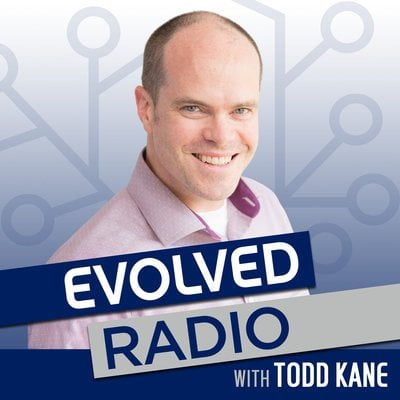
ERP015 - Modern Sales Process with Rob Malec
36:17
The role of the salesperson isn't anymore to be the holder of information or inside information, simply because all that's on the internet.
Show Notes
Rob Malec is an author, consultant, active keynote speaker to the business community and business columnist. He is the President of Businessworks Consulting Inc. Based in Vancouver British Columbia he has been helping his clients increase the revenue their company’s generate while operating more effectively as an organization since 2001.
Read Transcript
Welcome to Evolve Radio where we explore the evolution of business and technology. Today on the podcast, I'm speaking with Rob Malik of Business Works Consulting. Rob has been working with organizations to improve their revenue generation for over a decade. In addition to his consulting work with clients, Rob is also an author and an active speaker. Today we explore how sales is evolving in the digital age and what makes a great salesperson. Rob also gives us some great actionable advice on how to improve your sales opportunity inflow. So grab a notepad and get ready to learn from a successful sales veteran. If you enjoyed the show, be sure to subscribe on iTunes, Stitcher, or wherever you get your podcast from. Also, be sure to check out the webpage evolvedmgmt.com/podcast for show notes, links to my guests, and to check out previous episodes. Now, let's get started. So today we have joining us Rob Malik. Thanks for coming on, Rob. Thank you very much for having me. All right, today we're going to chat about the sales process and how sales is changing in modern business. And I think this is going to be really interesting with a lot of great insights on how business is changing and and how technology is impacting the sales process. So really looking forward to your insights here. Awesome, happy to share. So how do you feel that sales is evolving in modern business? Well, it's been very interesting for me to watch over the course of the last five years I've been doing more and more and more work in the high-tech space here in Vancouver. And interestingly, what is old is becoming new again. In that, um, you know, initially companies were saying, how can we close sales and generate revenue in an automated way, how can we set up our websites to guide our buyers through purchasing? And what they're finding is that, you know, you really can't replace the human touch. And more specifically, that people still need some help in thinking through their purchase decision. And that it's not simply an information-based decision. It's really a left brain, right brain thing. So people will shop in a left brain way, what are my options, what are the features of those options, what are the prices? But then when it comes down to the actual purchase and, you know, typing in their credit card number, there's always that hesitation, you know, that thought is, is this right for me, am I overpaying? I'm familiar with that. Yeah, or the the price seems kind of low, am I going to get the quality that I think I want and I need? And so people hesitate. And the conversion rates they were finding were were quite low. And so with the high-tech companies I'm working with now, and you know, I work with startups, I work with those who have millions of dollars in revenue. I work with those that have tens of millions in revenue. And they're finding that, wow, we got to talk to people. And help them think through are we the right option for them now, are we going to be able to deliver the value that they're after? In the way that they want to receive it. So it's it's been really neat to see the pendulum swing. That's really interesting. The so I guess the the you touched on a couple of points that technology has an enablement role both for the purchaser, but also for the seller. And can you chat a bit more on on kind of both ends of that, uh, I imagine technology enabling selling online and and that virtual purchase to potentially accelerate. The sales cycle, but the importance also of of technology and its role in the the sales team. The CRM, VoIP, analytics, all of that information. How how does all that that play together in your view? Right. So the technology on behalf of the buyer, you know, to to state the obvious, buyers often have as much information, sometimes if not more, than those who are selling and it's fundamentally changed the role of the salesperson. And if there ever was a notion there was some sort of power dynamic where the salesperson held some power, that's completely shifted. Um, the role of the salesperson isn't anymore to be the holder of information or inside information. Um, simply because all that's on the internet and people will arrive at the site where they're looking to purchase something with that information in mind and in hand. And so the role of the salesperson has shifted to being that of a navigator. So imagine the two of them are in a car, the salesperson might have thought, you know, many years ago they were in the driver's seat. Um, and the passenger was in the in the navigator seat to the right. And now it's it's completely flipped where the buyer is in the driver's seat. And the role of the salesperson now is to help them navigate through their decision, is this the right product for me or service? Is it going to bring the value that I need as as the purchaser? And so, you know, the seller needs to be very aware of the value they can bring. They need to be very, I think, skilled to be successful at diagnosing what buyer needs are. Because sometimes buyers will show up and they know they need something, some buyers may have a burning need that will be satisfied right away. And others, the need isn't burning enough to incent a purchase. And the role of the salesperson isn't to persuade or to push, rather is to help the buyer come to grips with, well, what is the depth and breadth of what I truly need, and then help that buyer connect dots. Um, around what the seller has to offer. So flipping to the CRM side, you know, if the dream a few years ago was have a buyer show up to a website and convert into a purchase straight away with fewer or no touches. Now the role of CRM is really to be two things, most effectively used. One is a rear view mirror as to what happened with each client interaction with a particular client along the way. What information was garnered, how did we get to know that client better in their needs? And the next is a windshield in terms of, well, as a seller, for an individual interaction, what is it I need to do in my next get together on the phone or face-to-face with this client to help them think through their purchase decision? And then if we take a step back for a salesperson running their territory or the business in totality, it helps them wrap their head around where exactly is my business in terms of revenue generation? How much do I have in raw opportunity, how much do I have in opportunity I've been working on, how much do I have that's close to turning into money? And what are my conversion points or rates rather between each of those points? And if the conversion rate is good, how do we make it better if my conversion rate is bad? Well, what's going on inside of that so I can improve it and become more effective and efficient in generating revenue? So that at a very high level is the role of CRM for sales people and for companies today. So the the importance of the technology and the process as well as the people. How would you rank the importance of the individual, the kind of that that salesperson that has knowledge in their head and a a bit of a an intangible? Or is it really just down to process and and uh managing a good sales methodology? Would you say one is more important than the other? I uh, is one more important than the other? I I would say that, boy, I I think they're both neck and neck. And and you can have success with both. But limited success. And so if you have a sales process that you have clearly defined, um, you know, down to the minutia level. And you think, I can take someone who is green as grass with no experience and, you know, set them at the desk and say, just follow, you know, step one through 50. And if you do it frequently enough, you'll generate revenue. Uh, I've seen success, uh, in that way. It's very non-creative, generally that's not that fun. And for the employee, it's not that engaging. And but having said that, if you work the the mechanics of the process and the numbers, you'll have success. And you'll capture the sales that you should capture, meaning those buyers that come to you with a well-defined need. And they say, look, here's what I'm after, can you give it to me, is the price right, yes, let's go ahead. Uh, on the flip side, you can have someone who's a natural and who has that knack of working with people and helping them get to yes. And they'll close the sales that they should get as well. Uh, and sometimes if they're really good, as much as the people who are following the process. The companies who do the best in my experience and what I've seen is they have. People who are skilled in working with buyers who also use the CRM as the foundation of their business. So as a repository of information, it helps them be more efficient and effective in in working the sales process that's being defined. And imagine it is the palette of paint. And then if they have sales people who do have that knack to be able to listen to people, diagnose what their needs are, uh, and prescribe solutions. Those are the those are the artists and those are the people who will use that palette of colors to paint a beautiful picture which turns out to be a happy buyer at the end who purchases and then will repurchase and will refer their friends. So to expand a bit on that idea, something I I'm always interested in is is the behavioral profile. And and the aspects of someone's someone's work and and how they approach their their work with with other people and their potential buyer. Do you find that there's a certain personality type or behavioral profile that is more suited or or tends to be more successful in sales or is that sort of not as relevant and and anyone can kind of be coached to be a great salesperson? Uh, well, I think more the former than the latter. And uh what I've been learning about that has been really interesting to me and quite counter to what I would have said 10 years ago. Um, as far as successful sales people, it's usually, well, it's consistently. Certain traits and characteristics that make them successful, the traits and characteristics will turn into behavior that's observable. And so the challenge for the uh manager or the company who's hiring sales people. Is of course in an interview process, you don't really see the selling behaviors. And so you need to try to understand how is this person dialed up? What do they care about, what don't they care about? What do they like doing, what do they not like doing, so that we're getting down now to personality traits and characteristics. And so in general, successful sales people, um, you know, and often they'll be hired. And they're straight out of school or straight out of a non-sales job. Um, but the things we look for to try to predict success, uh, in general terms. Um, you want somebody who is results and achievement oriented. So asking a question in an interview process that's something like, tell me about things that you have achieved in the past. How did you work at them, what did you achieve and to what level and how did it go? The people who are, um, dialed up to be achievers, they'll have something in their life. Be it sports or something in their personal life where they'll say, yeah, I did this thing and I worked at it over time. And I was named captain of the team or I was MVP or. I got the lead part in the play, whatever that might be. And those are people who are focused on achieving it. In sales, because it's very much, uh, you know, if you're in accounting for instance, the work finds you. People will bring you the work to do. When you're in sales, if you sit beside the phone, it's not ringing, you need to reach out to people or email or the like. And so because there's that self-starter notion, you do need this achievement orientation. Uh, also competition. The best sales people are often competitive. And I I when I say that, I don't mean hyper competitive, crawl over the desk trying to close business. But rather, um, if you say to them, well, tell me something you were involved in where there was other people on the team. Where did you rank? Um, competitive people will know, I was first, I was third, I was fifth. Whatever the case may be. Those who don't care about the competitive side of things will say, I don't know. I don't really track those things. Um, successful sales people are competitive because there is, um, there is a win-lose piece to sales. Often we call those deals that we successfully get as a win. And so we need that piece as well. Uh, generally speaking, team players will perform better in sales. Uh, specifically because sales is a role where often you need to coordinate production. And delivery, etc, etc. And so you need a lot of moving parts, a lot of people. Who are at the wheel of those moving parts to help a process move along to end up with a satisfied customer. So the lone wolf salesperson, I'm not saying they they don't have success or they couldn't, but generally. They don't contribute as much to the team. And generally speaking, they're not as successful as those who are team players. So there's a few examples of some traits and characteristics that, uh, make for good sales people. And either they come to you as proven sales people or or you say, okay, they've got these foundational traits and characteristics. I think we can work with them and help them become successful. That's awesome. Appreciate that. One of the other aspects, uh, I I see in this is, um, the the rise of kind of the social sale. It's something that I I tend to hear a lot about. And I think a lot of people are are sort of getting away from the idea of cold calling. And I think there's maybe still a place for it. I'd love your your feedback on, you know, the rise of the social sale versus the more traditional model of, you know, just dialing for dollars. Do you find that that is changing in some aspect, one is becoming more successful than the other in some way? Right, if I was to write a second book, it would be called cold calling is dead. And it truly is, truly is dead. It's uh, and when I say that, what I mean specifically is. The return on time and energy invested in that activity is extremely low. And, um, so now for instance, you know, it used to be, oh, you had to go through a gatekeeper to get to the person, the buyer that you want to speak with. Now there's not even a person there. It's it's a an automated system where you have to know the extension of people in order to reach them. And, uh, cold calling people. You know, now with call display, everyone's got call display for the most part, if they don't recognize the number, they're not picking it up. And so my experience with clients that I meet who say we've been cold calling and here's our results is their ratio of calls to meetings booked is really, really, really low. And so I counsel my clients, don't cold call, it's such a low return activity. And, you know, the other piece in there too is the emotional capital for a salesperson. Uh, imagine making 50 calls a day, five days a week, having, you know, booking one meeting a day. That's really hard on you and it's it's demoralizing. And so with social media, it's a great way to open the door. And get over that trust barrier. And that's the thing is the trust barrier. People, um, will be thinking, okay, if I'm going to purchase from a company, I'd like to at least know a little bit that they're trustworthy. That they're good and if you're selling at a higher level to, let's say, senior executives and the like. Um, when a senior executive has a colleague who says, look, you know, get on the phone with Todd, he's well worth 15 minutes of your time. There's a high degree of likelihood Todd's going to get that telephone meeting. And so the the social selling piece can help if done correctly to bridge that trust gap that exists. And make some connections for sure. So what with that? What do you think in in sort of your experience is is the most successful, the sort of the the highest output of those sales vehicles? It's uh, as you said, it's not cold calling. Some of the other ones that you tend to see are are, you know, going to networking events and becoming a part of professional groups. And uh, the the one that I tend to hear a lot about is just leveraging your network. But, you know, leveraging your network is difficult if you don't have a sort of a lot to go off of. And I think this is where I find a lot of young sales people really struggle is that if they don't have a number of people that they can draw off of to get started. How do they build those relationships in order to start to to develop a network and be able to build a funnel? Right, um, so specifically what I recommend is I think LinkedIn is the best vehicle at the moment. And specifically because the reason people sign up for LinkedIn and post a profile is because they want to connect and they want to interact. So you're not pestering anybody by connecting with them on LinkedIn. Now, having said that, connecting with people on LinkedIn that are second or third degree connections. That, especially third degree connections, it's hard to convert them into a first degree connection because they don't know you. And so, um, specifically what I suggest for new sales people. And I've recommended this several times and it's work like a charm. Is uh, it's a 10 minute a day approach. To building your LinkedIn network and so what it looks like. Is take 10 minutes every day and look back at the previous day and say, okay, who did I interact with? Uh, in terms of customers in a meaningful way that I'm not connected with on LinkedIn. And then think which existing customers did I deal with that I'm not connected with on LinkedIn. And work your way through your interactions in the previous day. And everybody you interacted with, reach out and connect with them on LinkedIn. I find probably in the business community, it's about 75% people who have a LinkedIn profile. And then go back two days previous and say, okay, well, who did I interact with that day that I'm not connected with on LinkedIn? And work your way back until uh, you get to the point where you go, okay, I'm now connected on LinkedIn with all my customers. And I'm connected with and this is a funny thing, all the people within my office because often people don't think to connect with folks that are that close to them. And then I say, uh, okay, well, think about the place where you worked previous to this job. If it's not the first job. Who do you know there that you're not connected with on LinkedIn? And so we make those connections. And then, uh, if you went to university or college, what friends did you have there? Are you connected with them on LinkedIn? And I suggest going all the way back to high school. Only people that you know well enough, who if you they heard your name, they go, yeah, I know that person. So it's not meant to be just any stray connection, it's people that you know well. And you'll get to 500 connections in absolutely no time. And then you'll be completely shocked and amazed at who your network knows that you would like to get to know by way of buyers. And so in a matter of about four weeks, 10 minutes a day, you'll get your connections up to where you need to. And even if you're brand new to the workforce, um, specifically connecting with existing customers. Because they're swimming in the same pool as the customers that you don't have yet. You'll find that there's enough connections to get you going. That's a great system. That's a good insight. But I guess uh, what would be the next step from that? Because it it's great to have, you know, 500 plus connections. Uh, but, you know, I see a lot online, people will kind of revolt against the, you know, I made a connection and then I'm instantly getting the the the the sales pitch five minutes later. So what's kind of the softer way to approach someone to that? Can you just ask to to meet them for coffee or for lunch, what would you advise is the typical next step to get engagement with those people once you're connected? Right, well, if I'm connected to an individual and that individual is connected to a sales prospect I would like to meet. Then the way that I suggest using LinkedIn is connect with the individual and say, I would like to meet with this sales prospect. I see that you're connected with them first degree on LinkedIn. Would you be okay to connect us by email? And so I send that email. And I suggest don't send it through the LinkedIn email system because it's a bit wonky and isn't always 100%. And the other thing that's hard is you can't copy CC people. And so you don't always see the email string. So we make that request through Outlook or whatever your mail system is, Gmail or the like. And see what the person says. And if the individual says, uh, well, you know, I don't know that person well enough to introduce you. Then fine. And if the person says, oh, I'm happy to help. Then the next important step is that you have an email template that you can send to that individual to say, thanks very much for your willingness to introduce me. Here's some verbage you can, um, edit, copy and paste to form an email to send to that prospect in order to connect us. And then once you send that, copy me on it and I'll take the ball from there. So we've made it easy for the referring party. Because that's the other hard part is people go, okay, I'm happy to introduce you. I don't know exactly what you want me to say. And so in giving them that information. It's easy for them, 90% of the time, you'll see an email connecting you to that other party. That's exactly the email verbage you provided to the referring party to use. So in making it easy for them, the referral happens. The other, um, magic piece that I didn't necessarily recognize up front is people really do want to help. They sincerely want to help. And if you're connected with them and it wasn't just you're connecting with anybody you've ever heard their name. It's people that you have a direct relationship with, uh, for the most part, they want to help. And if they know the prospect you want to get connected with, they'll in fact make the effort. We need to help make it as easy as possible for them, but the willingness is there. So that's how I recommend using it. And I I haven't been using LinkedIn in a marketing sense. Uh, right now, I prefer the power of the warm connection and my clients have seen really good success using that approach. This is excellent. Uh, what this kind of reminded me of is. Uh, moving from dialing for dollars or, you know, dialing war dialing to just get a connection to someone and make a pitch. It's more your in a sense dialing for relationships. It's uh, uh, relationships is a big piece that I focus on in in coaching businesses with management. Uh, and I guess the same is said for sales now that the relationships are really the key glue that's going to get you some opportunity to move a sales funnel forward, right? For sure, we in sales, we are all in the trust business. And if you really think about that and and feel it, all of a sudden you go, wow. Dialing for dollars doesn't make any sense because there's no way to address that trust gap. And it is literally cold calling. So you'll make a lot fewer calls and a significantly higher degree of success by using this relationship method. Absolutely. So for the sales manager kind of overseeing this, something that I focus on in coaching my clients is is around metrics. And visibility of the business through dashboards and and uh and numbers and what that story tells you. Do you feel that that has a same level of importance in managing a sales team, understanding the data? Uh and how and having that data entered because something that I've I've seen rightly or wrongly that sales people get a bit of a wrap for not being great with data entry and and administrative tasks. Do you think that that is really, really important that, you know, sales managers should still. Uh focus the team on that and and drive that effort forward or is there better ways to oversee a sales team? The example I always use is, um, imagine if you were a furniture manufacturer. And you were the head of production and, um, you know, senior leadership came to you. And said, we we need to understand what's going into making our tables, we want to make sure we're pricing it appropriately. So that we're getting consistent margin and we understand our costs and our inputs so we can negotiate better contracts with our suppliers. And imagine if you as a production manager said, oh, yeah, I don't measure that stuff. Uh, it's too much detail, my people don't like, they're not numbers people. Leadership would look at you and say, that's insane. We we can't run a business this way. And generating a sale, building a sale to me is the same as building a physical product. You need to understand the inputs, what they are and how much of each is required. In order to produce a sale on the other end, so you can then assess and say, we are effective or we're not, we're efficient or we're not. And uh, so over time, you can move the needle on both of those towards generating more revenue on a reliable and uh predictable basis. And so dashboards are critical. They're absolutely critical. In terms of what we should be measuring, you know, early in the sales process, there's four or five key things that sales managers. Or even a salesperson themselves, if you're a an individual person, consultant who's building your own business. Uh, you need to measure your activities because of course, activities precede results. And if you do enough of the activities on the front end, you'll have some good success on the other end. And then of course, we want to measure some of the results metrics for a couple of reasons, one for the obvious. The big result metrics is is revenue brought uh brought in, revenue secured. Uh, so we want to know how how successful we're being there. But the other piece too is back to this emotional capital when you're in the phase of building your business. And you're not getting a lot of wins, anytime you get one, you really want to celebrate it. Because that's the thing that keeps you motivated to go the next uh, the next step and the the next mile to in fact get get greater results. So the dashboard is critical. Yeah, that's great. I'm I'm so glad you're you're have the same world view on this as me. I thought maybe I was just crazy that, you know, somehow the sales people had an exception. Um, but, you know, it's it is the most black and white industry in business. Either you're you're winning or you're not. Uh, and no one else is is generally held to the same standard as the sales people in an organization. So I I think it is important to to understand those numbers to be able to to measure that success. Oh, for sure. And, you know, how many departments have a whiteboard with everyone's results posted on the whiteboard. Uh, you know, for the previous day's work. Not often. So sales is a very much a scoreboard driven role, absolutely. So you do. You know, and the thing about uh sales people aren't good with numbers. Um, you know, the manager's job is to manage the numbers and lead people. And if your team is saying, well, I don't like data entry and the like, there's there's a reason why they don't like it. There's a reason why they don't find value in it. And the manager's job is to peel the onion on those things and understand the why behind the what. The the why behind the behavior we're seeing and get the shift. Uh, because without being able to measure, you can't manage the numbers and no one's going to be successful. Simple as that. Right on. What about uh, you know, what are some other causes of failure or success? For the individual contributors of the sales manager, any any things that you you, you know, you're starting fresh with a client. What are some of the things that you expect to see that they're just sort of these common occurrences within that organization? By way of what makes them successful or things I see that typically are sticking points and why they're failing. Probably the latter, like uh, what are the things, you know, that that you you can assume that you're going to have to do some work on with with most organizations when you start with them? Right, generally, um, the the first thing you hear is, so I'll ask a question, well, tell me about your sales process and how you've documented it. And they look at me and go, what do you mean by a sales process and document it? Absolutely not. We have, uh, you know, our sales team is doing what they do in the best way possible. We give them a cell phone and the keys to the four Taurus and the way they go. And so when the process isn't defined, then you can't obviously work that process. In a systematic and meaningful way. And that's the first thing I see. The second thing I see where, okay, they're going to they're going to have trouble or here's why they're having trouble. Is if there's no CRM. Or in the absence of CRM, there's there's no even an Excel-based tracking mechanism that helps them understand their sales funnel. Where each opportunity is along the way to converting into a paying customer. After a very small number of sales opportunities, nobody can keep it all in their head. It's next to impossible. And so it's tough as a sales person to hit the desk and be efficient and effective when they have nothing recorded about the history of opportunities. And also if none of that is inside the funnel, when sales manager sits with uh company leadership or ownership and has to do forward-looking projections on revenue. And they don't have a very firm grasp on what's in the funnel at what stage of um development towards closure. Then they can't reliably and predict reliably predict revenue into the future. Uh, and the last thing I typically see is, um, sales peaks and valleys. And and the peaks are awesome, you're closing business. Everyone's jazzed up. And then all of a sudden the funnel is bone dry and it's a really dire time. And it's all hands on deck trying to generate new leads and get them in the funnel. So the peaks are great and fun. And the valleys are really, really terrible and and no one enjoys those. The reason they happen is a lack of discipline around filling the funnel. So when we start finding opportunities and companies, you know, they start working them and closing them, they completely stop the business development function. That's why the funnel goes dry. So it's it's discipline around, okay, we got to keep what we have moving forward, moving forward, we still need to crack some daylight into our day. In order to do the filling the top end of the funnel stuff. So that once our business at hand closes, we're not totally dry and we can hit the ground running on those other opportunities. So those are the the main things that I see that would say. Uh, either A, well, this is why you're not having success or B, you're headed for a sales trough and you're going to be in trouble. I love the fact that you addressed that sales roller coaster. I've certainly been a part of organizations where that was the case. And it it can be a little scary. You know, the the ups are are awesome, but, you know, when it's dry, the the pressure sure comes down from the executive and the management level. So I I'm familiar with that piece. The other thing related to that that I I've seen and and I've I've heard other people sort of suggest that there's some truth to this. Is I find this really odd situation where it seems like when you have those trough moments, everything seems to sell at the same time. Have you seen this as well that like it's dry, it's dry, it's dry, it's dry. And then everything sells at the same week. Uh, I have seen things like that and I wonder if it's because you get so immersed in the one activity. Of of trying to get things into the the dry funnel that all of a sudden poof, they turn into revenue at the same time. So you're right. And that leads us to the sales peak. So if we sprinkle the business development activity during peaks and valleys, you can as you can see, as some things close, the next things will come on. As some things close, the next few things will come on. When we're in a valley and we try to stuff the top of the funnel, yeah, it makes sense to me that all of a sudden poof, all the stuff starts to close. And from a running the business perspective, outside of the sales department, now we're stressing operations or we're stressing delivery or we're stressing customer service. Um, you know, in the old days, it used to be the companies that would have a quarter end sale or Black Friday kind of sale or the like. Where, um, they get this huge influx of orders. And then people have to deliver on that and it really stresses the system. And from the top, running the business in its entirety, management would rather see a steady flow of business. So they can get their suppliers in a rhythm of shipping in supplies, they can get production in a rhythm of producing, you know, they're going to have some expansion and some contraction rather than the big swings that stresses the business to its core. Uh, so we're coming up towards the end of the show, Rob. And, um, one of the things uh, I I would love to to hear is and I think you've touched on a couple of these points, so feel free to kind of reiterate and refresh. But if uh, a salesperson or a sales manager wanted to be much more effective with their sales success and their sales funnel tomorrow. What are kind of two or three activities that you would suggest are really key that are going to create some activity and some forward momentum for them? Right, um, well, the first thing would be if you don't have a sales funnel. Or you don't know what that term means. Uh, go online, get educated straight away. It's a very simple concept, you need to pour lots in the top, so you know some are going to fall away because they're not a fit. To have those purchase those who are purchasing and turning into revenue coming out the bottom of your funnel. Um, there's distinct sales funnel stages. And so you need to know what they are. And once you get that under your belt, then you'll look and say, okay, well, now that I know those, how do I move opportunities from one funnel stage to the next? And think that through and if you thought, okay, well, here's how I'm doing it today and then you documented it like a flowchart. You would look and very quickly say, oh, okay, well, this is why we're so efficient or wow, this is why we're so inefficient. Or ineffective because you'll quickly see the gaps. And so what that would look like is if you're um, part of a sales team, you get the sales team together and you do this up on a whiteboard and uh chat that through. So that's the first thing if you want to start generating more sales tomorrow. The next thing, um, 10 minutes a day on LinkedIn. Very, very top high on the list, uh, to increase your connection base. So that you have a referral network, people who know you and are willing to refer you. So that when you start doing more business development activity, you have a place to focus your efforts. And the next piece is to become skilled at diagnosing customer needs. In general. Sales people are great at talking about their product. They're great, uh, to connect cursory buyer needs to where their product can help. But usually it's 70% on our features and 30% on connecting the dots with our buyer. Getting great at diagnosing needs up front. To understand the totality of where does it hurt for the buyer that you can help? Then understanding, what's the buyer trying to achieve, what's their vision, what does good look like if they can get those things fixed? Not what does good look like if they're using your product, but rather what would good look like if those pains are addressed? And then you get the vision of what the buyer is trying to achieve in the big picture and then underneath it all. The third thing is what value is the buyer looking to derive by purchasing any solution and it's going to be one of five things or a combination of those five. It's they're looking to somehow either make money or save money, save time, make their life easier or live the dream of an overall improved situation. Those are the five core value drivers. And so if you get really great at diagnosis. The prescription's easy. And the prescription is far more effective because you're helping the buyer connect dots between, oh, yeah, here's what my needs are and I've fully articulated them even better than I knew what they were before speaking with the seller. And now I'm really, really clear. On how the buyer solution can help me or the seller solution rather can help me. And that leads to a higher incidence of purchase. And so there's of course sales literature, there's tons and tons and tons of books out there. Um, so that would be the next piece of reading if you will. So if you did those few things just to start, uh, got, you know, got the the ball rolling on those, you'd have success in short order. That's awesome. Appreciate that input. So Rob, uh, if people wanted to connect with you and understand a bit more, potentially engage you for uh, for your services to help them improve their their sales operations. Where would they look for you? Uh, if you go to the web and Google my name, Rob Malik, M A L E C. Or my email is rob@robmalik.com, uh, if you were to search my book, sell more by selling less, you'd find me there as well. Excellent. So uh, reach out to Rob and get your sales funnel in order. So appreciate your time today, Rob, I think this has been valuable insight. And uh, hope you have a a great week. Thanks, Todd. Thank you very much for having me.
The Ops Brief
Weekly MSP ops insights, in your inbox
Frameworks and field-tested tactics for service-delivery leaders. One email a week.