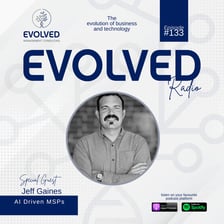
Welcome to the Evolved Radio podcast, Todd. Thanks for
having me on the Evolved Radio podcast. So stoked to be here. Cool.
All right, so as we do lately, we're going to be talking
AI, but I think you guys have a slightly different take on this.
If you want maybe give us a quick little background on yourself and
your adventures in the MSP industry. Yeah, for
sure. Background on me kind of of marketer by
trade in my 20s, fell kind of forward into the MSP
world in my late 20s, early 30s,
didn't even know what an MSP was. I just took a job ad and like
showed up and they were like, oh yeah, we're an msp. So I was
all the way from like a tiny 3 person MSP up to like a 75
person MSP. Have kind of done all the different stops along the way.
Most recently was at a big private equity roll up,
rolling up MSPs, you know, really in kind of globally in the English speaking
world. And now as of January, I find myself at
like, I guess what is an AI? First msp, which I'm sure we'll get into,
but recently joined Treeline AI.
I guess that's a good place to start is what is, what does AI
first mean to you at Treeline? I think the,
I think I hear this term around software,
maybe a little less so around operating model. So maybe
clarify sort of how you, you guys understand that. Yeah, I think
it just means that we're being thoughtful and intentional about the way AI
weaves throughout the service layer of the business.
There's like a lot of kind of thought leadership on this going
out right now around what it means to be an AI
company or a software company in the services space. So
like this technology sort of at this inflection point now where we think
it can be an accelerant to the services space, it is
obviously part of that, but fractional accounting, fractional hr, whatever
you could think about all the other services that are out there that'll have a
similar trajectory. So for us it's just really about architecting the
end to end vision of the business with AI
in mind. And so rather than
deploying an AI help desk agent or using
AI to vibe code client portal, it's
sort of like all the pieces of the business should be touching and augmented by
AI in some way. So more
like purpose built kind of end to end rather than sort
of maybe, I guess, sort of inserted into the model.
It's the condition of the build. That's right, yeah. And I think the way that
we've been talking about it is rather than saying like hey, we're bolting on
an AI or software product. Rather
it's the convergence of the software and the service coming together
across the business. And so if you think about any functional part of the
business, whether it's customer facing or behind the scenes,
our goal is to find a way to insert technology into that
service layer in a way that's cohesive across.
Right. So it's not disjointed and you're moving from point solution to point
solution. It's really all encompassing.
Okay, let's talk a bit about sort of the
different models of operating. Right. Because
you've come from a pretty big roll up in the industry.
We've got AI point solutions,
there's the AI roll ups that are now in the
ecosystem as well. There's lots of MSPs building AI tools
in house. There's sort of the SAS apocalypse threat of
people as you mentioned, kind of vibe coding some things. I
think that you thesis is a bit different than this. You kind of want to
do. You want to maybe run through how you perceive some of those other
operating models in the industry and maybe why you guys think that your thesis
is the better mousetrap. Yeah,
I think it might help just to start with like kind of overview on
landscape as a whole up to now which has been, you know, the MSP
industry and the model has been around for 40 years and
you know, obviously the last 10 years have been pretty hot on the M and
A side. Private equity has been a big player in this space. Strong
recurring revenue, good margin, expansion, opportunity. These are
usually not like super optimized businesses.
And up to this point there's been sort of two models out there. One is
like the private equity aggregator roll up that's
rebranding the acquisition.
Everyone's carrying the same logo or kind of going to market as new
company. And the other was like let's just them as a
holding company and kind of leave them as bespoke unique entities in whatever market they're
in. In both cases the models to generate
equity value or yield for the shareholders. And so there's really a focus on
driving margin expansion which shows up as obviously
EBITDA improvement on the bottom line. And
I think the third operating model you hinted at was the AI roll
up which is we're seeing those start to come online now which is kind of
an update to both those models I just mentioned. It's like
basically using AI as a tool or a lever in the private
equity model. To expand margin and produce better
yield. We're different because we are.
There is an acquisitive part of our business. We'll talk about how that
differs from the rollup model. But generally our
thesis is not that we're trying to use AI as a lever expansion. We're trying
to use AI to really update the overall experience for the end
user, improve some of those common pitfalls that
MSPs fall into in terms of poor response
times, unresolved issues, botched onboardings, et
cetera. And then our goal is to grow
organically on top of that. So really our inorganic
strategy or acquisition strategy we view as an entry point into some
of these attractive geographies in the States. We feel like there's still a very much
local dynamic in the way that this service is delivered. And so we
think it's important that we're local where our customers are. But we're not trying to
buy 10 companies in Houston, we're trying to buy one company in
Houston, you know what I mean? And use that as a launching off point,
as really kind of our distribution model for the
service that we're offering now. Is that to say that
you don't necessarily need to acquire all of the business,
in effect, maybe a bit of a land grab strategy instead, like
the core offering that you're trying to build. Being service focused
is so good that you assume that you guys can win the rest
of the business without having to acquire all the separate entities. Is that part of
the thinking there? Yeah, I would say
there's a bunch of different ways we could get this approach,
a partnership like this. For us, it's really just we're trying to think of like,
what are the big attractive markets in the States? How do we find the best
available MSP on the market, still help them build
a moat around their business in terms of like bringing
AI and software into that business in a way that's largely
impossible if not really difficult to do if you're a single operator on your
own. And then and then turning on go to
market engine on top of that, you know, building a commercial team on top of
that, and really expanding in that market and trying to capture
a market share. Really, you know, we have a new offering,
we think it's a better experience for the end user and the customer. And we
think there's some cost advantage, obviously with some of the
advantage and efficiency we get out of the AI side. So how
we get there, there's obviously some flexibility, but
generally that's the concept that we're after
the AI as it sits kind of within the
operation, a lot of organizations, especially the groups that are doing roll
up, they focus a lot on sort of backend efficiencies and the things
that the MSPs don' tend to be great at the administrative bits,
the sales and marketing are areas that the average MSP
isn't as strong in. And that's I think, where a lot of that sort of
industry leverage comes in. I imagine you guys have a
component of that, but also I'm
imagining the tool sets being different. Right. I think when
we talked before, you guys are leveraging some industry
standard tools right now, but are looking to eventually
kind of sub those in with inbuilt models. Is that kind of what you guys
are thinking? That's right. So up to this point
we've had our early MSP partners have been design partners for us as
we're thinking about where the opportunities are as we're building the
software and the product. And so really we've been building on
top of existing infrastructure. So existing
psa, existing client
portal, existing, all the existing service layer obviously. And
then as time goes on with kind of each shipment that we
deliver to market, we're replacing not just like some
of the services so like we can augment a lot of those services or shortcut
them for the technicians, but also replacing some of that software. So
an example of that would be right now we're wholly
dependent on the ticketing system to ingest requests still
and kind of ship it up to us, whether that's coming from an email
or a teams chat or a Slack chat, whatever it might be. But
eventually we kind of view it as like the interface will be the treeline
software for both the customer and the technicians. And so that's the point where
the service is delivered. So this
kind of gets to one of I feel is sort of like the
fundamental positions for a lot of the existing
AI software out there is it's either client
focused or technician focused. And
being good at both, I feel is maybe not a core skillset
of a lot of those, those tools just yet.
Any thoughts on sort of like which one leads first? Which one is maybe
primary in that relationship? You know, I think I would like
my thought on the entire concept is
the tools are only as good as like the time and skill that you have
to put into deploying them and using them. And that's true like
everyone's kind of using AI personally now. So like I just finally
got Claude cowork going. I was getting like a Lot of heat for not using
it yet. I was like, all right, I'm going to just sit down and like
kind of figure it out. And until I did that,
like there was all this untapped potential in that tool that just I was not
recognizing. And I think my experience again, having come out of
a large roll up of these businesses, we had over 100
MSPs under our umbrella was, you
know, there was a lot of variability in like how well they were able to
leverage any of those off the shelf kind of point solutions. And there are
really good products out there and I know a lot of the guys that have
made those products and I think there's definitely like a lot of opportunity in that
space still. I think for us the fundamental
difference in what we see is our advantage is that we are the owners of
the software and the service together. Right. So we don't have to try to.
There's no enablement that we have to sell through if we're selling product. There's no
education to the customer. We own all of that.
And really the value that we're generating is like at the nexus of those two
things combined with. So
generally like if it's customer facing or MSP facing,
at the end of the day, I just think it's about how well it's deployed.
Yeah. And one of the conversations that I had with
some of the AI manufacturers, like the software people here
was illuminating and the fact that
they're able to move faster than some of the larger
incumbents. And I think we're, I've kind of called this out as seeing a bit
of a, a bit of a pace problem with
some of the larger software vendors in the msp. And that's creating a lot
of opportunity, sort of white space for opening up
faster software tools to kind of fill the gaps.
And I think that's kind of an interesting approach. It kind of leads with
a lot of innovation within the channel. And then there's
a different approach I've seen from another one of the
M and A roll up companies where they've basically taken that approach in
house and they said, okay, you know, you know, a lot of great software,
good vendors, we work with these people, but you know, just the dev cycles need
to be faster for us. So we're going to do the development in house. I
feel like what you guys are doing is maybe a bit of an extension of
that, but actually sort of taking it to kind of the nth
degree of we're not just going to build on top of the tools
that we're utilizing, we're eventually kind of replacing
the whole stack. Am I sort of reading that right? And any thoughts
on sort of why that is necessary based on the dev cycles?
Yeah, I would totally agree. And I think the
big ships turn slower kind of analogy or idioms is
totally true. It just takes a long time. You may have more capital to
deploy more resources, but actually the coordination cost on that and
orchestrating that is really difficult at scale and
coupled with AI just in general is a great equalizer.
And so for small businesses you have a total leverage
opportunity where you can do a lot more, a lot, a lot more quickly
with less skill or less resource than you ever could before. Right.
You have endless possibility if you have the right resources
in front of you from the software standpoint.
So totally agree with that sentiment. I think for us, yeah, it
is that. It's basically all the best MSPs I've
ever seen over my 15 year career are the ones that are doing
the custom scripting and custom development
inside their business anyways. They're like, they see a novel
problem for their customer, for their business, and they try to solve it with like
a PowerShell script or something. Right. And I was always like amazed
when I would see that. I'm not a highly technical person, so I'd just be
like, whoa, that's really cool. Like you shortcutted this issue and you just kind of
solved it once and forever. So in a lot of ways it's like, it's
a very similar approach. It's just like how do we find these
opportunities in the business as it exists today, where
the value chain could be improved, the customer
experience could be improved, the technician experience could be improved, their quality of life
could improve. And then how do we bring technology into the fold that can fix
that? I think it's just the type of technology and the depth and breadth of
the way that we're approaching that is really the update. So
rather than saying here's one very specific problem, we're going to
deploy a script to that problem to fix it. It's more
like how do we link all these problems together in the form of linked
solutions that when built up on top of each
other, you really get some sort of compounding effect in the overall customer experience
and obviously the way that we're able to go to market because of that.
So extending on that, then this is an industry where a lot of
the major solutions that are out there now were MSPs
scratching their own itch. Right. They got a front row seat to this for it
glue being developed out of internal software that we used at fully
managed, you know passportal similar.
You know a lot of these, these examples Immibot I guess another like
these great solutions where you know they, they had a problem
internally and just decided to solve that problem on their own.
I guess with the expansion of this now and people are sort of
calling for the AI or the SAS apocalypse where you know, people
are just sor building their own solutions and you guys are a version of this
I think. But more broadly like what's your take on
this impact on the sort of the software industry
in the channel? Do you think that this is actually a legitimate threat or is
it going to be like fine, you can tinker but when you come, you know,
three months from now realize like oh well maybe we actually do need this
piece of software and it's not as practical as maybe people think it is. What's
your take? Yeah, you mean in the context of like AI
overall being a threat to that or like tree line? No, like more sort
of like, like the, you know what I've heard from a lot of people is
the constant conversation that is happening at booths, in
shows right now is why do I need you? Why would I not just vibe
code this myself? Right. So like is there a legitimate
threat to the software industry and especially in our industry with
like a bunch of technically capable people who might actually do this
versus like a marketing company may or may not roll their own CRM
type approach? Yeah, I think it's, I mean there's trade
offs so. Well one I've, you know what I, what I'm hearing sort of
in the technology zeitgeist right now is that distribution
sort of the next moat for a lot of this stuff. So it's not just
about like can you build the products, you have to have a good vision, you
have to be able to execute on that. You have to have clean code. There's
a lot of other variables in there but really like at the end of the
day it's like the distribution challenge is going to be
where you're going to win or lose in the future. At least
people that are smarter than I am are saying that.
But I think like more broadly it's just a matter of like trading off
resources. So for, I mean again you've been in the space a long time.
MSPS are small, they're bootstrapped most of the time,
they're capital constrained, they're like talent and
resource constrained. Just from like a skill set standpoint, like we have really talented
technicians and engineers here, but like not always the best,
like software developers. Right. For example. And so it's like every
time that you take their time and attention away from a current customer challenge or
operating the business day to day to go do that other thing, you're making a
trade off there. And some folks I think are going to be able to navigate
that just fine. Maybe other folks will not. At the end of the day,
I really think it's about the focus of the
software industry as a whole. Like can they go really deep on
a point solution? If you're going to be a software company that's distributing through the
channel to the msps, are you going to have really good enablement for them? We
just kind of just hit on this a minute ago so that they can get
the most out of the product that is purchased from you. They're not going to,
you know, shut it down in six months or whatever or
try to go build their own because they think they can do it better. That's
I think the problem trying to solve again for us, why we think we have
a little bit of an advantage here is because we're not developing software to sell
through the channel. We're trying to find MSPs to directly partner with and
distribute to end customers. And so we have a lot more control over the
overall value chain there and how that
software is being distributed along with the service.
But yeah, I wish I had a crystal ball, dude. That's probably the million dollar
question. I just saw the multi billion dollar question. Yeah, indeed.
I was going to say a trillion dollar. I just saw a thing last
month, Julian Beck, he's one of the partners at Sequoia,
dropped this manifesto on X and he was
basically like the next trillion dollar company is going to be a software company
disguised as a service company. And so it's like there's still this
distribution opportunity in the services world.
The technology is great. How do you get it into the hands of end customers
and actually make it useful for them? It's a big lift to do that if
you're going through a middle person, a middle company and having to
educate them and train them and give them all the enablement to do it and
then hope that they're successful. It's a different story if you're able to just sort
of control that delivery end to end.
The other aspect of this I guess is rather than focusing
on the technical end of things, that tends to be where
a technical industry gravitates towards because they're more comfortable with it.
But the general operating maturity
level for MSP organizations could be higher. And I think
maybe this is the opportunity that they probably wish things
could be different and could be better, but resource
constrained, time starved. I just have to get this thing for
this client in order to get through the day.
So not necessarily thinking about the internal operations.
This is much to my dismay of
people not having the time to focus on improving the operations of their business
because quite frankly, like this is how you create margin
is. It's great to win business, but in order to
keep it and actually make money, the operations have to be efficient. So
maybe this is an opportunity where AI can help augment
a lot of the other technical capacities and give people the time
that they need to focus more on operational improvement. Do you think that that
is something that people should focus more on?
Absolutely. It's, you know, I'll just say like I have a lot of empathy for
anyone in that seat right now. It's really hard. I've been there when it's five
people, I've been there when it's 70 plus people and
the challenge is always there. It just sort of like looks different depending on
like where you're at. Right. So everybody wants to make their business better.
And I think honestly, like, you know, one of the reasons I was so attracted
to Treeline was like, I've been around this space for so long. I mean it's
just, it's, it's frustrating to sit on the sidelines and go like, man, like we
all want to make our businesses better in some way, but it's just, it's just
really hard to do like there's all these like kind of leaks and
waste along the way as you're delivering these services.
So yes, I think everyone should be focused there.
I do think like, you know, the, the
barrier entry on doing this on your own is lower. Like people
can, you know, just by way of like automating some of their other
routine tasks will get time back to put into the business and new
and novel ways that help them improve the overall operation.
So the technology is absolutely going to help there, you know, for,
for us. When I think about just like the overall operational
maturity, really what I think about is like what's the customer experience at the end
of the day? And like, you know, I'll go back to my own personal experience
and maybe there's like, you know, A plus MSPs out there that didn't have
this challenge, but it was, you know, routinely we'd hear, you
know, why didn't you get back to me on time? Or, you know,
this ticket had to go to three different people to get solved or you solved
it and then it got reopened a couple times.
Or the worst one was like we had a new customer's employee start
and we like missed some piece of software that we were supposed to turn
on access for or something. Right. And so there's just
obviously naturally going to be a ton of human error there. And the technicians
are spread thin and they're really trying to please a bunch of different
customers at the end of the day. So anything we can do to assist them
and make their job easier I think is
a win across the board. Not to mention
those guys and gals work really hard and they probably go home and take a
lot of that stress with them. So it's like, how do we just improve their
quality of life? Because, you know, I've had hundreds of
technicians work under me over the years and you know, they're all really good people
and I just, you know, they want to do the best thing for the customer
in like 99% of cases. Right. And they're always,
they're not always capable of it. Like they don't have the time or the attention
or the resources to do it. So I think it's just a win win honestly,
like the, the employee's life gets better, the business obviously improves
overall and the end customer is not having these, you
know, errors or you know, drops in their quality
of service because of all the things we just talked about.
So. Yeah, I couldn't agree more. I think it's, it's great, it's a
great thing that it's coming now and helping all the businesses.
So you guys are looking for some, some companies
to partner with. I don't know, maybe that's, that's sort of like a,
a veiled way to say acquire, I suppose. Is that
fair? Yeah, I mean, yeah, you could definitely. I think that'd be a
fair thing to say for us. You know, the way that we're thinking
about it in the traditional private equity model, again, 90
plus percent of the time, the founders are staying on for six
months, maybe a year. They've got some sort of predefined earn out that
they're working towards and they're helping with like a peaceful transition
of power, if you will, to the new private equity regime
that's, that's coming in. For us. It's different. We're partnering with
operators that want to be around for four or five years that are interested in
Technology that maybe like are having trouble
bringing that technology into their business on their own. Which is a common
story that we're hearing right now as we're talking to folks. Like everyone's curious about
it, everyone's trying to navigate it. It's a topic in the
exhibition halls, the topic of the peer group rooms, but no one's
really cracked the code yet. And so really what we're saying is like, that's great.
We need experienced MSP people and
we need them in these very strategic markets for us
so that we can come and help you with the software and the AI technology
and deploy into your business. And going back to our conversation one
minute ago, help improve your employee's
quality of life, help improve that customer and user experience,
help make your business better overall. And then if we are capable of
doing that, which we think that we are, everybody sort of wins in
the long run. So I mean, if you're trying to
retire tomorrow, treelane's not the right business for you. If you feel
like you've got some track in front of you still and like you want to
like see what this next wave of technology does to our industry,
disruptive or otherwise, like we're a great partner, like we definitely want to be
helping the industry get better across the board.
That kind of answers the question I was going to lend to, but I'll maybe
tease this a little further that there are
like most MSPs I think are becoming a bit
numb to the number of people that want to purchase them. You know, like they
get two or three calls a week of hey, you know, we'd love to acquire
your business. And a lot of M and A activity has been
feverish over the last certainly five years and even 10 years.
And I'd be curious, like that is the big one is, you know, what do
you want from the next five to 10 years of your life? I
think is a, is a good framing of this as well as, you
know, helping people with the AI enablement of their business.
I'm curious maybe a bit more on sort of the mechanics of acquisition though, right?
Like a traditional M and A, you know, there's
certain percentages, there's an earn out, maybe you stay on,
reinvest your, your shares. There's different models around these
acquisition strategies that are, that are out there
and some of them, you know, this is not, certainly
not naming names, but there are certain organizations and PE companies that
are very profit driven. I think they're more
on the margins than some of the bigger folks that you And I
know, but I certainly have heard some of these horror stories where a person
gets acquired and it just becomes a pressure cooker for growth
and that like a lot of people just kind of working out of
spreadsheets and that can be a bit, a bit daunting as like,
well, this is not exactly what I signed up for. Right. As people try to
work through this, I'm curious, kind of your guys thoughts and ideas
around. Not that you have to expose kind of what your model for acquisition is,
but you mentioned being more service focused than
profit driven and that feels like a bit more of a core thesis for you
guys. You want us to talk a bit more about that then? Yeah, absolutely.
Well, this is coming out in April, is that right? We're going to release
in April. Yeah. So first off, we're not
private equity, so we're venture capital backed. We've partnered with Andreessen
Horowitz. They sort of bet on us to win this,
this AI and the MSP world race. And
because of the venture capital backing, it's just a totally different
model. So like we have a longer time horizon where
obviously like trying to in the short term
improve the overall customer experience. It helps us acquire more
customers, acquire more revenue and grow the company both near and
long term. Whereas in the private equity world, you're absolutely right, it's
100% equity value driven. And so the way they
generate EV is there's a standard playbook. You have so many
levers you pull, you're going to raise prices, you're going to pool
vendor costs, which now you're squeezing your vendors who are no longer incentivized to
go to market with you and generate business for you. You're going
to, you know, there's all these cost
cutting just down P and L, human capital or otherwise.
And so there's, there's, it's a very standard playbook and it's not unique to the
MSP world that they'll run, they'll usually run that in kind of a one
to four year window. Some are holding longer
than that obviously and they're going to have to figure out the
organic growth strategy on top of all this because you kind of pull those
levers once or once every few years. That's the only opportunity
you really get. You can't raise people's prices 10% every year. They
would, they would quit, they would not be your customers anymore. So just
like right out of the gate, the juxtaposition between that and what we're doing,
where we're like literally just going and saying like, okay, the service is good.
How do we make it great? How do we make it like the best service
possible for the customers? How do we find the best people in this business and
elevate them into higher value activities where they're being
more strategic or consultative with the customers they currently have? How do
we then take that and tell that story and go acquire new customers in these
new attractive markets to us? And yes, we want the business to be
profitable near and long term, but the
primary focus for us is like, how do we just build the best
msp, if you will, in the market right now,
built on technology and AI and so that we can
acquire more business and over time and gain more market share and then
ultimately the end goal is the profitability will come. Right.
So I hope that paints a clear enough picture and there's nothing wrong
with the former model. Obviously I came out of that world. I was there for
almost a decade. But you're absolutely right.
If people are getting inundated and their inboxes are saturated with
every family office in America and every big private equity firm in the world now
has a Ms. Arm to their
business, I couldn't be more clear. This is
completely the opposite and even the opposite of some of the
AI roll ups that we have talked about where really just using the technology
to produce that same result we talked about and that is not our
goal. Yeah, right. Okay, cool. Well, this
has been cool. Appreciate your time, Jeff. If people want to hear
a bit more about what you guys are doing and maybe are curious to, to
have a conversation with you, where should they find you? LinkedIn and otherwise I can
link to those in the show notes. Yeah, that'd be great. Yeah. I'm on LinkedIn,
Jeff, at Treeline AI if you want to shoot me an email or follow the
company treeline on LinkedIn as well. Would
love to connect with anybody that's curious about this kind of stuff or
has. You know, my complaint inbox is open as well, so you can
direct complaint mail to me too. But yeah, Todd has been great, man. Thanks for
having me today. I really appreciate it. It. Have a good one. All right, thanks,
Todd.