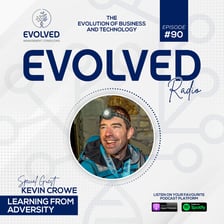
And so we managed to find our way finally to the hut. You know, we get into the hut and like, you know, it's like one of those scenes where you're like you're trying to close the door but the wind's too strong and they got a little fire in there. And I get in there and I'm like, hey, um, I'm just going to lie down on the floor. And they're like, well, if you lie down on the floor, you're going to be disqualified because there's no sleeping here. We give you some hot noodles and broth, you eat them and you got to go. And I'm like, well, no, you don't understand like, I'm like, I just want to lie down on the floor. And they're like, well, you can lie down outside. And I'm like, I'm quitting this race, like I had enough of this thing. And they're like, well, you you can quit up here, but there's nobody to rescue you. So you have to go down the mountain. I'm like, fine, how far down the mountain do I have to go? And they're like, five miles. And Richard the guy who was with me, he's he's like, I could see him say to the people, just give him a little space, it's been pretty tough out there. So. Welcome to Evolved Radio, where we explore the evolution of business and technology. I'm your host Todd Kane. Did you know Cisco helps manage service providers directly? Know about the Cisco partner program focused on helping partners combine managed service expertise and service creation with innovative Cisco technology and proven go-to-market resources. There's a program option for you. With provider pricing, MDF and marketing resources coupled with Cisco's leading technologies including Miraki, Duo and Umbrella. Learn more with the link in the show notes. Today on the Evolved Radio podcast, I'm chatting with Kevin Crow. Kevin is the executive VP of customer experience with Long View systems. If you've ever heard me tell my origin story about working in an early hypergrowth company. I'm talking about my days at Long View. Even back then, Kevin was a fantastic storyteller and an adventurer. In the episode today, Kevin talks about how his adventures like doing a 240 mile endurance race prepare him to tackle all kinds of challenges in his life, personal and professional, including a life altering condition. The lessons here are about challenges and adversity and how they're useful both in business and in life. So please enjoy the entertaining and enlightening conversation with Kevin. Kevin, welcome back to the podcast. Thanks so much, it's great to be back. That's awesome. So I wanted to have this conversation for a while. I think this will be really informative both. Uh, you know, we've been we've been friends for a long time. Lots of experiences. I've always looked to you uh as as a as a bit of a mentor in multiple different ways. So that's why I think that this conversation will be exactly sort of perfect for those two angles of both the the business side of things, but also you have an unusual life outside of work. So, uh, I think this will be really cool to get into. Maybe just start with uh a bit of a background on yourself, both personally and professionally. Yeah, for sure. And hey, thank you for the honor of uh being mentioned as a mentor. That means a lot to me. So. As you said, Kevin Crow, executive vice president of client experience at Long View. And what we do at Long View as really we're an IT service provider. Three buckets, you can you know, again, buy your software and hardware from us. You know, we'll run projects for you and and we do a lot of managed services. I've been at Long View coming up 22 years. Um, I was I think employee number nine or 10. And the first mission I had was to build managed services inside the company. And we are now 1300 people across North America. You know, Toronto, Houston, Dallas, Denver, Vancouver, Edmonton. And, you know, we have kind of about 10 years ago really got into cloud. And uh helped us get kind of make that launch happen. And so we're seeing this tremendous progress uh across the IT services. And so my role right now is very much kind of think of it as like a mini CEO. Like, you know, I I I work with the branches and I I I lean in with the branches on, you know, client experience and and services. And and there are the profit centers of the organization. So time check. Like you were you were particularly early on the managed services trend, right? So. I remember like you had this this this uh sort of tight little office with a few people kind of piled in there kind of developing that knock. Like what what time frame was that when you were starting to build the practice? So, and ironically, I was working on managed services before that. Uh when I came I graduated from Uvic, uh the ITP program, which was about 97. Uh did my work term in Calgary with a company that was kind of. They we were working on managed services, but it was conceptual, right? And so was working on that and then that company got sold to tell us. And I went to Long View uh around 2000. And. So the mission was like, hey, you you were building something over at Northwest Digital. Here's your chance to build it kind of in your vision and execute in your vision. And so very early conceptual days. I remember having arguments with people around, you know, well, is managed services really here to stay? Is it something, right, why wouldn't I just do professional services and pay for people? And and kind of fought through that. So. Have seen a tremendous amount of evolution and progress and innovation in that space and it's been amazing uh just to see how that market's developed, you know. It's kind of incredible in a lot of ways because like in my head, you know, as much as I saw this early version of this practice. Uh and and I think that this conversation 20 years later is still in some parts still happening, right? But uh, you know, being so early to that, the trend of managed services, I would say as as sort of a a strong industry trend was not really prevalent until kind of 2010-ish, right? So I would say like your your vision of that was was very early. Oh, yeah. And we were I think one of the first to do, you know, fixed cost operational support, right? So we were going to clients and you know, whatever size of the client, you know, for 10 grand, we're going to do all the operational 24x7 support. And they looked at us like we had two heads. Like they're like, what do you mean, no one's willing to do this, nobody else does this. Like it seemed crazy, you actually will do this, there's got to be some sort of catch. And. The reason we kind of got hooked into that is we had gone around to our clients and we had asked them, you know, basically. You know, why why do you want us to support you and, you know, why do you want us to help you and the vast majority of people were saying, I just don't want to worry about it, right? Like I'm I'm an entrepreneur or I'm trying to run this business over here and this IT thing is so big and complex, it's taking a bunch of time, I just don't want to spend on it. So really our design principle was worry-free IT, which you probably remember. And it was this concept and it was built around ITIL. This concept of like, we're going to take those operations on so they don't have to worry about that part of their business. And we had huge success from that. Um. You know, I always say um, you know, it was so hard to believe when we were 10 people, like we thought if we were going to be 100 people, we were going to rule the world, right? We never thought of any other offices outside of Calgary. And here we are, 1300 person company and managed services now is the vast majority of our services and a fairly large company. Yeah, very cool. So, I guess future looking. Like you you were you were early on some trends, what are what are some of the trends that you're tracking now out of curiosity? Yeah, I I think. You know, the biggest thing for me where I look at kind of, you know, managed service providers and and kind of where that market's going is. You know, if you think of that general IT operations uh coming very commoditized, right? So obviously, you know, you want automation and you want AI in there. And so you're forced up the stack, right? And so. I think about things like, you know, creating unique IP that you can bring to a company to make them competitive or strategic. And we have just made a huge bet over here on on data and dynamics and we have, you know, what we believe is one of the best data teams in North America. And so that data is driving kind of those insights and those dashboards and that kind of AI play on top of it. And the other thing I would say is enablement of a productive and intelligent worker, right? Uh the citizen dev movement's kind of kind of a big part of that, right? So. Hey, I got to keep everything up 24x7 and that's kind of like electricity, I I expect it always to be there and it's, you know, quote unquote, commoditized. But now I'm going to come in, probably give you some great data insights around your organization, help you build some workflow around that. But also empower your users to, you know, be smart, to be intelligent, to use data, to be better at their jobs, you know. Yeah, and as part of that sort of the modern uh uh modern workforce enablement, kind of shifting digital transformation, all of those initiatives as well. Yeah, and. Absolutely, you nailed it, I would say, you know, uh organizational change management's in there as well, right? You know, one of the amazing things we saw through COVID was, you know, tens of thousands of desktops being rolled out to teams or whatever, right? Like, that was an incredible lift by IT organizations in general, right? Like, you know, we have dinners when when COVID was uh let up and we were able to go to restaurants and meet with our clients. We'd go around the table and just ask them, you know, hey, talk about COVID. You know, what what are you most proud of? What's been the hardest thing for you? And by far, all those IT leaders were saying how fast they deployed things based on COVID, right? But. One of the things inside of that is is deployed, but is it maximized for value? Can you drive the most kind of potential used by those people to get that true intelligent worker going? And and obviously not, you had to do it in a rapid motion. And and it's great that, you know, we had clients or users that were like, I'm never going to get on a video chat, right? Like it's never going to happen. That that's their life now. And so now how do we make them stronger and better through those tools that are at their fingertips? That's awesome. Yeah, I think that that will be a strong trend because you're right. Like. I was all equally surprised and impressed at how well that whole situation went for most organizations. Like that should have been a a complete firefight and just a complete disaster. And in most cases it really wasn't. So I think that's incredible. But. You know, it it it requires a lot of mop up and a lot of cleaning up on the margins to to improve the deployment of that stack. 100% for sure, you know. Absolutely. All right, so we covered off a bit of the the business end of things. And definitely like this this is the the meat and potatoes that I wanted to get into here. So, uh now, do you want to tell us about uh how you spend your free time? Yeah, yeah. Well, there's you know, I look at designing your life to me, there's like four key pillars to it, right? Do something you love that makes money and pay the bills, right? Do something you love that keeps you in shape and we'll talk a little bit about that one. Do something you love that gives back to the community and and give a miles my charity. Where we provide flights for people that are at end of life, right? So a mother, brother, father, sister, son, who needs to go spend one last visit. And we do that by people donating their unused travel miles. And then the the last pillar is obviously family and friends and and that community that you're part of, you want a strong community around you. The endurance one is the one we'll jump into, you know. Um, I think last time you and I were talking about trying to get on the podcast. I was headed out to the UK. It was 2019 going into 2020 to do this race called the Spine. The Spine. The Spine is uh 268 miles through kind of Central England, so England up to Scotland. It's basically on the Pennine uh way, which is their kind of their nature trail. And it's through their their mountains, they're kind of their Highlands. And it's in January, February, which you can imagine the weather in Scotland. Which is absolutely crazy. So. You know, 100 km hour winds, rain constantly, you know, sideways rain, etc. So it was by far the hardest thing I've ever done. The craziness of that race is hard to put into words. Not only are you dealing with obviously, you know, elevation and climbing mountains and you're out in this, you know, crazy uh environment, you have those weather conditions. And. And it's, you know, just a place, my my my wife's from England, uh originally, but it's not a place I've spent a lot of time in nature there. So it's a a different environment. And so it was a hell of a challenge, very much uh life and death situations out there. So I'll give you a great story about that. So. You know, you got to you got to navigate and and when I say trail, it's not like what how we think of a trail. Maybe, you know, out in the mountains here. It's it's basically like lots of navigation through a bunch of farmer fields and there's trails everywhere. So. You can't it's not like I'm just going to walk on this thing and you're going through literally at times. We were up to swamps up up to our waist. But the one part we got to was we had to go up to this mountain. And. You know, there's five aid stations where you can kind of sleep. And and one of the aid stations was right below that mountain. And I had teamed up with a guy, a local guy who was three hours south of uh. Of the course and he was really key in helping me get through this thing, right? He knew the course better and kind of knew the the logistics. And we were going to go up to the mountain. Top of this mountain. And they were warning us, you know, there's massive wind up there. You know, you got to be prepared and we left the aid station and he's like, put your jacket on now. And it was, you know, it was fairly calm. And I'm like, oh, I'll put my jacket up there. He's like, you're not going to have any chance to put your jacket on up there. You got to do it now. And so we started going up this mountain and the wind was just building and building and building. And we passed this guy who had his headlamp on and we're going up the mountain. And now you're literally like you're sticking your pools in the side of the mountain because you feel like you're going to get blown off. And there's snow, you can't see anything. It's like 4:00 in the morning, so it's dark. And we get up to the top of the mountain, like beautiful navigation by Richard, the guy I was with. And we there's a little wall that somebody had built with rocks, right? To kind of hide behind. So we hid behind the wall. And I said to him, I said, hey, like we passed that guy, I don't see him anymore, like I don't see his headlamp. Like should we go try to find him and bring him in? And he's like, dude, we are just trying to stay alive up here. Like this is life and death now, right? Like we got to get down the other side of the mountain, there's this legendary like, you know, old ski hut that was built, you know, 300 years ago that you kind of get down to on the side of the mountain. We still have to get to that thing. And so we went down the side of the mountain, you know, we're navigating. And then we realized we're like we had missed it. And we're out in this total blizzard, 100 km hour winds. You know, and we realized we missed it by like we were kind of on the other side of this valley, so we had to come back through mountains to get to it. And literally, you know, was up to like knee deep snow and it was like, I'm just going to lie down here. And I always know. I did a lot of mountaineering, that's like the the thing you don't do, right? Everest stories, right, somebody, oh, I'm just going to lie down and and have a little nap and get warm. And so we we got to keep going. And so we managed to find our way finally to the hut. You know, we get into the hut and like, you know, it's like one of those scenes where you're like you're trying to close the door but the wind's too strong. And they got a little fire in there. And I get in there and I'm like, hey, um, I'm just going to lie down on the floor. And they're like, well, if you lie down on the floor, you're going to be disqualified because there's no sleeping here. We give you some hot noodles and broth, you eat them and you got to go. And I'm like, well, no, you don't understand like, I'm like, I just want to lie down on the floor. And they're like, well, you can lie down outside. And I'm like, I'm quitting this race, like I had enough of this thing. And they're like, well, you you can quit up here, but there's nobody to rescue you. So you have to go down the mountain. I'm like, fine, how far down the mountain do I have to go? And they're like, five miles. And Richard, the guy who was with me, he's he's like, I could see him say to the people, just give him a little space, it's been pretty tough out there. So. So we, you know, we had our our warm broth, we started going down the mountain. He let me kind of run in front of him. And then he catches up to me after a couple hours, he goes, uh, what's our plan? I'm like, we're going to keep going. We're fine, we're fine, right? So. You know, fighting through that and then we had, I think through the whole race. We had two or three hours of sunshine. Wow, over like the the entire course. Yeah, and. So the 268 miles took me six days. There's there's the clock never stops or starts, right? Like. Like um, or sorry, like it it's never like you only have to do this many miles in a day. It's like start to finish. There's certain times you have to be to certain places. And. So it was extremely intense. And I remember, you know, as we were kind of getting towards the end, maybe we were like 60 miles out or something. We're there was a bunch of us now, we had caught up to some people and we're going down into the last aid station. And. We're kind of all spread out a little bit. And these guys come up to me and they go, hey, your buddy Richard. Are you looking after him? I'm like, yeah, like we're we're a team here. I'm going to look after him. They're like, well, he's talking nonsense, right? So I'm like, okay, I'll go back. And I go back to him and he's like talking to his mom or something, right? Like he's just sleep deprivation, he's snapped. So I said, hey, let's pull out the sleeping bags. We'll just kind of sleep on the side of the road, side of the trail. Because you had to have a sleeping bag and tent and the safety gear. Obviously to be in these mountains. And uh. And he's like, no, no, I want to keep walking. And so. You know, we keep walking and he's just like, he's a mess, he's like swerving. And and so these other guys that are with us is like, we'll call the medics because this is a medical situation. He said, yeah, for sure. But the phones aren't working up there because just the place we're in the mountains, right? And so now we're maybe five miles from the aid station. So. They uh, they go, we'll go down to the aid station, we'll send up the medical crew, right? And so, yeah, this perfect. So I'm talking to Richard, just trying to keep him going. The uh, the medical crew comes up. And they have a van. There's kind of like a forest road there, so they pull him in the van. And they're like warming up, they're they're giving him a tea. And they're like, what do you need, Richard? And he's like, I just want to sleep. And they're like, well, if you sleep in the van, you're disqualified from the race, right? Like the race is over and he's like, oh, I just want a tea then. And I'm talking to the medical guy, um, and I said, what should I do, like, what do you think I should do? He's like, hey, it's your race, right, there's only so much you can do for people. He's in medical hands. Like, you know, you probably should need to get going. And like Richard and I had been so bonded through this, right, we've been so, you know, the the mountain where we almost died and all that kind of stuff. So. Anyways, I took off, I'm like, you know, running down the hill, very emotional, like, I'm all by myself, right? And I get down to the aid station, the aid station rule there was only 30 minutes. You can only be 30 minutes in that hut. And so like I'm trying. Talk to other people like, hey, do you want to team up, like, can I join you? And they're they're already like it's near the end of the race, they've already formed their bonds, right? They're like, ah, we don't know, we're kind of a team. And so I'm like. Really tired and really lonely and I'm going to be on my by myself. And so I come out of the aid station and who's walking in, it's Richard. Somehow. He rallied himself, wobbled down the hill all the way to the bottom. I said, okay, go in there, get your coffee, your tea, you know. Come on out, we'll we'll, you know, bivvy somewhere and then we'll we'll we'll go to the end of the race. And so, you know, he rallied from there. And off we went up into another set of mountains and and managed to get to the finish line, man. And it was uh. An incredible experience. Like it's hard to put into words. That much of life and death and kind of an expedition mentality to get 268 miles done uh was an incredible achievement, man. And just uh super happy. Super happy we pulled it off. That's incredible. So I I have one simple question for you around around these types of adventures. Yeah, why would you put yourself through this? Well. You know, the the thing for me when I look at it is I really believe that like suffering is a tool to build you, right? Like. It it makes you stronger and I really think that. Like any of the things we talk about, you know, courage, fortitude, determination, they're all muscles, right? Like there's nothing, you know, there's nothing quote unquote special about me, right, my genes and genetics are the same as everybody else's. But I built this up over time so that I can go challenge a spine at 268 miles, right? Like, you know, I started running marathons and then ran some, you know, 100 Ks and then I ran a 240 miler and then, you know, got to the spine. So it was this exposure and this concept of building this muscle. And to me, those are the things that you apply in life, right? Like they make life you can execute on life a lot better. And and, you know, one of the things I know you and I were chatting about before the podcast is adversity. And I'll tell you about the adversity and and how I think these muscles have really helped me. So. You know, when we got the spine done, I felt like I had achieved. You know, I I I would put it in one of the five hardest races in the world, right? And people can debate those things, but it's it's up there, right? It's easily in the top 10 hardest races in the world. And so I was like, okay. From a racing, from a, you know, running race, expedition in the mountains point of view, I felt like I had achieved kind of the ultimate test that I wanted to. And so myself and Johan, and when I say we, because Johan's. Goes on these crazy adventures with me. And even though they're solo, it's great to have somebody training with you and that's, you know, on the course with you. And so we said, hey. You know, I want to get into stand up paddle boarding. It's a really new area, it's not really explored. And and people are doing some really cool things around like long distance paddle boards. And there's some races that are starting to emerge. And it's like the thing I loved about ultras when I got into them is you couldn't just Google it and there's like a training plan, right? Or like do this and you'll be successful. And that's where stand up paddle board endurance is right now. So Johan totally agreed, he always agreed. So. You know, we had our eye on this race called the Yukon River Quest. Which is a 705 km race from White Horse to Dawson City. And. We knew we had to train to get to it. So we were like, okay, a couple years out. We're going to work on that. And obviously through COVID, things were locked down. So we're like, you know, getting out on the river and paddling is one of the things we can do. So. We last summer, we decided we're going to paddle from Calgary to Medicine Hat on the Bow River down in South Saskatchewan. Which is about 400 and something kilometers, 420. We couldn't find anybody that has ever done this before. We also found parts of the Bow River that people don't really talk about. Because, you know, you kind of go south of the city. People float down there. They fish down there. But after there's another 240 kilometers, there's like nobody really hangs out on. So it was a an incredible adventure. Uh we brought another friend of ours, Phil Agile and and, you know, it was in August last year. And it was like 40 degrees every day and 40 Celsius for American friends. Yes, yeah, yeah. Yeah. And there was some parts where the water was extremely low, so we had to end up dragging our paddle boards. And, you know, it was a hell of an adventure. And it was an adventure in every sense of the word because you we didn't know where people. You know, camp here, stop here, this is how many miles you can get in a day. And so that was a great adventure, you know. And and it was just super stoked. And we so we took that and we started training for the uh Yukon River Quest. And then. You know, come uh kind of end of January. I started having like it felt like I had a cavity, like a really bad cavity. I was like, oh, that's weird. But, you know, typical guy, I was like, I'll go to the dentist later, I got things to do. And uh. And one day I bit down into a sandwich and it was like my pain just kept amping up. It was like not like sometimes you have pain and then it comes down, right? It was like pain and it kept going up and up and up and up and it wasn't stopping. And it like it freaked me out and I ended up on the floor in a bit of a like a a fetal position, just you know, crawling across the floor. My son was there, who's 20. And he he came across, picked me up and we both kind of had a laugh because he's like, Dad, I've never seen you in pain like that. And, you know, you were screaming and I was like, yeah, that's never happened. So I went to my wife came home and I said, this is what happened. And she's like, I'll take you to the dentist right away. And luckily my dentist brought me in. And he looked at me and he's like, I don't know what's going on. Your teeth are fine, maybe you have like TMJ, which is a tight jaw muscle. And. And so, anyways, he sent me back home. And I think like four days later, I got COVID. So. What happened through COVID was it was getting worse, but I didn't want to go to the dentist to have COVID, right? And so. I started deteriorating to the point where like, you know, I was drinking like slushies. And then I was drinking slushies with a straw. And then I couldn't drink that anymore, so I was trying to sip out of a cup. And. You know, it was just getting worse and worse. So I went back to the dentist and he's like, I think you've got this thing called Trigeminalgia. Which I've never heard of. I'm like, what the hell's that? And so he sent me to a specialist dentist right away and he confirmed it. He's like, yeah, I'm pretty sure you got Trigeminalgia. And what that is is in our face, there's three muscles, one kind of goes higher, one goes through the middle of the cheek and one goes lower. And so the nerve on the lower part of my mouth is like creating basically pain seizures. Wow. So when I was trying to talk or I was trying to drink or eat. I literally would end up in a pain seizure and these pain seizures were anywhere from 30 seconds to two minutes. And and it's literally like, you know, very much like a a seizure as you think about it. I'd be on the floor. I I couldn't talk. You know, I'd be cold sweats and, you know, my wife would be like, what can I do? And literally you can't do anything until the seizure ends. And so it's described. Uh as the most painful chronic pain situation you can have. Because it's a nerve pain, right? It's a nerve pain. And anyone who has never had nerve pain, you don't know pain. Yeah, and. What it the best way I can describe it is somebody taking electrical shocker and sticking into your brain for 30 seconds to two minutes. Right, that's the the best way I can describe it. And it's extreme, extreme pain. And as I was deteriorating, like, you know, you can't you couldn't touch your face, you couldn't shave, right, you couldn't brush your teeth. Anything that goes near that would create a seizure. I was literally having them when I was walking down the stair, right? Anything that would juggle my head. I would have this massive seizure. And so as we're doing this, my my wife, you know, runs me up to emergency a couple times. Because obviously the pain is just so immense. And and nothing against. The situation, obviously, they were extremely busy, this was February, so COVID's still going. And, you know, they'd shoot me full of some sort of pain medicine, Dilan or something. And they'd send me home. And uh things are just getting worse and worse. And then the one day I'm sitting in my chair at my home office and I literally go into a seizure that will not end. It's it's going on for minutes upon minutes. Uh I think it lasted about 20 minutes. And so my wife calls the ambulance. I luckily live right by the hospital. They they come down. They shoot me full of Fentanyl. Which I finally felt great for about 20 minutes. I was like, oh my God, this is what normal life feels like. They ran me up to the hospital. And I got admitted into kind of an acute pain situation in the neurology unit. Uh and I ended up spending eight days up there. Uh just trying to get to the point where like. At this point, you know, I'm normally about 200 pounds. And I was 181 pounds, I I wasn't even drinking water. And so my wife had been begging them to admit me because she didn't know how to handle it. And so finally they admitted me. And, you know, one of the challenges was. Whenever I was going to the hospital with COVID, you're not allowed to have a guest. And I couldn't talk because I had Trigeminalgia. So I was trying to explain things in the hospital, trying to get my wife on the phone, writing things down on the notebook. And luckily I got connected to this great resident doctor who said like, look at, you got to get admitted. We got to take care of you. So that was the first week of March. And so I got in there. And to your point, like I didn't realize nerve pain is not something we're good at dealing with. Like we just don't have good medicines. Or good treatments. And yes, they'll give you, you know, opioids or what, but they just they just don't work, right? And so. Uh after eight days in the hospital, I came home. And it was a really hard situation, right? Because. Basically, the best way to describe it is you're living with an assailant that can jump out any time and beat the living shit out of you, right? Like any time. I can have a seizure. So you're you're so edgy. Because you're you're kind of constantly living in fear of it, right? Like like is it coming, is it coming? Like where do you find you were like hypersensitive and sort of like reacting to everything? Hypersensitive. Absolutely. And so on edge and and literally. The thing you I wanted to do and I I would assume most people with this would be in the same situation. Is just go lie in bed, right? Like like the safe place. That I don't have as much pain and the pain is there is a constant pain. It's just not that that seizure. If I lie in bed, if I don't talk, right? I I kind of get through the day. And obviously there's just no quality of life, right? There's no quality of life. And one of the things with Trigeminalgia, the street name or the, you know, jargon for it is called the suicide disease. Because you lose such quality of life and the pain is so bad and and there is no cure. That the number that's thrown out is 26% of people with it commit suicide. Now that number is questioned and is it, you know, dated and and, you know, we're getting better at treating it. And that type of thing. But it just tells you the difficult, difficult mental state of this disease. And, you know, of course, I was in some forums and you you just hear from people and, you know, just the the sadness and the anxiety and the depression they have. Because, you know, there's no quality of life. I was lucky, I could sleep. Some people can't even have a pillow touch their face, right? Like I couldn't I couldn't shower if there was like water hitting my face. It would give me electrical shocks. Luckily the doctors started getting me on some they use epilepsy drugs to kind of try to get the nerve sorted out. So I wasn't getting into seizures, I was just having electrical shocks. And. You know, as I was lying in bed, you know, one of the things I had in my head was the Yukon River Quest is at the end of June, right? Like I've signed up for this. And. You know, it's 705 km of paddling. And, you know, Johan and another guy by the name of Fred Dickinson. They were going with me, right? And I was like, okay. I got to get out of this bed, right? And uh. And so luckily, I think, you know, kind of back to the point that the fact that I had participated in these endurance events. And I kind of had these mental this mental toolkit of kind of, okay. How do you get through situations like this? And one of the big tools I always tell people and it's a very simple tool. Is you chunk things, right? Instead of thinking of 268 miles, maybe you're thinking of 10 miles. And maybe if that's too tough, you're thinking of five miles. And if it's one mile, thinking of one mile. And maybe sometimes in the Moab 240, which I ran was 240 miles, at one point I was thinking 10 steps, just do 10 steps. Just do 10 steps and do another 10 steps. Oh, now try 20 steps. And. And so when I was lying in that bed, I was like, just go downstairs and do some yoga. Just do some simple yoga. Like just like. Just try it, just see what happens, right? And if you have any pain, you're going to stop. And so I started getting some yoga done. And then I was like, okay, well, just start doing some simple weights, right? Like really light weights. And then, hey, go for a walk. Can you get a walk in, you know? And even just being scared of the wind hitting your face, right, just get outside. And. And so I started rebuilding all of that. And, you know, one of the scariest things through that was. I just wanted, okay, I got out of my bed, but I want to be by my house. My house has all my drugs. My house, my wife's there. Right, she's seen me in seizure, she knows how to handle this. I don't want to go too far from the house. And so I had to encourage myself to. You know, okay, we're going to go for five miles from the house. You're going to be okay. Go 10 miles from the house. You're going to be okay. Go 20 miles, okay, you got your you got your medicines. You're going to be okay. And so I started rebuilding all of that. And got back on track for the uh Yukon River Quest. And and so. I kept telling, you know, Johan and Fred and we had support crew. Like there's big logistics in a race like that. And, you know, checking in and I'd give them a percentage, I'm like, I'm 50/50 that I'm going to go. I'm 60/40 that I'm going to go. I'm 80/20 and then I was like, okay. Game time decision, it was getting down in the last week before we we were going. And and I and, you know, I was like, right now if everything stays the same, I'm getting on the plane. And so. Meanwhile, we're getting emails from the Yukon saying, hey, the the river is record high, there's a huge flood up here. We don't know if the race is going to happen. And, you know, only come up if you're a very experienced paddler. And once again. The guys are saying, what are we going to do? And I'm like, we're going. Like like we have tickets, like, you know, we have to go see the river. Like we're not making a decision from here. So. You know, we went up at the end of June and got on on the on the river. And, you know, we started paddling. And there's the first 300 km and the first 300 km is a 50 km lake, right? Even though you're on a river, you got to go into this 50 km lake. We got hit with a massive storm out there, like massive, it capsized six boats. Because most people race in canoes and kayaks and the paddle board thing. They started happening a few years ago. And there's six boats that got capsized. I think, you know, eight people got rescued. And the the there's massive head winds and and rain. And so we ended up missing the cutoff by 22 minutes. And so. Made it 300, call it 300 km on on the race and uh got a DNF. Because didn't couldn't go any further because I missed my time cutoff. But in some ways it's the race I'm the most proud of because I say the start line was that hospital bed. And the finish line was uh 300 km into the Yukon River Quest. That's incredible, man. Holy smokes. Like I I mean you you seem good now. Like what what's sort of the status of your recovery? I assume this is not something that goes away or what's the status? No, no. It it doesn't. There unfortunately, like you the best thing you can do is get into remission. Is what you're trying to do. And sometimes that remission is like two, three years. And some people will say, you know, they've been in remission four or five years. So I'm headed towards remission. Like I feel like my pain's a lot less. I'm bringing my meds down right now. If you notice, I'm probably like my mouth doesn't move normal, right? Like I'm kind of talking through my teeth a little bit. My apologies to people that are listening. And. So there's pain, right? And it's kind of like an ebb and flow, like I'll have really good days. And I'll have really good mornings. And then I'll have. You know, something will happen and it'll just be like, okay. You know, I'm just going to bed. I'm not in a good spot right now. I'm going to fight through it. But. One of the things that I I'm on is is that concept of, okay. How am I going to manage this? Like, how am I going to attack this? And so. You know, I want to get myself to a spot where I am in remission. I can kind of hold myself in remission. And so. You know, doing a lot of research and doing a lot of investigation on how to do that. Try different things, different diets, etc. And I am on medication, uh Trileptal. Which is that. You know, seizure medicine. But which is doing a big job. And I don't want to dismiss modern medicine. They do a lot. But, you know, the big things for me right now is I'm doing yoga every morning. Probably about 45 minutes of that. And then I'm stretching. The commitment to my wife because I did, you know, once I got back from the Yukon, I did try to kind of push some stuff. And create more pain. And she's like, just stop. Any endurance workouts, please. Like just focus. Like no heavy weights. No big runs. No going to the mountains for a big run. I was like, yeah. So those are the things I'm focused on from that front. You know, just obviously trying to get. Like really good sleep and and eating healthy right now. But the big things for me have been, you know, like yoga. I really think it's a muscular thing for me. I'm what they call idiopathic. Um, so they don't know what's causing mine. A lot of people, they believe it's a nerve uh hitting a blood vessel in the back of their their head. So they there's a brain surgery called MVD, which they'll come in. And they'll put something in to avoid those touching. But that will last for about five years. And they have to go back in and do that. I I'm not an option for that, nor personally, I don't know if I'd want to do that. Until I went through every option, right? Brain surgery is a serious thing. And and obviously takes a lot of recovery. So. You know, really focusing on this kind of muscular approach and uh I can't say enough about kind of yoga. And also, you know, just for mental health. Meditation. Uh, you know, I've on and off through this. I've been doing the Wim Hof breathing technique. Um, which I think helps obviously with your state of mind. So, yeah, finding my way through it. And I remember, you know, I was in the acute pain situation in the hospital. And it was COVID, so nobody could come visit me except my my wife and my son. You're allowed like one visitor at a time. And and my friend was like, you must be going crazy up there. So I'm going to tell you, you got to watch this uh documentary called the 100 foot wave. And it's an incredible documentary. If you haven't seen it, watch it. It's about these guys that, you know, they want to serve a 100 foot wave. They go looking around, they find this in um. Portugal. Yeah, Portugal. Thank you. Yeah, they find it in Portugal. And they really they create this kind of world around that's trying to catch the 100 foot wave from Portugal. It's a great story because it talks about how like the village gets kind of reborn from it. And, you know, they're going through kind of. The people that are trying to surf, you you get their experiences and their journey on it. But somewhere in that movie. A bunch of them end up very, very broken, broken bodies, right? One one guy can't even get off the floor. Right, he is in so much pain that he literally is just lying on the floor every day. And yet. They fight their way through it, right? He gets back. Not to be a spoiler. But they get back out surfing. And and so to me. Lying in that bed, it was just one of those really inspiring kind of coincidence from the universe. Kind of saying, hey, you know, you can do this. Um, but you've got to work on building your body back. And and so I feel like. You know, I'm somewhere along that journey, 60% along that journey. One of my favorite expressions. Sort of relative to this is one man's hangnails. Another man's crisis. And I think it's a really important description of like, regardless of what adversity you're facing, like anybody, right? Like it is your own personal journey. And it's never fair to compare this. Like obviously, objectively, what you've gone through and are going through is is incredibly awful. But I'm I'm curious sort of what you would say based on this. And sort of how you're managing that adversity to other people that are just facing adversity in their own lives in different capacities, right? Like it it doesn't have to be. You know, a life altering illness. It could just be that they're stressed at work, they're difficulty at home, all of those things, like it is everything is relative that way, right? 100%. And I do like when I've talked to people and they'll say something, oh, my aunt has chronic pain. And, you know, yada, yada. And I'm like, like she can't get off the couch. And I'm like, yeah, don't. There's no comparison, don't go to your aunt and say, oh, I know, I just met a guy and he paddled 300 km on a paddle board up in Yukon. Get off the couch. Like everybody. To your point is in their situation. And the other side of that coin is I don't want people to say, well, that guy's like some sort of anomaly. And outlier and that doesn't apply to me. To me, the key thing about adversity is meeting it and chunking it. And understanding how to progress against it, right? I think sometimes we think about adversity in these big kind of buckets, right? And one of the things I was doing, you know, when I first got diagnosed and I was in this incredible pain. I was catastrophizing. This was the rest of my life, right? Like, okay. From now until I die, this is going to be the rest of my life. And, you know, I remember. Just to put pain in perspective, I remember being in the hospital bed. And, you know, there's this Turkish proverb that if you don't want to live, go throw yourself in the middle of the ocean. And see how hard you'll swim. And I can tell you in that bed. I would not swim. Like I wanted to die. Like I was asking God to kill me, right? And, you know, it was so hard. Because I've been in life and death situations. I like I've been, you know, I fell down mountains. I've been in the mountains. I, you know, hanging on to mountains. Where you have to fight for your life. And I always have prayed really hard there. And I've always fought to be alive. And I would say there's no atheist in a foxhole, right? When it comes to life and death, you will fight for your life. But this is how bad the pain situation was. That I was like, no, I'm good. God, I've had a good life. Please just end this. And I thought it was a curse. I said, you know, there's worse things than dying. And I do not want to live to be in my 80s if this is how it's going to go, right? But what I had done. Is I had painted this picture from now to the end of my life. From the moment I was in, right? Instead of saying, well, no, no, bring it back. What's the moment in, what do you need to do? You know what would be victory today? Get up and shower, right? That's the victory. That's the victory you want. Now you're going to get up and shower. Okay, I did that. All right, let's build upon that. Okay, I I got up and showered today. What am I going to do now? I'm going to get up and shower, I'm going to go downstairs. I'm going to do five minutes of yoga. Just five minutes. That's all I need to do. Okay, I did five minutes. Okay, and everything I got through that. Okay, now I'm going to do 10, right? And so to me. I would really recommend to people whatever their goal is and if it's chronic pain. If it's like, I just want to get off the couch and play with my kids for five minutes today, right? Little, little things, but build on them and and recognize them for the achievement they are. And the thing I would say to people. Is don't do what I did, which was that design of from this moment I'm in. This is the rest of my life, right? I love the saying and meditation. Helps me here, here, here. Which is foster just weather, right? And they come and go. And so if I'm in this really dark place and I feel like that's, you know. I'm I'm making all my decisions from that dark place. It's going to change, right? Like it will change. And believe me, lying in a hospital for eight days. I was like, this is not changing, right? But it will change. And I, you know, a piece of advice I got when I was running ultras. And I've taken it and I've applied it to my life. Is, you know, I was in running the Canadian Death Race. Which is three mountains, 100, 125 km. And it's three mountains, right? Lots of elevation. You got to make these cutoffs. They're really hard to make. I think only 30% of people finish that race. And that includes four person teams, right? So there's four people running each leg. They only finish at 30% of the time. So it's it's a big challenge. And I talked to my friend who had done it. And he said, Kev, whatever you do. Do not make a decision while you're going uphill. I was like, whoa. That's great advice. Yeah, like. And I had put it put it away. And you know what it really came in when I was going up those mountains. I was looking at my watch. I was like, I'm never going to make the cutoff. Like why why put another 30 km in? Like I'm I'm dead in the water. I can't make the timing. But sure enough, okay, don't make a decision when you're going uphill. I got down to the other side, sprinted down those hills, right? Made tons of time. Got through the cutoff. And and so to me. It's just been such an applicable saying. And I was making decisions running uphill, right? Like I was like, oh, this is what it's going to be like. And no, don't do it, right? Step back, chunk it down. Remember those moments are going to change, right? Focus on what you can control. Focus on what you can execute on. And another piece of advice I got. I use this app, it was called Curable. And it gave you kind of mental tools around chronic pain. And one of the things they said is, do not design your life around your pain. Like the pain will become the center of your life, right? Like everything. Is going to be around your pain. And you can see how that would be a natural inclination because of how present it is, right? Absolutely. And and how everybody kind of talks to you and how everything shows up. Right, because it is. Kind of quote unquote the focus of conversation. And and that's all great intent. It's people's love, right? They want to take care of you. And how you doing? And what can I do for you? And and, you know, I laugh with my wife. Because, you know, I I love my wife's approach to it. Because she's got a bit of a tough attitude. Because I've got a built-in excuse, right? When she's like, hey, you got to unload the dishwasher. I'm like, ah, Trigeminalgia. She's like, no, no. You were downstairs, you did an hour of yoga. You're going to do dishes as well. And so, you know, just. That that mentality of keeping yourself moving forward. And, you know, start where you're at. Like I like I said. Like everybody's got to start where they're at. And your victories are your victories. Um and make them small. Yeah. It's so important. Like I I I I say this a lot in in different contexts. Like in business and the the coaching that I do is is when people are facing an issue. Or they're struggling with a problem. Is the momentum matters, right? Like just taking the next action. Is so significant because it gets you out of that place of just like ruminating, right? Of like, what do I do, what do I do, I don't know what to do about this, like, all right, what's what's the next thing? What's the next action that you can take in this? And as small as possible too, right? Like I'm just I'm just going to sit up in bed. That's going to be my action. And, you know, one of the things I've learned through all of this. And, you know, the endurance events, business, growing business. Obviously the pain situation is is fear hates action, right? Like that's a great way to put it. If you if you're, you know. And I was caught up in a lot of fear lying in that bed, right, like it was just like, oh my God. I don't want to move. But as soon as I took action. The fear started dissipating. It was going away. Because I got to focus on other things. I got to think about other things, you know. And and it goes into the background. And, you know, you can also put fear in context. Like fear, like there's the strategy of like. Fear is just trying to tell you something. Like I like thank you fear. I appreciate you. Reminding me that I got to take care of myself and I could hurt myself. But that's great, but I'm going in action now, right? And it's so important. Motion really helps you there. Yeah. I guess similar to that. One couple of other things I wanted to weave in here as well. Like, you're not a young guy either, right? How old are you now? 51, headed to 52. Like a 50 year old doing like 260 km races. And like most people, like I always joke. The the warranty seems to run out after 40. Yeah, yeah, yeah. And I talk to a lot of people. Like we're a fairly desk bound, office bound culture. And and like people really struggle to to work in exercise. Like this morning. Maybe a bit of inspiration about this conversation coming up. I've gotten back into running. So I'm doing the the. Speaking of incremental action, right? So I'm doing the couch to 5K program, right? So I'm just doing my jogs this morning. Like starting nice and easy. Beautiful. But, you know, how do you approach this from from an ability management standpoint? Is it just starting with something simple? Like, how is it possible that at your age you can you can do these huge races and do all this work? And everyone else around us that is potentially even younger than than you, even younger than me. Struggles with, you know, running a kilometer or two, right? Yeah, no, it's a great question. I I think what, you know, your couch to 5K is a beautiful program. I love those programs. I I tell people, in some ways, that's harder than kind of quote unquote me going to run, you know, the spine. Because you're going from zero to something, right? I'm already in motion. I I work out. I stay in shape, right? I I've exposed myself to these things before. You know, that doing something new with that that sense of like embarrassment. And I don't know what I'm doing. And also the fear of like, you know. Maybe I'll fail. All that that to me is huge, right? So I love when I see people kind of getting off the couch. Doing a 5K or doing that type of thing. That that's incredible to me. You know, the one thing I will say about age. There's a couple, I think there's some big lies out there, right? Like about age. So one of the things I was telling myself. Is normally when I race, I kind of would get down to like 190, 192 type of thing. And, you know, I was training for the Yukon River Quest and I was still this is before I got sick. I was still around 200. And I was like, oh, it's age, right? It's just an age thing. Like you can't lose as much weight. When I first got diagnosed with Trigeminalgia and and and, you know. I went down to 181, I I knew I had to get myself back up. But I was going to do it on an anti-inflammation very strict diet. And I got myself to 193, right? Just on that diet. And so I was like, oh, it's not an age thing, right? It's a discipline thing. It's an execution thing. Uh one of the things I noticed now about like when I run and I work out is I got to stretch. I got to do like yoga is been a God send to me, right? This keeps my body going. So you make those adjustments. But I really honestly think that once you're in motion, regardless of your age. You're you're in a much better spot than you would think, right? When what your age would tell you. I know a lot of people that are like, oh, 40, I'm calling it at 40, right? You see a lot of that happening. I'm like, well, I feel in some ways better at 51, 52 other than this TN because I'm wiser, I'm smarter. I'm working out in a smarter mode, right? I I do a lot of more like tracking of things now, right? Okay, where is my body breaking? How do I adjust for that? But I'm bringing that wisdom. Which I think compensates for the the strength of age. Uh youth, you know. Yeah. It's uh I I think that helps. To kind of maybe solidify the things that I'm thinking about. Part of the the thing I've been frustrated about. In exercise and keeping fit as I get older. Is it feels unfair that if I do 20 minutes of exercise. I need 30 minutes of stretching. Yes, yeah, yeah. Yeah, no, that that's true. And and maybe some more sleep. And and, you know. All those things are applicable. But to me, like I said, I I think it's the the wisdom that you apply now to working out. And, you know, when we started the stand up paddle board thing. You know, we didn't I'd never really done it before, right? Didn't know how to work out. I didn't have any skills around it. There is so many tools out there, uh whether it's YouTube, whether it's books. Whether it's just connection into people, right? Like community. That you can get caught up online and you're just reaching out to people. And sure enough, you get connected to somebody that's done a long distance paddle board. And they'll give you some advice. And some insight. All those things help us keep pushing this along as we get older. There's just so much knowledge out there. Yeah. So, uh, one I would like to circle back to. Is life design. You kind of mentioned like, uh, that that you're intentional about this. You know, what do you have sort of a process? How do you think about your life? And do you do this kind of on an annual basis? And and what's your process? I guess. Yeah, yeah. Definitely intentional. I I mean, I think there's a book how to design your life. If I got the title right. I read it many, many years ago. And it really just talked about intentional design approaching life. Which is, you know, kind of weird that we, you know, we design our house. And, you know, we design. You know, or look at our wardrobe, but we don't really intentionally design kind of how we want our life to be structured. And what we want to build. And, you know, one of the big fallacies. I think, um, I have a son who's 20, he's in his third year university. And everyone's like, what do you want to be? What do you want to be, right? And it's it's not one choice. I keep telling him, it's not one choice, right? Like there's a plethora of choices. But you have to pick something. You have to get on a path. That path will show you other things, uh will open other doors. So what I tend to do is I have a five-year vision of kind of where I want to be. And that vision would be built around those pillars I talked about, so, you know, doing something you love that makes money. Doing something you love that gives back to community. Doing something you love that will keep you fit. And then family, friends, the community that you participate in. And and so I have a five-year vision of that. I also have a 10-year vision, but that's more nebulous. Because 10 years to me, it's kind of like, you know, it'll be maybe like five, six points of design principle. That I I want to head to, right? The interesting thing for me is as I am 51. I I have to start thinking about time, right? Like, okay. How much time do I have to do certain things, certain goals? Like, you know, there's a bunch of other things I want to do on the stand up paddle board. I have an unfinished race. I got to get healthy and I got to get back to. And so you start looking at the clock. Well, if I really want to do that. That means, you know, okay, this year I got to get healthy enough to get off the medicine. Next year I got to train to go to the Yukon, right? Then I need to fit this break in. So that means, you know, 2025. I'm going to do that. Okay, what's my age? 56. Okay. The thing I think a lot of people do is they do a lot of and I'm guilty of it too. Is you do a lot of fantasizing in your head. Without executing, right? And so you keep thinking about. Well, you know, one year I'm going to go paddle in the Yukon, right? One year I'm going to go paddle in the Yukon. But you have to put it down if you're serious about it. There's some fantasies that are just nice, right? Oh, I'm going to go live in a cabin in the woods. We all tell ourselves that. It's more of an escape hatch, right? But to me. It's like, oh, if I'm really going to do this. Then I really need to understand and commit and design to it, right? Like, okay. If you do that, the race is in June. If you're going to do it in 24. Then this is how you got to back up and make it happen. And really put the the the rubber to the road. I'm one of those guys like if we're we're hanging out. And people are like, let's go to Vegas. And we're we're going to go to Vegas in September. I'm the guy that will call you in three days. And go like, I I bought the ticket, right? Like I I don't. I don't necessarily partake in a lot of that. Like this is just talk. Some of that. We do. That's fun. But it's really like. If we're we're talking about this, then let's go do it. And so that's how I design. With intent in mind. And then I review those goals every day. You know, the five-year vision. And I have a daily tracker of things that build me towards that goal, right? So like exercise. And, you know, okay, am I getting, you know, am I executing? And and it's an Excel spreadsheet. Green when I get it done. Yellow when I don't get it done. And man, do I hate to see yellow. That's awesome. I I love that you're you're you're you're dashboarding your life. Uh to your goals essentially, right? Yeah, yeah. And and it holds you, I think accountable. You know, one of the things you realize through dashboarding your life. Is like, you know, when you give yourself an out, all those out start adding up. And you start to see a lot of yellow, right? Like, you're like, oh, I'll just take the weekend off. And then, oh, a couple weekends later, you're sick and I'm not going to do it. And all of a sudden, you know, two weekends gone from whatever you're trying to achieve on your goal. Holy smokes, that's a lot. Yeah. You know, this is something I didn't give a lot of credit to. Until quite recently, based on an event. Like, uh, streaks and stuff are really popular in apps. And and for building habits and things like that. And I have an Apple Watch. And I went on this thing where I was like, okay, I'm going to start closing my rings every day. Yeah, yeah. And I was really good about it for a long time. Until I went to I went on vacation and forgot my the the charger for my Apple Watch. And I was in this in Tofino, like small little town and on the the west coast of Vancouver Island. And I went everywhere in this town to try and find an Apple Watch charger. No one had one. So my battery died. And I lost my streak. Oh, no. It's I have still not gotten back into the habit of fully closing them again, right? And it's incredible that I was so persistent about that. Until I lost my streak. And then I was like, eh, well, now what's the point, right? Yeah, and I I there's a couple things I say. I love Jaco Willnick's quote. How many days does it take to form a habit? Every day until you stop doing it, right? Like that's really what a habit is. And then. Yeah, and then the other part I tell my friends because, you know. Uh, you got a bunch of friends that are trying to get into fitness and their thing. And and, you know, they'll miss a few days. And it's like they throw the baby out with the bath water. Like, oh, I'm done. I'm like, no, you just start again, right? It's just start, we start again. Like, don't worry. We missed a few days. We start again. And I I I do feel people are too hard on themselves. When they have those gaps, when they miss and they kind of, you know, just give up. And it's like, no, man, we just we start again. Yeah. Well, Kevin, this has been amazing. Uh this is now inspiration. I'm not going to do a 260 km race by any stretch. But I am going to start closing my rings at the very least. Well, maybe you'll get out paddle boarding with us. We got some races coming up. So. I would love to. I've been paddle boarding for years. So I the race maybe. We'll see. Yeah. All right, we'll keep talking. If I can do my couch to 5K without ending up with a my recurrent back injury, then I'll give you a call. All right, perfect. Listen, it's been awesome, Kevin. Really, really appreciate your time. Oh, thanks so much for having me. It was a great conversation.