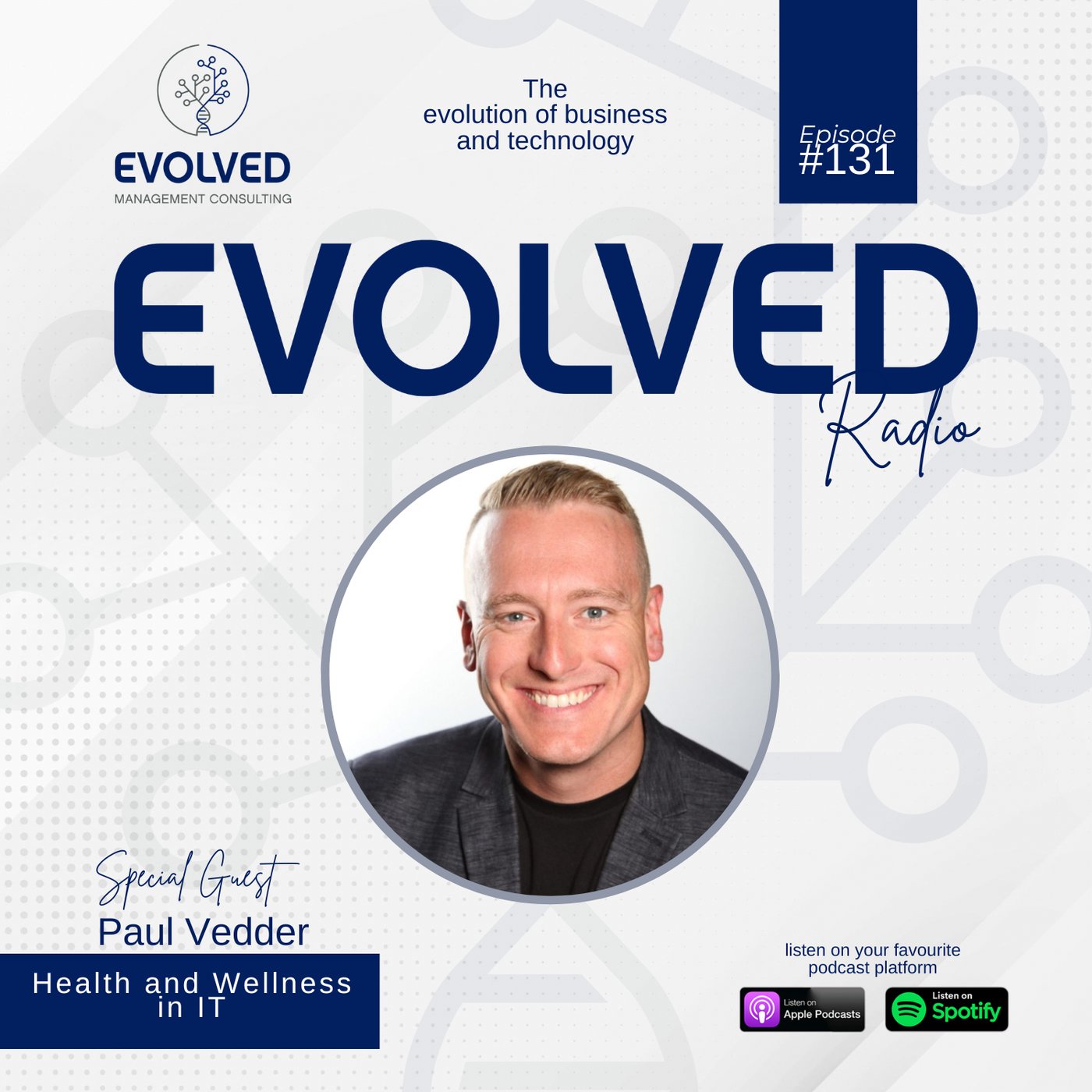
Paul, welcome to the Evolved Radio Podcast. Thank you, sir. Thank you for having
me. Uh, I believe another return guest. I should have checked
your, your episode number, but you were on once before, right? I was.
Maybe we've been talking about the same things this whole time, so we'll
see. This is definitely new because like, it's new. Okay. Yeah, like some of
this I think is, uh, maybe fraught territory. I, I suppose
I want to convince people that this is something that they should think about, but
I recognize this is something that for whatever reason I feel like is maybe a
bit of a third rail in the industry of like, eh, we kind of just,
you know, we maybe ignore that. We don't really talk about that. So I'll lead
you into that with a hard question that is probably
easy. But you showed up, like we've known each
other in the industry for quite a while, but like this topic and you
related to it showed up when I saw you doing the 75
Hard. And I mean, that's got to be hard, isn't it?
It is. It is. And for perspective, I'll tell everybody what it is if you
haven't heard of it. 75 days, you choose a
diet plan, whatever it is, but you stick to it. Zero cheat
meals, 2 workouts a day, 45 minutes each. One of them has to be outdoors,
and a walk counts, so you don't have to kill yourself both times. But,
you know, so usually I would like lift weights in the morning and then go
for a 45-minute walk at night. So stick to diet, no cheat meals,
2 workouts a day, 45 minutes each, and they have to be separated. You can't
do them back-to-back. Gallon of water, 10 pages of personal development reading,
and then you take a progress pic every day. And if you fail
to do any one of those tasks in a given day, you have to start
over at day 1. But it was just— it was
something that I found around the 2018,
2019 mark, and I kind of used it to
uncouple my brain from some of the problems that I was going through.
At the time, and it's evolved. And my wife does it with me, and
we try to do it every year because it just kind of— it's like a
reset for us, and it works. And I
guess just for the record, did you hit the 75, or did you have a
couple resets along the way? So check this out. The only time
that we have failed and had to reset was when Robin and
I did it separately. So we each tried our own,
tried to do it on our own. That was the only time we had to
reset. Every time we've done it together, we've finished it. And I think that that's
just a testament to not necessarily our relationship
specifically but marriage and teamwork as a whole. When you
go about things together, you just have that support
and understanding. I think that's the biggest thing is just understanding because when I
get home from work and we have 2 kids that are now 11 and 12
and doing the evening routine, if we both
have to get a workout in, we can share that load and we understand that
we have to get that done. And it's something that we committed to and we
follow through together. Yeah. I think having some level of like
a buddy system or a partnership for anything creates that
accountability loop, right? Yes. I'm just not feeling today. No, no,
no. We committed to this. Yeah, you're right. Okay. Right. Like, you know, it's so
helpful to have someone to lean on to, to keep you accountable in those circumstances
when something is difficult, right? Like, it's so strange, right? Like, what is
weird about this is what I've always thought about fitness and
exercise is It is obviously good for us,
but like, why is it so difficult? Like you would imagine
that evolution had built us in a way that this would be
like, there was immediate gratification, but there's also this mental
resistance to starting, right? It's such a strange
dichotomy of like, that there aren't better systems in our
evolutionary biology that like, we almost get like motivated and
primed for this. Like, like, I have to work out, I have to do something,
I have to move, right? But there's actually that resistance to no, no,
no, let's not spend the calories right now. Like, we don't know where we're going
to need this, right? Like, what do you, what are your thoughts on sort of
the internal battle around that? So it's so funny, I've
wondered that same thing myself. And for some reason, I just had an epiphany
as to, you can relate it to our industry. It's
reactive versus proactive. So The
proactiveness of getting up early, getting a workout in,
planning meals or whatever that looks like for you from a diet or
nutrition standpoint, that's the proactive side. And
the proactive side is actually, I think, harder to do than the reactive because
we're just, as human beings, we're so good at firefighting and
reacting to the world around us. When you start to move into
crafting your life the way you want it, whatever that looks
like for you, which would include working out because I have an ideal
image of myself, my body weight, what I want to look like, what I want
to feel like. You know, you can move that into longevity, but
it all goes back to that proactive. The proactive falls away when there's
so much reactive. So there's the epiphany I just had.
Okay. Imagine that, right? Yeah. Yeah. Like, how long has this
been— like, have you always been someone that's been attuned to
fitness and health? And is that was this something that you kind of discovered later
in life? It was definitely later in life. So
I'm gonna— hopefully you're okay with cuss words on your podcast, but
I— fantastic. So I
jokingly say, and some people might take offense to this because you're like,
they're like, oh, be kind to yourself. But I jokingly say that I used to
be a lazy piece of shit. And I just got to a
point where, again, like I was reacting to life. Especially
when I got to becoming a business owner where I
was just not taking good care of myself. I was eating
whatever I wanted to and I was using alcohol. That was my biggest problem was
I was using alcohol to relieve my stress and the anxiety of my day.
So, I would get home and I would drink. And then, if I would drink,
I would for some reason think it was a good idea even after dinner to
throw a frozen pizza in the oven and eat the whole thing at 10:00 PM
at night right before bed. You know, I, as
it sits right now, I mean,
I collectively have lost close to 100 pounds because I
think my highest I got to was like 243. I was like 168
right now. So yeah, so I mean,
80 pounds or close to that. And that was,
I don't know when I was, when I was that weight, but around the 2018
mark, I was probably pushing 220. And I'd always
been active, always like mountain biked and I was doing some running and things like
that, but I just got to a point where I was fed
up with— I'm like, "This is what my life is right now?" And
I ended up finding a podcast, Andy Frisella's podcast,
who he invented 75 Hard and he
basically explained the growth mindset. So, if you've ever read the book by
Carol Dweck, I think is how you say her name, "The Growth Mindset,"
He explained that to me and I understood for the first time that my life
didn't have to be the way it was and I could actually change things. That
sounds so stupid to say out loud, but I was just so inundated with all
of my problems and my issues and anxiety and stress or whatever it was
that I was just overwhelmed. And I was like, "Wait a second, I can fix
this." So, I put a plan together. I did my first round of 75 Hard,
lost a bunch of weight, and I was like, "Oh my gosh, this is great."
And when I What I realized was when I started focusing on
myself first, and it goes back and I say this analogy or talk about this
analogy a lot, in an airplane they tell you to put your own
mask on first so that you can help other people. What it
equated to was if as long as I put my own mask on first,
everything else fell into place, my business, my marriage, me being a
father. So again, it goes back to our
industry. When I put effort into the proactive part of what
we do, the reactive part was less intense
in volume or whatever intensity or whatever it was.
So, around the 2018, 2019 mark is kind of when I found the
personal development world, dove into it headfirst, and
it changed my life. Learning about the growth mindset changed
my life. Are you kind of data-driven? Do you have a
Whoop or an Oura Ring or anything like that? Yeah, yeah. Actually, I don't have
my Whoop on today. I've kind of taken a break because it gave me a
little bit of a rash, but I have a Whoop. I have an Oura Ring.
I don't wear it during the day. I wear it at night just to track
my sleep. But I'm totally data-driven, absolutely 100%.
I weigh myself almost every day. I have a Garmin watch,
tracks my steps, all that good stuff. And I'm a runner
that likes to lift weights, so I do a lot of running.
I've done a couple marathons.
I'm hoping— not hoping, I'm going to do my first 50K
this year, which is like a 30-ish mile run. And
at some point, I have on my vision board, I want to do a 100-mile
run. Um, probably not this year, but at some point I'd love to do that.
Yeah. Distance running is wild to me. It's, uh,
definitely, I enjoy running to a point. Like, I'm like,
6K is sort of my limit of like, no, kind of want to go home.
Yeah. Like, I love it. Like, there's, there's probably not a lot of
exercises between like doing a HIIT, like a really intense HIIT
exercise or doing, uh, running. Those are the things where there is
an immediate benefit after fact, whereas it's like, "I feel lighter, I
feel better, my mind is clearer." But those two things,
HIIT and running, are hard to beat for me
in getting that type of output for it, right? Yeah, yeah,
definitely. I don't
actually love the activity of running, I love when
I'm done. So, accomplishing a run
is something because— and I don't know why, but it's almost driven by the fact
that when most people go, "Oh, I hate running," or, "Oh, I would never run
a marathon." I'm like, "I'm going to do that because most people
won't do that." And, I don't know why, I enjoy doing
the things that most people aren't willing to do or don't want to do because
for some reason in my mind, it propels me.
I don't know. I don't know why that is. I think that you need that
challenge, right? And, I think this is maybe where a lot of people gap on
like, "Well, this isn't for me. I couldn't do that." I can do that. Like,
there's a lot of victim mindset that I think limits people from doing
these things. And I think definitely the point earlier of like, no, I
made a plan and I, I realized like this is
entirely up to me to change, right? Like, this is not something that's happening to
me. This is something I am just accepting is my life and I'm not
making any activity to change around it. And I think once you recognize that,
of like, you have complete control over this, and whether or not you're willing to
admit it is the only impediment to making progress. And then the next step
is, what— how can I challenge myself, right? And like, a
good example, I think a lot of people probably know the, like,
the singer Jelly Roll, and he is a huge dude. But yes, he,
he got on this train of like, no, no, like, I'm gonna get healthier. And
he could not make it around the block in the first few, the first few
weeks. But like, he's just, no, I'm just going to keep walking further and further.
Like, it's literally as simple as that. And then you can set the next challenge
further along as you go.. But just like getting up, starting
to move, I think is such an important aspect for people to take
ownership over, right? Definitely. And I think that's along those
lines. I think it's super important for business owners to do that because we as
these Type A crazy people that are running businesses,
we have to have that challenge. Like, you're right, I have to have something
to strive for, to aim for, to challenge myself, or else I'm gonna go
crazy. I don't know what it is. That's just the way my brain was
created. I just have to always be chasing something. And that—
and fitness is a great, great way to do
that. So I'm curious, so many directions I want to go
here. This may end up being an hour-long podcast. So I hope you got some
time. Let's go. Yeah, let's do it. How—
with the business piece of this, like I've seen some organizations that I've consulted
with where they implemented like a bit of a
motivation plan where it was not prescribed, didn't tell anybody that you had to do
these things because that can be a little aggressive. But it was a volunteer
program of like, if you guys want to sign up to this, to a fitness
club, like we'll buy you a Fitbit, right? And everyone can start
tracking steps and have a little open competition. We'll do
some walks after work, those sorts of things. Like, is this something that
you feel strongly enough that you advocate for with your staff at
all? 100%. So, we bought— we, through our PEO,
we were with Paychex. They have a thing
called WellHub. It was formerly known as Gym Pass, but we pay for everybody to
have a gym membership. And it's not actually one gym membership, it's
a membership to multiple gyms. So, they can go to Lifetime, they can go to
LA Fitness, they can go to Stretch Lab. And one guy
was taking taekwondo classes, I believe. But it's
absolutely something. We have a health and fitness channel in our in our
teams, and we post our workouts there. And I do cold plunging, so
I snap pictures of me at 4:30 or 5 o'clock in the morning of me
in the cold plunge. Me and this other guy kind of have competitions about how
many we can do in a week. I try to do it every day. Again,
it's just part of my morning routine. But, and then on top of that, we
sponsor a local 5K run that supports Gold Star
families, and we're huge into that. And basically, anytime
a race comes up like a Spartan Race or a Tough Mudder, We
will pay for any of our employees to do that. We do that together because
I do, yeah, absolutely encourage it.
And a lot of people here, they get into it. It's fun. It's great.
That's amazing. Yeah, I think it's so good for camaraderie
and, you know, from a business outputs perspective, and I think you recognize this personally,
I think you certainly recognize this from a team perspective, like
having a healthy body absolutely creates a healthy mind. And this
is where we kind of get into the territory of like, I'm not
judging anybody and I'm not like throwing shade. And that's why I think it's important
for people to recognize this is up to you, right? Like, I hope
like this conversation can help convince some people, like, you know,
just start doing something, like do some movement, right? Focus on your
sleep, right? We can get to some of those aspects. But
I think there is an implicit and absolute
connection between whether or not you take care of your body and how
well your brain functions. So I think from a business owner
perspective, this is a very practical reality of wanting the
staff to be active, to have good
health practices in how they manage their sleep, how they manage, you know,
food intake, and, and should, should they be exercising.
Because yes, that has a practical impact on whether or not they're going
to be, you know, very like dozing at 1 in the afternoon because, you
know, they've just ate like this gigantic meal and come back to the office
and can barely stay awake for the next 2 hours while their body processes
this. Or, you know, they have a really tough time getting up in the morning.
They have to drink 6 cups of coffee because they were slamming Red Bull and
up till 4 in the morning. Like, like all of these things have an
absolute downstream impact that relates to your business.
Yeah. Or coming into work hungover. I mean, they could be grumpy with, with
the clients, like, um, you know, and again, as I tie it back to the
business owner, having the— because managing
a team and people takes so much time, energy,
and effort. And if you are
investing that time, energy, and effort into yourself, you can show up for your
employees and then your employees can show up for your clients in that way.
It's so— yeah, it's so important and it's all tied in
together. Yeah. I was not much of a
drinker kind of in my probably early 20s and then sort of got into
some drinking with some friends because I would drink when we went on
vacations. We would go on trips together and usually kind of all-inclusive
type stuff or like pub crawls in foreign countries and things
like that. So I would usually drink when I was on vacation. And then at
some point, I came back and just continued drinking. And
that went on for a good decade or
so. What really sort of curbed my drinking was getting an Oura Ring. And I
still drink from time to time, but less and less as I get older. I
just cannot justify the impact that it has on me as I
get older. And some of this I think is just personal biology, but it
became really difficult for me to justify it when I saw how
much of an impact it had on my Oura score.
Like, anything more than a drink or two and I was just like, my score
would absolutely plummet. And it's weird because people would say, well, why do you need
a ring to tell you what you already know? And I don't know why,
but I am very data-driven. And when I had the score after getting the Oura
Ring, I was like, holy crap, I might have to get off drinking.
Yeah, yeah. Now, and I'll take that a step further for,
for some people listening. Again, I, I, you know, and not to judge or anything
like that, but I, I totally agree with you. The fact that I was joking
with my kids last night— was sidebar— We were at a little ice cream
place after dinner because we go out to dinner as a family. And I was
talking about— I was around a group of business owners that day, and I was
actually talking to my wife about just the snacks and all the stuff that was
there because I'm on a nutrition plan. And I was like, yeah, this one guy
ate like 3 candy bars. And I kind of was talking a little
trash, and my kids are like, Dad, are you like fat shaming people? Are you
being a bully? And I'm like, you know, just a splash of bullying
is a little motivational from time to time. I think it's
okay. Because I've been there, done that. But yeah,
it's— so back to my own personal story, I was
utilizing alcohol to— again, because I'm a type A, my brain
is just going and going, going nonstop. I got to a
point where I was relying on alcohol to turn down the volume in my
mind. It was the only way I could relax. It was the only way I
could de-stress. And that's not healthy. Relying on alcohol for that is
not healthy. And actually, I got
on many podcasts and I was talking about this for years.
And finally, last year, I made the decision to give it up. So, I
just crossed 8 months sober, best decision I've ever
made. And it was— yeah, we can go down
that rabbit hole, but I was drinking a lot.
I could probably consider myself— not probably, I was an alcoholic
because I was utilizing the substance
to de-stress. And in my mind, I kept telling myself this lie
that it was the only way that I could de-stress when there's so many other
healthy alternatives to it. So, so what became the replacement for you
then? You know, it's so funny. I don't know that I have
a replacement. Here's what I will say. When people— and this is
totally typical— when people stop drinking, and I wasn't a sugar guy
before, but when I stopped drinking, my sugar intake kind of went up a little
bit. I was like, man, I'm starting to crave sweets now, which I never did
before. I was a meat and potatoes kind of guy, but now like Wednesday nights
we go out to dinner as a family and then after we go to a
frozen yogurt place and I can get like a sugar-free frozen yogurt because that's on
my nutrition plan and some strawberries or something like that. So, not
overly unhealthy, but we seem to do that once a week. But,
as far as replacing it, what I actually found was I
was spending, Todd, when I tell you I was spending so much
time, energy, and effort around drinking, like I was always
just waiting for my next drink to calm my mind or to turn down
that volume. And at vacations and stuff like that, I spent so
much time drinking that when I removed it from my life, I actually— I
was like, oh my gosh, I actually have like lots of time
for other activities. So like I can read at night, I
can listen to podcasts and take in information at night.
You know, one of the things I was talking to my sister actually about, she's
22, and I was encouraging her to build a good morning
routine now early on in life. And I told
her that if you want to win the day, you have to win the
morning. And the only way to win your morning is to control your evening.
So one of the things I used to talk about was how alcohol was taking
away my evenings and in turn taking away my mornings.
Because if I would drink and stay up late and do whatever I was doing,
hanging out, watching movies, eating a whole frozen pizza at 10
o'clock, you know, there was no way I was going to wake up early and
get some of the things that I actually cared about done. So now, I
mean, I wake up at 5:00. The other morning, my
body came awake at 4:30. So, I get up
and I stretch, I cold plunge, I read, I do
my sauna, I get a workout in. I'm out in my garage gym by 6:30
doing a workout. I usually work out for an hour. I do a
pre-workout breakfast and then I do a post-workout breakfast and I get all of that
done by 8 o'clock in the morning and
it's fantastic. So, what replaced it was
just lots of time. I just didn't realize how much
time alcohol was sucking from me. It's crazy.
Yeah. You mentioned sort of like the evening and then the morning around
alcohol. My favorite expression around this is alcohol is borrowing fun
from tomorrow. Yes.
And admittedly, it's fun, right? Because you're— 100%. —a little extra from
tomorrow, borrowing for tonight. Super fun, but tomorrow it's gonna suck,
right? Because you've— yes, you're in debt, right? Yes,
basically. Here's what I'll say. Since I've given up
alcohol, there are activities and things in my life that
are totally not as fun, 100% not
as fun. The highs are not as high. But here's what I'll say, back to
what you just said, my lows are not as low. So instead of, you know,
high, high, really high highs and really low lows, my life is just kind
of evened out a bit, and I'm okay with
that. It's just such a better— it's not
chaos, and chaos in a good way and chaos in a bad way.
It evened out my life. So I love EDM concerts. My
wife and I go to eat. We love EDM shows and stuff like that. And
I will tell you, being sober at those, at least to
start, I've kind of gotten over it, being sober I
hated it. I hated it. It was terrible. But I've
learned to do things. I've had to rewrite the stories because there were so many
things that centered around alcohol. One of my favorite things to do— I've got
a brewery like 2 miles from my house. I loved going there and
their beer was my favorite beer in the world. I haven't been there
since, but that was like one of my favorite things. I'd meet a couple buddies
or my wife or we'd go there for dinner, whatever, and I'd sit there and
have a couple of beers and it was fantastic. But I've
rewritten those stories. Going out to fancy dinners and ordering drinks
or going to the beach and having drinks, like everything, it was like, why,
why, why is everything centered around alcohol? And admit
it, it's poison. It's literally poison. Like it's ethanol.
It's poison for your body. You know,
and most people might not have to give up drinking. I had to give it
up because I couldn't, I couldn't, I wasn't a guy that could just relationship, right?
Not at all. I couldn't have one or two. Like, it was impossible,
or damn near impossible, for me to have one or two. I'd
have more than two. Yeah. And for people
that don't understand the rationale of it, it is poison. And like, you know, to
your point, like, if alcohol is your thing and you have a great relationship with
it, fine, right? But totally, there's no realm of reason
where you can say like, this, this is, this is healthy for me. Other than
maybe taking the edge off in stress. But as to your point, like it becomes
a slippery slope, but the mechanics of it is like, it is poison and
your brain starts to shut down regions of your brain in order to sort of
focus on the core centers, right? Like this is how alcohol poisoning can literally
kill you because it just shuts down too many parts of your brain and you
know, you can go into paralysis, right? So yeah,
it's not great, but I guess like The other way to think about this
is like, you know, you're describing this as like, you know, this
has been great for you. It's rebooted your life, given you all kinds
of other things that have been gifted back to you. But maybe people are listening
to this and be like, Paul, this doesn't sound fun, right? Like, I
have to get up early. You know, I have to do all this meal
planning. I'm not allowed to drink. Donuts and pizza are great, right?
Like, what would you say to the person that's like, good for you. This just
doesn't sound like it's for me. Yeah, I mean, you have
to understand. I mean, I always relate back to books that I've
read. Simon Sinek's Why. Start with why. So if
any of this resonates with you, well, ask yourself why. Why does it resonate
with you? And if you're fighting anything and everything I'm saying, then don't
do it. It's fine. But what I'm trying to do is
share my story because my life was changed around the 2018 mark
when somebody shared their story. And I heard it and I was like,
"Wow, this totally makes sense. I resonate with it." So, my goal
is simply to share my story in hopes that it
helps somebody else change their trajectory of their life because it's that whole thing
about a big cruise ship or something like that. You change that thing 1 degree
and it's going in a completely different direction. So, there's little things that
you can do. And again, you mentioned that I think, but just get up and
go for a walk. Like a walk. Walking is a
fantastic thing to exercise. Like throw on a podcast or don't.
Just go out on a walk. Go do a loop around your neighborhood or whatever
it is. Start like Jelly Roll did. Just start going around
your block or whatever. Just start
small. And what I have found
is consistency is like the biggest thing, is just being consistent. You
don't have to be 100%, 100% of the
time.. But, your goal should be 80%. If you can
do it 80% of the time, you're in a better position
than most people because most people aren't going to do these things or
80% of what you're trying to do.
So, yeah. I think that's a big one. I think this is like if you
take anything away is start small and stay consistent, I think is
the number one takeaway from this because like, okay, I want to start running or
I want to start walking. And you get up in the morning and it's like,
oh, it's kind of miserable out. It's raining. I don't want to do this. Okay.
Like, don't go for a 20-minute walk. Literally walk around the block. If you go
out for 5 minutes, at least you've maintained the behavior. And if
you can consistently do that, then, you know, okay, tomorrow's nice. All right, fine. I
feel good. I'm going to do 25 minutes instead. Right? Like that, just
showing up and putting in whatever effort you can, I think is so,
so important because there is that consistency
and sticking to something and building the routine for people, it starts to cement in
your brain. And I recognize this as someone who wants to do all of these
things, but like, if I get injured or something like that, that, uh,
and I'm maybe, uh, doing less for a week, like, it takes a
bit of a ramp-up period where like, absolutely, actually starts to
crave it. And I love getting into that space where I'm like, in the morning
I'm like, oh, I haven't got my work in yet, because I'm not like you.
I don't like do it first thing in the morning. I have to do it
earlier. If I don't work out before noon, it's unlikely I'm gonna work out. So
I have to get in early, but it's not first thing. But like, once I
have a routine about it, I get antsy when I have not done it. And
I love that feeling where my body starts to crave it. Right?
Definitely. Yeah. No, I've gotten to a point where I'm craving it totally. And I
go back to your original question, like, whoever's listening
to this, like, just sit for a second with yourself and
think about something that you want to change about your life and then
start there. That's what spurred this whole thing
was because of my drinking, because of my eating, I was
unhealthy, my body was unhealthy, and I wanted to change that. My
marriage, that was actually the catalyst, one of the bigger catalysts to this whole
thing was, long story short, my wife and I got into an argument. We were
actually— I'll tell you the story because it is super relevant. We were
at my neighbor's house, and when I say my neighbor's house, I mean literally one
house over. My truck was there and we had been hanging out. We had been
drinking beers, me and my buddy, and we were in the pool, the kids. It
was a great time. And we went to go
leave that evening and we went out to the car and my wife's like,
well, I'll drive your truck since you've been drinking. And I'm like, babe,
it's like 100 feet that way. I think I can handle this. And we
got into an argument over it because I was, of course, intoxicated
and not thinking rationally. And that
That ended up into an evening of hell where I got angry
because I didn't know how to deal with my anger and all of the stress
that was building up from all of this. I punched a hole in our
bedroom door out of anger. And she
was actually— I said that I had found this podcast, but that's not even true.
My wife sent me this podcast not thinking that I was actually going to
listen to it, but she also expressed like, she's like, something has
to change. Like, this is not what I wanted my life to be. And I
was in agreement with that. I was like, yeah, I don't want my life to
be like this. I don't want a shitty marriage. I don't want to look the
way I do, and I want to be healthy. So,
so all that to say, like, whoever's listening to this,
think about something that you don't like about your life right now that,
that needs changing. There's something in your life that needs changing, and start with that
thing, whatever that thing is.. And I think that
that's a good jumping-off point for you. And you have more
agency than you believe in that, to the earlier point, right?
Yes. Yeah. And that's another— gosh, yeah,
agency and freedom. I'm learning this. I just turned 40 in December and I'm learning
because I didn't see this in my 30s. But I have a bumper
sticker now on my truck that says, "Discipline equals freedom." That's
a Jocko Willink all the time. Quote. And it's so
beautiful. Quote. It's so good, but it's so counterintuitive
because we think— so like, let's take money for example. We
think that money— or sorry, we think that freedom with money is just being able
to spend whatever you want. It's not. It's actually having enough money
in the bank to do whatever you want, to do the things that you
want. So, you know, it's the same with your health.
Like, personal— like, freedom or, um, You know, what do
they call it when you
have like, people think, I don't know why they think this, but they think like
mental health is like sitting on the couch, you know, taking a day off, sitting
on the couch and binge watching Netflix while eating bonbons. Like
that's the whole thing. Self-care, thank you. Yes, self-care. So they think
that's what self-care is. And that's
probably a reactive version of self-care where you just wanna like, be a lazy piece
of shit for a day. But, the proactive part
of self-care is actually getting up in the morning,
getting that workout, whatever, whether it's a walk, lifting weights, running, pick
something, just move your body. And then, fueling your body throughout the day
so that you can be ready for the things that might come
at you. I've gotten into longevity a little bit and I want to be
fit when I'm much older and later in life so that I can run around
with my grandkids and keep doing these Spartan and Tough Mudder races with
my kids and stuff like that. So, discipline equals freedom. And it's not
the freedom that we have in our mind is not what we think it
is. It's actually potentially the exact opposite. Yeah. Like that
makes me think of— I think it's Peter
Atiyah, the Centenarian Olympics. Yes. What you're sort of aiming for in
your life. Totally. Like it's great if you want to live to be 100, but
if you can't, like pick your grandkids up off the floor when you're in your
70s, like that, is that still, you know, the quality of life that you want,
right? I think that's a great way to frame it of like, I don't care
how long I live as long as the quality of my life is still great.
And that's like making those investments very early on
is really crucial for this. So this lends to another thing that I think
is really related here. Like I sort of talk a lot about, not
a lot, but I mention this enough that I don't
think it's a mystery that the chronic low
back pain issues of both our generation and certainly in our
industry are related to the fact that we sit a lot and we don't
move enough. And I think a lot of this is exacerbated by
work from home because I work from home, I've worked from
home for 12 years, whatever it is. And to your point
earlier, movement is medicine, right? Like there is almost nothing better
that you can do for your life than walking twice a day.
Because just getting yourself out and moving around is good enough to kind of get
the blood pumping, get the juices flowing through your body, but also just
the mechanics of it, of moving your skeleton around so that it doesn't end
up stiff and atrophied over, over
time. And this was really driven home to me when I was suffering from low
back pain. I've had low back pain for years and years and years, and,
you know, I'd always get frustrated because I would try and exercise and and then
my back would flare up and then I'd be injured and then I'd try and
get back into it. And it was just this wash and repeat cycle. And
I saw this podcast interview with Dr. Stuart McGill,
who's like the, probably the most revered
back specialist with spinal mechanics
out of McGill. And he had the, in this interview, the guy basically
posed to him like, okay, so describes this person who is basically me. Like
works at the desk a lot, wants to
invest in their health, but doesn't feel like they have a lot of time, and
then tries to accommodate things with an hour a day workout.
And his response was basically, he's like, how would you help this
person? He said, well, honestly, if they feel like they can just sit around all
day and fix all of that with a once a day workout, I can't help
them. I was like, damn
it. He called me out. I feel attacked. Yeah, and it's true.
I think like that, that is such a huge aspect of what a lot
of people deal with in our industry is sedentary most of the
day and, you know, trapped at their desk through their job. And then, you know,
a lot of our hobbies are either sitting at
a computer still or at least, you know, kind of sitting, sitting
at a TV. So I don't know what my question is here, honestly, Paul, other
than like the biomechanics and just the movement of this, maybe
kind of the, the injury-prone nature of our industry and
how we sort of manage that as business owners, I
suppose? Yeah, I mean, we did something in our office when we moved into our
new space, we got everybody standing desks, and I'm standing right now at my desk.
So I try to do it as much as humanly possible. And it's not
necessarily the most comfortable thing. I did try. I don't know if you've ever tried
it. But I tried the walking pad under the desk. And I was
really impractical to type. Yeah, I couldn't think. It
was so distracting. Like, and I, again, I like to run and stuff like that.
I do a lot of running, but like, I couldn't, for some reason, the walking
and the typing and the thinking, it just, it wasn't working for
my brain. So I'm actually looking, it's sitting up against the wall there. I tried,
but so I have a standing desk. I give all, we give all of our
employees standing desks and just try to encourage that. But yeah, it's absolutely, I feel
like the sitting thing is just slowly killing all of
us. It's crazy. Oddly, I have found standing now to
be problematic for me. I think it's more the movement, but you
have to be like, you kind of every hour, you kind of have to move
up and down. Yes. Having like, if you try and stand at your desk
for 6 hours straight, I think you're going to be in pain. Totally.
If you're standing majority of the time, but you take 20 minutes to sit in
between, then I think that tends to work out better. Yeah. And, I
think I have undiagnosed ADHD because I'm like fidget and move
around a lot. Yeah, yeah, definitely. Yeah. So, I
think just the up and down like sitting, standing, doing
the different things, I think it's good that just
kind of expending this energy. And, it's also— that's another
thing like the whole sitting, standing, the movement and things like
that, we're actually burning calories when we do that. So it's actually, again,
it's all good. This is good. Yep. All right. So the other
one that we touched on earlier is sleep,
right? I strongly believe sleep is the center of the bullseye with
all of this. It creates everything in a downstream reaction
around what you choose to eat, whether or not you're going to
exercise, your mood. All of those things are a function
downstream of sleep. You wear an Oura. I
imagine you're pretty thoughtful about your sleep. How do you approach it
from kind of routine, and are you protective
of your sleep? Definitely. So, when I was drinking,
I wasn't. I just kind of— Yeah, totally. But after
I stopped drinking, I absolutely changed my mind on this and I totally agree with
you that it is the center of the bullseye. And it's
so funny, my wife doesn't necessarily want to go to bed as early as I
do because she doesn't wake up as early as I do. She homeschools our kids
and they can sleep in, you know, if they wanted to.
But I've been encouraging her, we've been talking about her having her own morning routine.
But I have a morning routine. I try to, and it sounds crazy, but
I try to have lights out around 9:30. It doesn't always happen. Maybe
it approaches the 10 o'clock mark. But, and again, our kids are, you
know, 11 and 12. So we've worked out a schedule
for our family where we try to eat dinner around 6, We do, you know,
we spend time together, do our thing. The kids, you know, we all clean up
the kitchen together. Well, I'm reading a book with them right now, so we'll read
that after dinner. But I basically told them by 8:30, they don't
have to go to sleep because they're 11 and 12. They're not going to go
to bed at 8:30. That's too early. But by 8:30, I want them
in their rooms chilling out, reading, kind of
unwinding, because between 8:30 and 9:30, I've got 1 hour before I turn
the lights out. I need a little alone time and watching
TV. I usually watch YouTube. I watch like running videos and weightlifting videos or
business videos at night, much to my wife's chagrin. She sits
there and reads on her Kindle, but that's kind of what I enjoy. I don't
get into like TV series or anything like that.
I watch YouTube. So yeah, by around 9:30 or before, I try to
turn off the lights and I go to bed. And right now, I
can fall right to sleep. Of course, when you're drinking, people will be like,
"Oh, well, drinking helps me fall asleep." You're right because it's
sedative. It absolutely helps you fall asleep, but after you fall asleep, it doesn't help
you stay asleep and it doesn't give you good quality of sleep. So, I would
absolutely fall asleep quickly when I was drinking, but then I would wake up at
2:30 and be up for hours. I struggle with that
a lot. So, my alarm is set for 5:00. It's crazy.
The last like 2 months, I've been actually waking up before my alarm. This has
never happened, but it started happening. So, I usually wake
up right before, right around 5:00. And like I said, I get up out of
my bed, I go to my cold plunge. And
it's so funny, you know, if somebody has a cold plunge, you know about it
because they constantly talk about it, but it is what it is. So, I'll be
the first to admit that. So, it's so funny though. I've had this
cold plunge for years, like 3 years now. And I tell you what, every morning
it's still a struggle. I stand over this damn thing and I
go, what the fuck am I doing with my life? Why am I doing this?
And then I get in it and I'm in it for 3 and a half
minutes. I'm in it up to my chest for the first 2 and a half
minutes. And then I go to my neck for the last minute. And then at
the end, I have a song that plays. That's how I know it's
3 minutes and 30 seconds. And then I dunk my head for like a second
or two and then I get out. Every time I do it,
it's like I've conquered something. And you can go to Huberman.
He talks about the whole cold plunge
thing. It boosts dopamine in your system, and you're doing a hard thing early
in the morning, and it just sets your day up. I don't
know the brain chemistry behind it, but there's literally brain chemistry that's happening
that just prepares you. So, I do the cold plunge right out of bed.
I do some stretching. Sometimes I'll get in my sauna. I
do some reading. Like I said, I do a pre-workout breakfast. I'm in my garage
gym by 6:30 because I don't actually don't like going to the gym. I love
working out at my house or I go for a run by 6:30.
By 7:30, I'm done. Post-workout meal and then I'm off to shower
and then I'm off to the office. So that's like, that's my morning routine.
From like, I don't have like a, I guess I'm establishing more of a morning
routine, but I'm curious. I can't remember the exact I don't know the name of
this, but it's like the Millionaire Morning
Routine. Is that sort of what you were basing this
off of? Kind of, yeah. I'm pretty sure I've read that book, or at least
I have it on my bookshelf or saw some content around
it. But yeah, I just figured out the things that I wanted to do in
the morning. And I tell you what, for me, I love my wife and I
love my two daughters, but having alone time in the
morning is fantastic. Like just having that quiet time where the house
is quiet, nobody's awake. And kind of
doing some things before the sun even rises,
like, I don't know, it just puts me in a good mood. It
sets me up for winning
the day. It's amazing how much longer the day feels in a good way of
like how much you feel like you've accomplished if you get up slightly earlier in
the morning. And I mean, even like 30 minutes earlier, it's
wild how much more you feel feel like you can fit into a day.
Yeah, definitely. So, yeah, I cherish that time. I even
encouraged my wife to get up a little earlier with me, and she did that
this morning. She got up at like 5:30, and we spent some time
talking this morning, which is awesome. And she stood outside and watched me and laughed
at me while I was in the cold plunge, which she does from time to
time, but she doesn't do it every morning. That's one thing I will never get
my wife to do is cold plunging. Interesting. So, on that, you
mentioned a little anxiety beforehand. I don't know about your personal
experience with this, but there has been no
better antidote for anxiety than a cold plunge for me. Definitely. Have you felt
the same? Yeah. Yes. Yeah. So, I'll
be honest. So, yes, but me giving up alcohol
was the biggest antidote for that because it was the thing that
I was using to fix my anxiety but was the thing that was
actually causing my anxiety as well. Like
a coat of paint over top, so it was still 100% notice it as
much. Yeah, yeah, 100%. And I, you know, even after I stopped
drinking, I still had it for a while, but I've gotten to this point now
where I feel— I told my wife Robin this the other day, like, I
feel myself changing. And it's so weird because I
spent all of adulthood drinking
pretty heavily, so I like, I'm 40 years old now and I'm now living
an adult life without alcohol. So I'm having to rewrite stories, I'm
having to experience new things. And it was so crazy because I was so afraid
to give it up because I was like, well, what if we travel to Europe
and I can't go to the Guinness factory and have a Guinness? And guess what
I did? I did that, you know, I traveled to Europe and I didn't drink.
And I've done, I went to bachelor parties and weddings and birthday parties
and stuff like that. I did everything that I was afraid to do because I
was like, I'm just, I'm gonna miss out. It was FOMO. It was total FOMO.
But I've done all of the things that I was afraid of
without the alcohol. And again, I will be the first to tell you,
and most sober people will, they'll be like, it's not as much fun. And if
anybody tells you that it's as much fun or more fun
sober, they're lying because it's not true. It's
not true. But there, I get to So, when I'm at a
conference and my buddies are staying up, because I used to do this till 2,
3 in the morning drinking and partying, I go to
bed at 10, 10:30. I'm in the gym
at 5, 5:30. They're all stumbling in at 8, right when
the program starts. And I've already worked out, I've talked to my kids, I've
done things, I've read, and I've been able to jumpstart
my day and I'm ready for the day. And I'll be honest with you,
just not being hungover is, is, is
a beautiful— probably the most beautiful thing about being sober. Um, because I just
spent so much time hungover now, getting to this age as well, like
past 40. I feel every year that clicks by, it gets harder
and harder to deal with a hangover, right? 100%. Yeah, I used to be able
to deal with it fine. I was like, ah, not a big deal, not a
big deal. It is a big deal now, right? Yeah, like in my early
20s kind of thing, it was I could go to work
basically hungover and be like 80% effective. Totally. Now it's like I need
3 days to recover if I've done some heavy
drinking, right? Yes, totally. I mean, like drinking
is sort of a huge activity in a lot of the conferences and stuff, right?
Like that's, it feels like half the reason people are there to
some degree. Absolutely. I don't understand how people operate
in those environments with like like you say, like people are in the bar until
closing time and, yeah, you know, they're there maybe not at the crack of 8
o'clock for breakfast, but they tend to roll in around 10. I'm like, how are
you here? You know? Yeah, yeah, I was that guy. I was that guy.
But I would, I would try at least most of the time to make sure
I was there at 8 and when things got started. But yeah, I was that
guy and I don't know how I did it. I mean, part of, part of
me knows because I was much younger, but, um, or at least a little
younger than I was. But I just, I can't do that anymore. I don't have
I don't have it. It's age has caught up
with me. Yep. I suppose a lot of this is kind of like, like you
said, like it's rewriting stories. It's almost like rebooting
your life, rediscovering things that kind of bring you joy and discovering
sort of different aspects of your life that, you know, like
you said, the highs are not as high, but, you know, trade that off for
not as low lows. And just, I think like
maybe this comes with a bit of age of like getting to the space where
you're much more comfortable with things being calm, right? Yes. Like,
calm is really nice, and, you know, it's not wild, it's
not crazy, but that's not necessarily something you desire as you get older. It's like,
every once in a while it's a little fun, you know, throw a little hand
grenade out once in a while and watch things go nuts. Yeah. But just
to have things steady, predictable, and like on a
positive note, that's fantastic. Like, it's a great way to live your life,
right? Yeah, I'm pretty extroverted, and
as I got as I'm getting
older and sober, like, I'm kind of enjoying, like, or at
least a part of me is becoming a little introverted. I'm like, yeah,
that calm, I'm craving that calm. And I don't— I think that's
probably just as I'm getting older. But it's definitely something that—
because again, like, rewind 10 years ago, I had FOMO for everything. Like, I
couldn't miss out on everything. I wanted the chaos. I wanted the hand grenade. I
wanted the fun, the partying. Let's go drink. Let's have a good time. But
I'm like, yeah, I'd rather be in bed watching YouTube and going to bed in
20 minutes than out late. I just— we're getting old,
Todd. We're getting old. Moving from FOMO
to JOMO. Yeah, exactly. You guys go get hammered. I'm gonna feel great in the
morning after my workout. Like, yeah, I'll see you at lunch,
right? Yeah, exactly, exactly. I love it. Well, this has been great,
Paul. Uh, really appreciate you sharing sort of the
lessons that you've learned and your story of how you got there and a few
of the tips on what's worked for you and the practical reality of like,
what are the honest trade-offs? And hopefully,
people recognize like, there are things that you should and
want to and absolutely can change in your life.
And the downstream impacts of that are incredibly positive.
So I think it's great inspiration for people to take up
the gauntlet and start making some changes on their own. For sure.
Yeah, it's absolutely a pleasure to talk to you
again. Yeah. And anybody— like, you're pretty open
about this and share pretty readily. If, like, people wanted to reach out to
you and just bounce a few things off of you, are you open
to that? 100%. Yeah, please hit me up on LinkedIn. I don't really— I
don't have an Instagram or anything like that anymore. Or anything that
I check regularly, but I do check LinkedIn. So absolutely look me up, look
me up on LinkedIn. I am an open book. I'm totally
transparent about this journey. And I would love to help anybody
that needs just at least a point in the right direction. I don't know everything,
but I've been through and I've learned a lot over the last 10
years in business, life, marriage, family.
My two girls are adopted. We couldn't have our own kids. That's even a
whole nother story. So, so yeah, I'm an open book. I love, love just sharing
my story, my story, because another person sharing their story with me is
what brought this catalyst of change. Like, I'm a changed human
being because of somebody sharing their story. Amazing. All right. So I'll
link to you on LinkedIn and show notes if people want to get in
touch. But again, awesome. Really appreciate it, Paul. Yeah, my pleasure.